
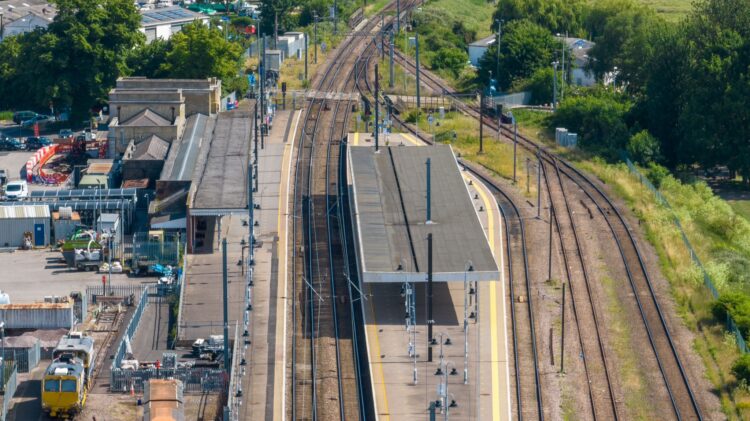
A long-awaited upgrade to the Ely rail junction—described as essential for both the regional and national economy—was thrust back into the spotlight this week during a Westminster debate led by Ely and East Cambridgeshire MP Charlotte Cane.
For more than 25 years the project has been stuck, in Cane’s words, at a “red signal”. The debate laid bare both the breadth of support for the scheme and the continuing frustration at repeated delays, funding gaps and political false starts.
A £500m Scheme Promising a £4.89 Return for Every £1
Opening the discussion, Cane pointed to the Outline Business Case for the Ely Area Capacity Enhancement (EACE) programme, which shows a benefit-cost ratio of 4.89.
“For every pound invested,” she said, “there will be a return of £4.89.” Despite this, she noted, the project remains unfunded.

Cane told MPs the project has endured “feasibility studies, consultations and task groups aplenty,” alongside “funding promised just in time for the 2024 election”, only for the incoming Government to confirm that the previous administration had not in fact secured the money.
The £500 million price tag, she acknowledged, is significant—but so too is the return: “almost a quarter of a billion pounds” in economic benefit.
National Significance Beyond Ely
Although the scheme bears Ely’s name, the debate repeatedly highlighted its national importance.
The upgrade would relieve one of the most constrained sections of the UK rail network. Ely is the critical gateway for freight travelling from the port of Felixstowe—a port handling nearly half of the UK’s containerised trade—moving northwards to the Midlands, the North and Scotland.
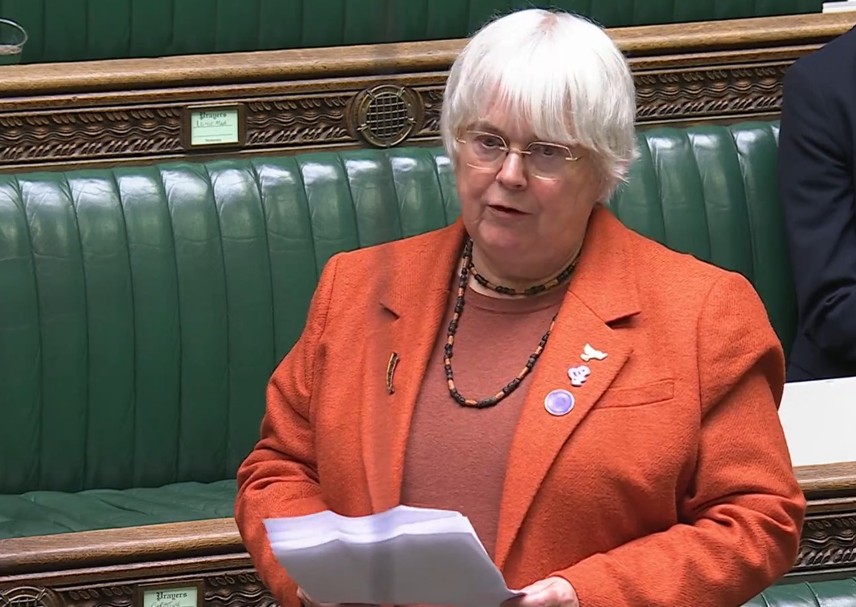
Cane emphasised the resilience issue: currently a single-lead junction means “a failure… has the effect of practically stopping all rail traffic”. Delays cascade across the region, affecting not only Ely passengers but services as far as Cambridge, Peterborough and Ipswich.
Several MPs underlined that Ely is now part of a far bigger picture. Cambridge MP Daniel Zeichner said that renewed enthusiasm for East West Rail “makes the case for doing the works on Ely junction even stronger”.
Green Party MP for Waveney Valley Adrian Ramsay urged Ministers to consider the related upgrade at Haughley Junction—another key constraint on Felixstowe freight growth.
Former Cabinet Minister Steve Barclay, Conservative MP for North East Cambridgeshire, stressed the importance of improved connectivity for Fenland communities. Twice as many trains, Cane reminded the House, could run on the Ely–King’s Lynn and Ipswich–Peterborough routes if the junction were upgraded.
Environmental and Road Safety Benefits
Cane devoted a significant part of her speech to environmental gains and road safety.
Rail freight expansion could remove 98,000 lorry journeys per year and cut car journeys by 376,000, reducing congestion and saving an estimated 1.7 million tonnes of CO₂ over 60 years.
She pointed to the “clear danger” posed by HGVs, citing provisional figures showing more than 4,100 road casualties in the first six months of the year involving occupants of lorries, including 42 deaths.

“These lorries are a danger to their drivers and other road users,” she said—arguing that every freight train taking containers from Felixstowe is a safety improvement for East Anglia’s roads, including the A14, which she said can feel at times as though “all 450” daily HGVs are stuck on it at once.
Support Across Industry and Local Government
Cane described a “remarkably strong show of support” from the rail freight sector, ports, local authorities, chambers of commerce, the Eastern Powerhouse partnership, and regional transport bodies including Transport East and England’s Economic Heartland, which chairs the Ely Taskforce.
Both industry and councils point to significant unmet demand for rail freight. Maritime Transport, a major logistics operator, has identified strong interest from customers looking to shift freight from road to rail for environmental reasons.
The upgrade, Cane said, would enable 2,900 extra freight services per year, easing pressure on the North London Line and freeing capacity for London’s own ports.
Passenger benefits would also be significant, with an extra 277,000 rail journeys per year predicted once capacity is enhanced.
Government Response: ‘Not the End of the Story’
Responding for the Government, Transport Minister Lilian Greenwood acknowledged the strategic importance of the scheme, calling Ely “an essential role in our national rail network”.
However, she confirmed that EACE was not allocated funding in the July spending review because the Government had inherited billions of pounds’ worth of “unfunded” transport commitments.
Greenwood emphasised that while the scheme cannot proceed now, “it is not the end of the story”. The project remains in the “pipeline of future rail enhancements” and will be reconsidered as funding becomes available.
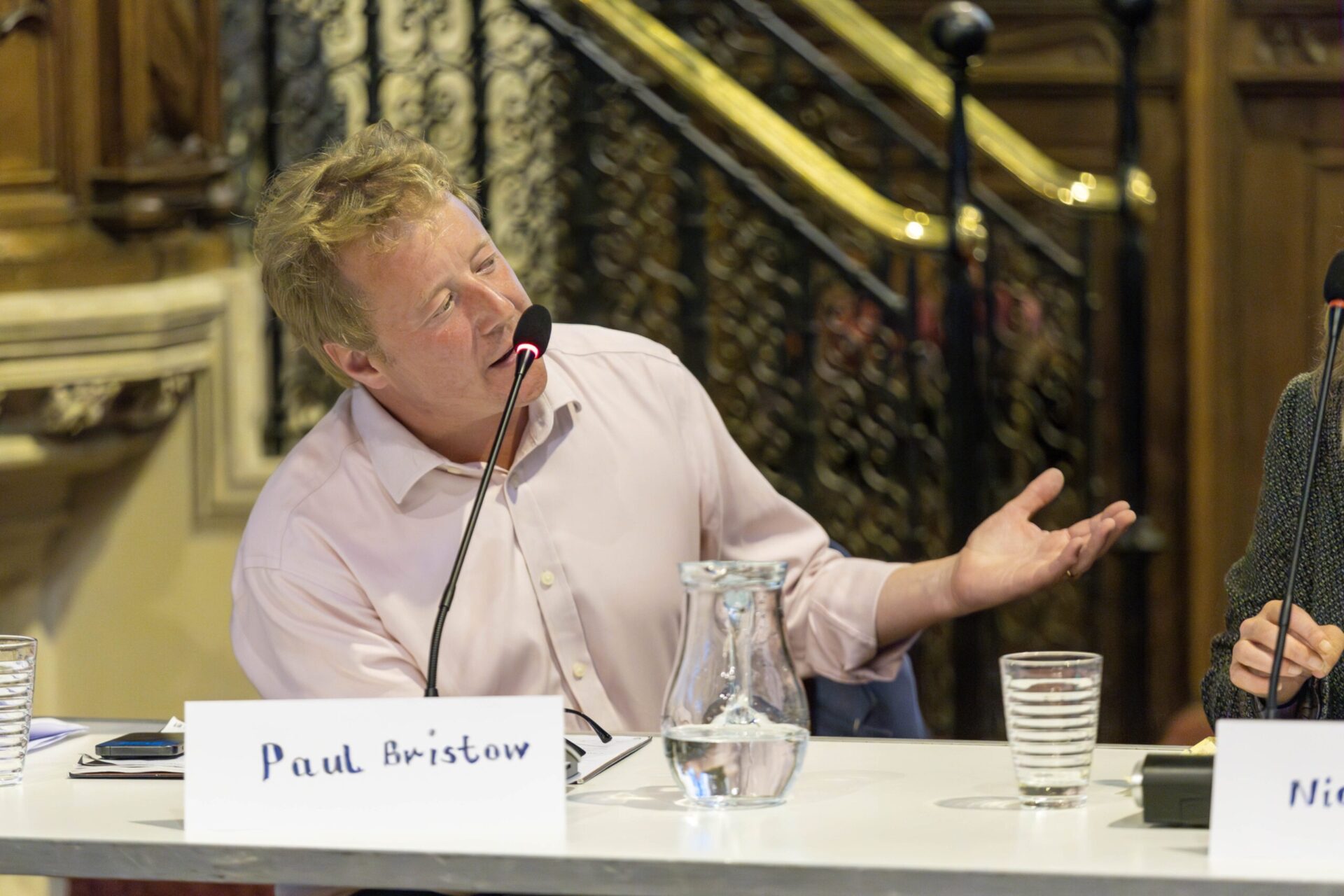
She confirmed discussions between the Rail Minister and the Mayor of Cambridgeshire & Peterborough Paul Bristow about third-party or private-sector funding contributions. However, she warned that any such proposals must still demonstrate “value for money to the public sector”.
One of the biggest obstacles remains the 44 level crossings that must be upgraded or closed. This adds complexity, planning risk and cost—often the most contentious part of rail infrastructure schemes.
Greenwood urged local authorities to work with Network Rail to find ways of “simplifying or rationalising” these requirements to reduce costs, and she encouraged Cane to continue working with the Mayor and Network Rail on this.
Next Steps: Updated Business Case and a Ministerial Meeting
The Minister revealed that no development work has taken place on the scheme since it was closed in 2022. Updating the business case, including costs, demand forecasts and benefits, will be “a positive first step”.
Cane pressed for clarity and for a meeting with the Rail Minister. Greenwood confirmed that the Rail Minister “will be happy to meet her” to discuss the way forward.
Cane closed the debate by stressing that residents have waited 25 years for progress. “It is time,” she said, “to set Ely Junction on track to fulfil the potential we all know it has.”