
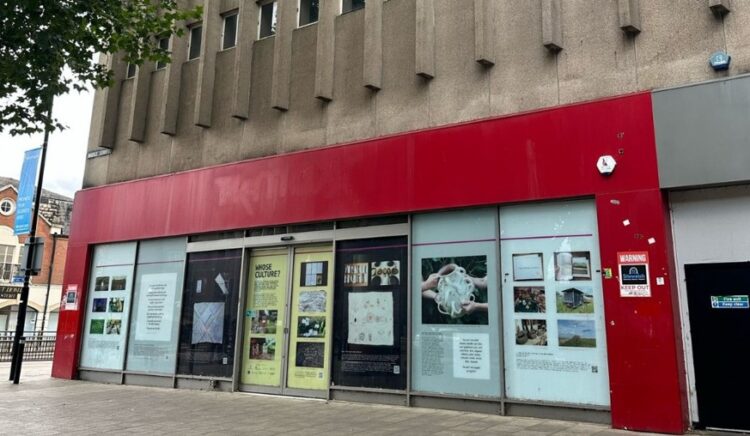
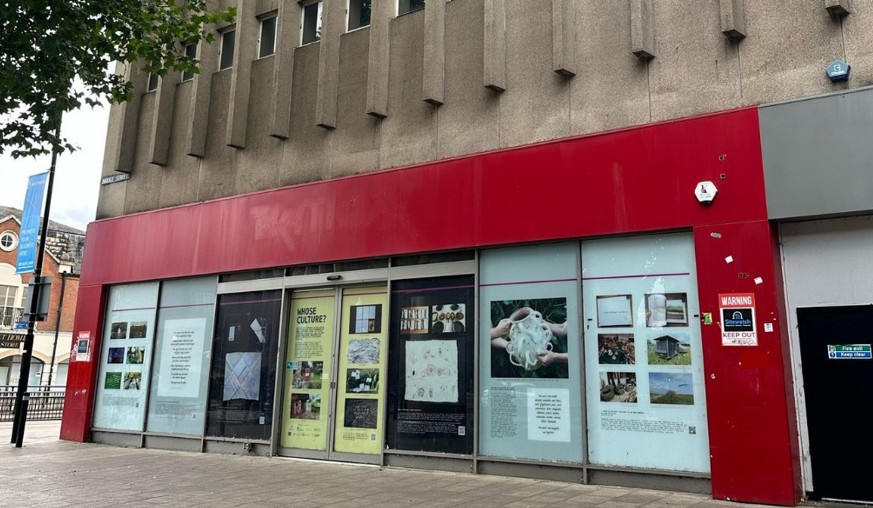
A long-vacant cornerstone building in Peterborough city centre is set to be transformed after March entrepreneur Mike Saxby and his company MJS Investments (March) Ltd were selected as the preferred buyer for the former TJ Maxx store at 62–68 Bridge Street.
The proposal will go before Peterborough City Council’s Cabinet on 16 December, where councillors are expected to approve the disposal of the site following a competitive marketing process that attracted significant interest.
The building, once home to Woolworths, New Look and later TK Maxx, has remained unused since the council purchased it in 2020 under the Government’s Towns Fund programme.
A report to Cabinet confirms that MJS, operating through a special purchase vehicle Bridge Street (March) Limited, submitted the strongest bid after two rounds of offers. Council agents Montagu Evans recommended the sale to MJS on 30 October, highlighting the company’s financial position, track record and proposed redevelopment approach.
In the Cabinet papers, officers state: “Given the level of interest and proximity to offers to one another, there was a second round of bids invited.

“The recommendation… was to proceed with selling to a special purchase vehicle (SPV) of MJS Investments (March) Limited. In arriving at the preferred purchaser, a number of factors were considered including best price, funding, track record, timescales, conditions and proposed use.”
The site occupies one of the most prominent gateway positions in the city centre, sitting at the junction of Bridge Street and Bourges Boulevard.
It amounts to over 90,900 sq ft of internal space across four floors. With its stark brick exterior and years of inactivity, the building has frequently been labelled an eyesore.
Even senior council figures have acknowledged its unattractive state, with Executive Director of Place and Economy Adrian Chapman previously remarking: “At the moment it is difficult to be proud of this site because the building is a slug of a building. I imagine it with something iconic in style and nature and a real gateway into our city centre.”
MJS intends to deliver exactly that. The company is proposing a residential-led mixed-use redevelopment, aligning closely with council aspirations for the site.
The marketing brief produced by Montagu Evans suggested capacity for 55 to 85 homes, subject to planning, and confirmed the building as a strong candidate for a future city-centre living scheme.

The Cabinet report adds: “The purchaser is seeking to redevelop the site as a mixed-use residential-led scheme. This is an unconditional bid… The intended purchaser was able to clearly demonstrate proof of funds in excess of the purchase price.” Due diligence checks also found the company to hold a “very low risk” rating.
For founder Mike Saxby, the acquisition represents another major milestone for a business that began in 1995 with a small team of labourers and one clear mission: to deliver construction with quality, integrity and long-term value.
Today, MJS operates from its purpose-built headquarters at MJS House, Wisbech Road, March, employs more than 100 staff and delivers over £30 million of construction work annually.
MJS has built a strong regional reputation for redevelopment, with recent schemes including the transformation of Guild House on Oundle Road into 138 apartments and major work at Fletton Quays, including the redevelopment of the former Whitworth Mill. The company is also in discussions regarding the former Goods Shed on the same site.
The council originally bought the Bridge Street property for £4.16 million in 2020, intending to convert it into The Vine cultural and community hub. However, spiralling refurbishment costs caused the project to be abandoned, leading councillors to opt for a sale earlier this year.
The council reports: “The refurbishment of the building to develop the Vine project was no longer economically viable.”
Despite the sale price being lower than the 2020 purchase cost, officers say this reflects wider market conditions, with higher interest rates, rising development costs and falling commercial land values all affecting viability.
In their assessment, they stress: “The value of the sale is less than the price paid for the property in 2020 which is not uncommon and reflects market changes… development costs have increased over recent years, [so] land values in some cases have fallen to enable a project to be a viable development.”
Once the sale completes—expected in January 2026 following Cabinet approval—the proceeds will be returned to the Towns Fund and redistributed to other local regeneration projects.
The report notes: “The surplus funds from the sale will be reallocated into other Towns Fund projects… The council is the approved body responsible for managing and approving re-allocation of the Towns Fund.”
As Bridge Street prepares for a fresh chapter, the transformation led by a home-grown Cambridgeshire business is set to play a defining role in the city centre’s regeneration story.