
The Cambridgeshire & Peterborough Combined Authority (CPCA) has unveiled its draft budget for 2026–27, setting out plans for transport, economic growth, and community investment—while warning of tough fiscal realities ahead.
A strategic focus is tackling economic inactivity, labour market challenges, and skills gaps, with the ambition of achieving an 80% employment rate.
Income Under Pressure
The Authority’s finances remain under strain, with much of its income coming from ringfenced government grants, the mayoral precept, and the transport levy.
The core “gainshare” (Government) grant, fixed at £8 million since 2017, has lost significant value due to inflation. As the draft budget notes, “the annual £8m revenue grant first awarded in 2017 now only being worth the equivalent of £5.1m when the impact of inflation is taken into account.”

Treasury management income, once a key source, is forecast to drop sharply from £8.6m in 2025–26 to just £3.8m in 2026–27, and £1.3m by 2029–30. The Authority is lobbying for “greater fiscal levers, such as business rates retention, and fairer funding for the area to align it with the opportunities available to other Mayoral Authorities.”
Investing in Cambridgeshire’s Future
Growth and Innovation
The CPCA’s ten-year Local Growth Plan aims to triple the region’s economy by 2050. £18 million is earmarked for the Local Growth Plan Delivery Fund, which will “be used as leverage to attract private sector investment as well as other finance linked to other national and regional public bodies.”
Innovation is also high on the agenda. The Authority is working with the University of Cambridge, Anglia Ruskin University, and Innovate Cambridge to create a “triple helix Local Innovation Partnership,” including a bid for up to £20 million of Government Innovation funding.
Skills and Employment
The Authority’s Adult Skills Fund provides training to over 10,000 adults each year. The new “Connect to Work” programme, launching in January 2026, aims to help over 4,000 adults with health conditions or disabilities into meaningful employment. “The overarching ambition [is] achieving an 80% employment rate,” the plan states.
Housing and Place
The Strategic Place Partnership with Homes England is working to accelerate housing delivery, with several commissions due to report in March 2026. The Authority is also developing a new Spatial Development Strategy to guide future growth.
Resilience and Environment
£6.7 million in capital and £1.1 million in revenue are set aside for a new Resilience Plan, focusing on “risks to our region’s environment, infrastructure, water management and energy supply.” The Combined Authority is also the accountable body for the Greater South East Net Zero Hub, supporting the drive to net zero emissions.
Transport Transformation: Buses, Tiger Pass, and Free Parking
Bus Franchising: A New Era for Local Services
The Authority is pressing ahead with plans to franchise the region’s bus network, a move that could transform public transport for Cambridgeshire residents. An independent review, led by Leon Daniels OBE, is underway to ensure the right model is adopted.

“The Mayor has initiated an independent review of bus franchising to ensure the development of a sustainable model for franchising in the Region. The review is due to report back to the Board in the new year,” the budget states.
Implementation is now expected from 2027–28, with £50 million in capital ringfenced for bus reform over three years. The Authority says, “Borrowing, if appropriate, would not be undertaken until (and unless) a business case for the depots and network enhancements is approved.”
The financial plan shows initial set-up costs in 2026–27, with major income and expenditure from 2027–28. “While there are delays in expenditure in 2025–26 and 2026–27, the net impact of this on the 2027–28 budget… is a pressure of £1.5m on transport service costs, reflecting that the franchised network was modelled as more efficient than the current de-regulated subsidised network.”
However, the Authority warns: “There remains an element of risk particularly covering such a lengthy time period. The Authority has set aside some reserves to help underwrite this risk but at this stage it is not clear whether these will be sufficient.”
Tiger Pass: £1 Bus Fares for Young People
The Tiger Pass, introduced in 2024, offers £1 single fares for under-25s and has already seen “approximately 60,000 pass applications and over 2.5m journeys.” The draft budget allocates £3 million annually to support the scheme, funded by a £1 million reduction in concessionary fares and £2 million from anticipated multi-year bus grants.
But the Authority cautions: “Tiger Pass usage is a non-statutory demand led service. Increases in costs driven by growth in usage or increased reimbursement rates beyond what has been allowed for would result in a pressure on the Authority’s budgets. As the most recent data for the start of the Autumn Term 2025 has shown a substantial uplift compared to that seen in 2024 this risk is considered high.”
Free Parking: Mayor’s Pledge
The mayoral precept is set to remain at £36 for Band D properties, with £600,000 per year allocated for free parking in parts of the region—a key mayoral manifesto pledge. This is funded by a temporary surplus in treasury income, but the Authority admits, “its long-term sustainability is uncertain.”
Risks and Uncertainties
The Authority faces several risks, including:
- Heavy reliance on time-limited grants and uncertainty over future funding.
- Inflation eroding the value of core grants.
- Demand-led pressures on concessionary fares and Tiger Pass usage.
- Unfunded priorities arising from new national expectations and devolution.
- Risks associated with bus franchising, including cost overruns and grant shortfalls.
- The transfer of Police and Fire Service responsibilities to the Mayor from 2028, with unknown resource implications.
“Should the cost of passenger transport services increase beyond the proposed budget, or the level of funding drop, non-statutory services such as supported bus routes, the Tiger Pass, or non-statutory services beyond passenger transport, would need to be reviewed to balance the pressure,” the report warns.
Have Your Say
A six-week public consultation runs from December 1, 2025, to January 12, 2026, inviting feedback on the draft budget, MTFP, and mayoral precept. The Overview and Scrutiny Committee will review the proposals, focusing on strategic impacts and financial sustainability.
In summary:
The Combined Authority’s draft budget for 2026–27 sets out plans for growth, innovation, transport, and skills, while navigating fiscal constraints and significant risks. The future of bus franchising, Tiger Pass, and free parking will depend on funding, demand, and the outcomes of ongoing reviews.
You can comment on the budget – take part here https://orlo.uk/WW7U7
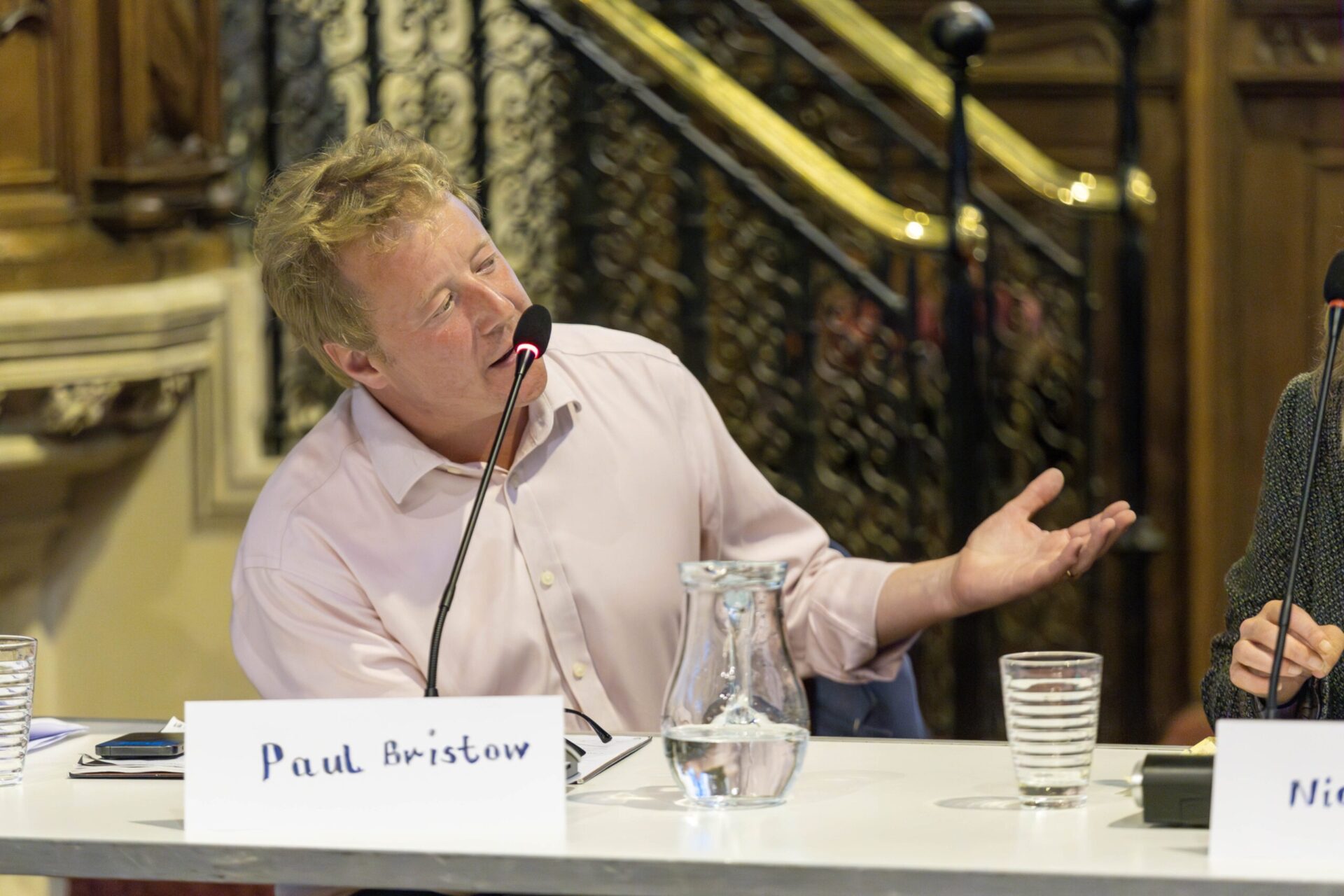
You can also question Mayor Paul Bristow at a public meeting in Peterborough. He has ‘booked’ outgoing Peterborough PCRFM DJ Kev Lawrence to answers questions at St John’s Church, Cathedral Square, Peterborough on Wednesday 14 January
Seats are first come, first served, so register your interest now to secure your spot https://orlo.uk/CpiuC