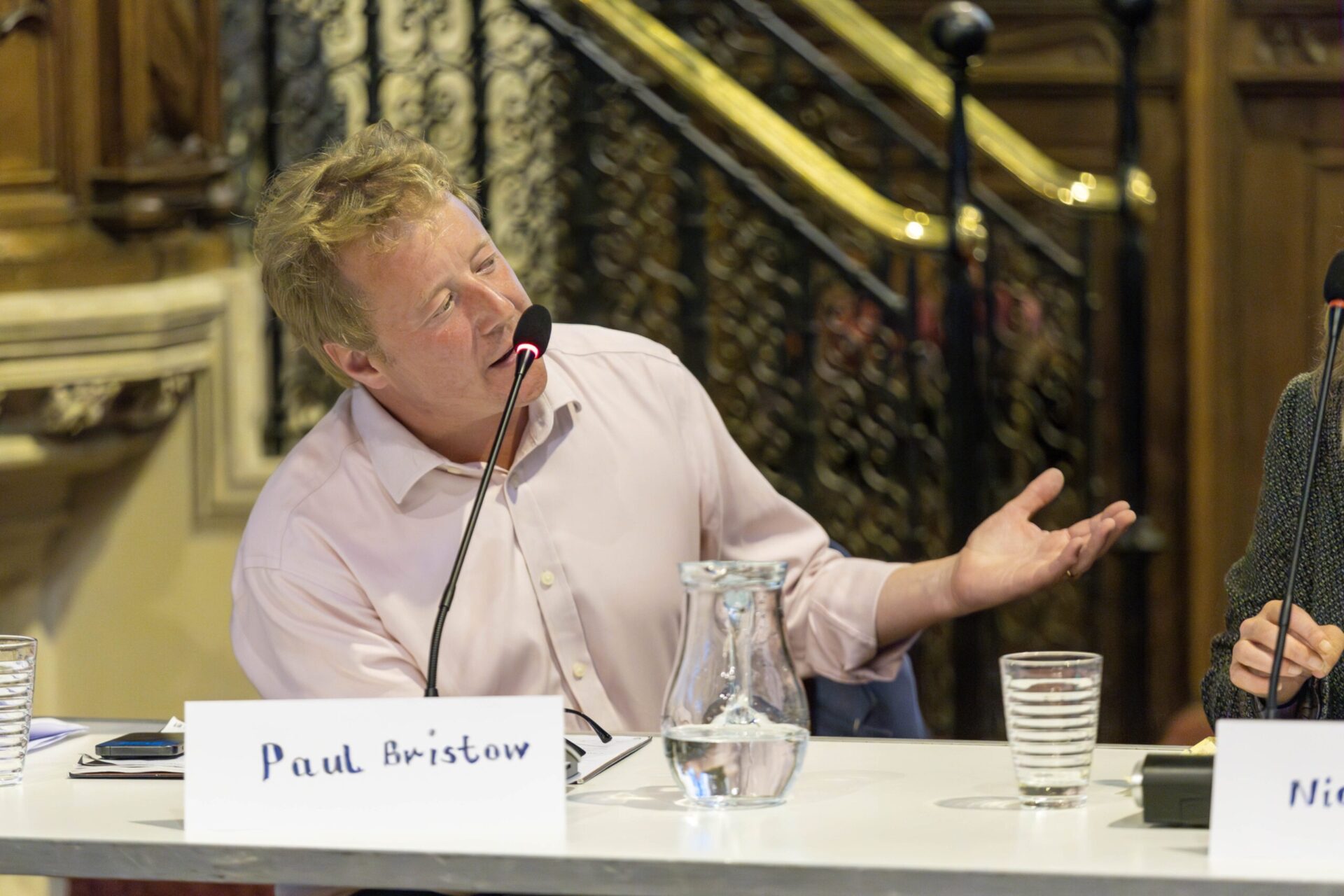


Opposition councillors- led by Cllr Lorna Dupre (above) – say decisions by Tory controlled East Cambs Council undermines the very purpose of the audit committee and risks eroding public trust in how millions of pounds of taxpayers’ money are managed.
Opposition councillors- led by Cllr Lorna Dupre (above) – say decisions by Tory controlled East Cambs Council undermines the very purpose of the audit committee and risks eroding public trust in how millions of pounds of taxpayers’ money are managed.
The dispute centres on the council’s draft Statement of Accounts for 2024/25, which was approved for sign off by the chair of audit and finance director on 20 January without being brought back to the audit committee for further review. The decision was carried by the committee’s three Conservative councillors and sealed by the chair’s casting vote.
Opposition councillors from the Liberal Democrat and Independent group say the move undermines the very purpose of the audit committee and risks eroding public trust in how millions of pounds of taxpayers’ money are managed.
Errors, contradictions and unanswered questions

During the audit committee meeting, members were presented with a draft set of accounts containing what were described as multiple significant errors and inconsistencies.
One entry involving the apparent movement of millions of pounds from the cash balances was directly contradicted by the explanatory note beneath it. The explanatory note says there was a movement into cash, which is not what the figures above the explanation show, but in any case the auditors have said this was because cash and cash equivalent sums had been misclassified.
Another showed expenditure on employees rising sharply from £9 million to £25 million in a single year — a £16 million increase that officers present at the meeting were unable to explain. The finance director has since told opposition councillors that this increase is pension fund contributions—but the opposition councillors say they are still seeking an explanation of how or why this has happened “and we are yet to be convinced of the accuracy of the figures”.
Opposition members argued that such anomalies demanded further collective scrutiny before the accounts were signed off and submitted to Ernst & Young (EY), the council’s external auditors.
Instead, the committee voted to delegate authority to correct and submit the accounts solely to the chair of the audit committee and the council’s finance director, bypassing any further meeting of the committee as a whole.
Opposition: “Deeply concerning”
Cllr Lorna Dupré, Leader of the Lib Dem & Independent Group, said she had proposed a further audit committee meeting specifically to review a revised and corrected version of the accounts.
“Because of the number and seriousness of the errors and unexplained figures in the draft accounts, I proposed that the audit committee should meet again to examine a revised version before it is finalised,” she said.
“This proposal was supported by the committee’s independent lay member, who regrettably has no vote.”
Cllr Dupré said the decision to block further scrutiny cut to the heart of the committee’s role.
She said: “The purpose of the audit committee is to scrutinise the council’s finances impartially and in the public interest. The decision by Conservative members, and ultimately the chair’s casting vote, to prevent further scrutiny puts party politics ahead of transparency, accountability, and confidence in the accuracy of the council’s accounts. That is deeply concerning.”
Tight deadlines, high stakes
Under national regulations, the council’s accounts must be signed off by external auditors by the statutory backstop date of 27 February. Conservative members argued that delegating authority would avoid further delays and help meet that deadline.
But critics say speed has been prioritised over accuracy, at a time when the council’s financial reporting is already under intense scrutiny.
Those concerns appear to be reinforced by the findings of EY’s annual audit report for 2024/25, which paints a stark picture of weaknesses in East Cambridgeshire’s financial governance and reporting processes.
Auditors: “Significant internal inconsistencies”
In unusually blunt language, EY criticised the quality of the council’s draft accounts and the supporting evidence provided during the audit.
“The first version of the draft financial statements published by the Council had significant internal inconsistencies, typographical and arithmetic errors, that should have been identified through internal quality review prior to publication,” the auditors stated.
EY also highlighted serious problems with the timeliness and quality of information supplied by the council’s finance team.
“Working papers and requested evidence were not provided in line with the agreed timetable and were generally not to the expected standard,” the report said.

According to EY, this caused “significant slippage to the agreed project plan and inefficient use of the planned audit resources,” leaving auditors unable to conclude key areas of the audit.
Disclaimed of opinion
EY added a disclaimer of opinion on the council’s 2024/25 accounts — effectively stating that they could not provide assurance on their accuracy. At the moment a disclaimer of opinion on council accounts is not unusual—many councils have had their accounts disclaimed in recent years because past government changes to the audit system have basically broken it.
“In the case of East Cambridgeshire, of course, what is unusual is the double disclaimer on the grounds of failure by the council to be able to provide evidence and accurate working papers (see throughout the audit report),” said Cllr Dupre.
The auditors said: “We do not express an opinion on the accompanying financial statements of the council. Because of the significance of the matter described… we have not been able to obtain sufficient appropriate audit evidence to provide a basis for an audit opinion.”
The report makes clear that this is not an isolated issue. Ongoing problems from previous years, delays in receiving audit evidence and the inability to complete work before the statutory backstop date all contributed to the decision.
Millions of pounds in misstatements
EY identified a series of material errors in the accounts, involving sums running into the tens of millions of pounds. The notable error is the cash and cash equivalent issue, but the issue of the pension fund liability is still unexplained rather than a confirmed error.
Among the most significant was a £16.185 million audit difference relating to the valuation of the council’s pension liability, caused by incorrect treatment of the asset ceiling and only corrected after updated information was provided during the audit.
The auditors also found that the council had incorrectly classified £17 million of investments as cash equivalents and identified errors in year-end cash reconciliation that were known but not corrected in the general ledger.
Group accounting errors were also flagged, including balance sheet figures that did not agree with the council’s own records, leading to misstatements across pension assets, property, plant and equipment, and capital grants.
In addition, EY said it was unable to gain assurance over the council’s implementation of IFRS 16 lease accounting, after being provided with working papers that fell short of the required standard.
Value for money: a “significant weakness”
Beyond the accuracy of the accounts themselves, EY raised red flags about the council’s overall financial reporting arrangements.
In its value for money assessment, the auditors identified a “significant weakness” and concluded that the risk represented a serious flaw in the council’s underlying governance.
While the council met the deadline for publishing its draft statements, EY said this had come at the expense of quality, with basic errors and inconsistencies slipping through internal checks.
Warnings for the future
The audit report also contains a sobering warning about the years ahead. EY said the council is already behind expected improvement timescales and indicated that the 2025/26 accounts are also likely to receive a disclaimed opinion, due to unresolved gaps in assurance over opening balances and comparators.
Although most councils will be in that position, opposition councillors claim that in the case of East Cambridgeshire the delays, inaccuracies and poor quality of working papers supplied to the auditors is making it worse.
Although the auditors stopped short of issuing statutory recommendations this year, they made clear that patience is wearing thin.
“If we are not satisfied with the pace and substance of improvements… we would be minded to issue Statutory Recommendations,” the report warned, citing the “recurring inability to prepare robust financial statements and support the audit process”.
Confidence on the line
For opposition councillors, the combination of a damning audit report and the decision to curtail audit committee scrutiny raises fundamental questions about transparency and accountability at East Cambridgeshire District Council.
With local government reorganisation only two years away, the pressure on ‘handing over’ an exemplary set of accounts to a new unitary authority of which East Cambs will be part has never been greater.