

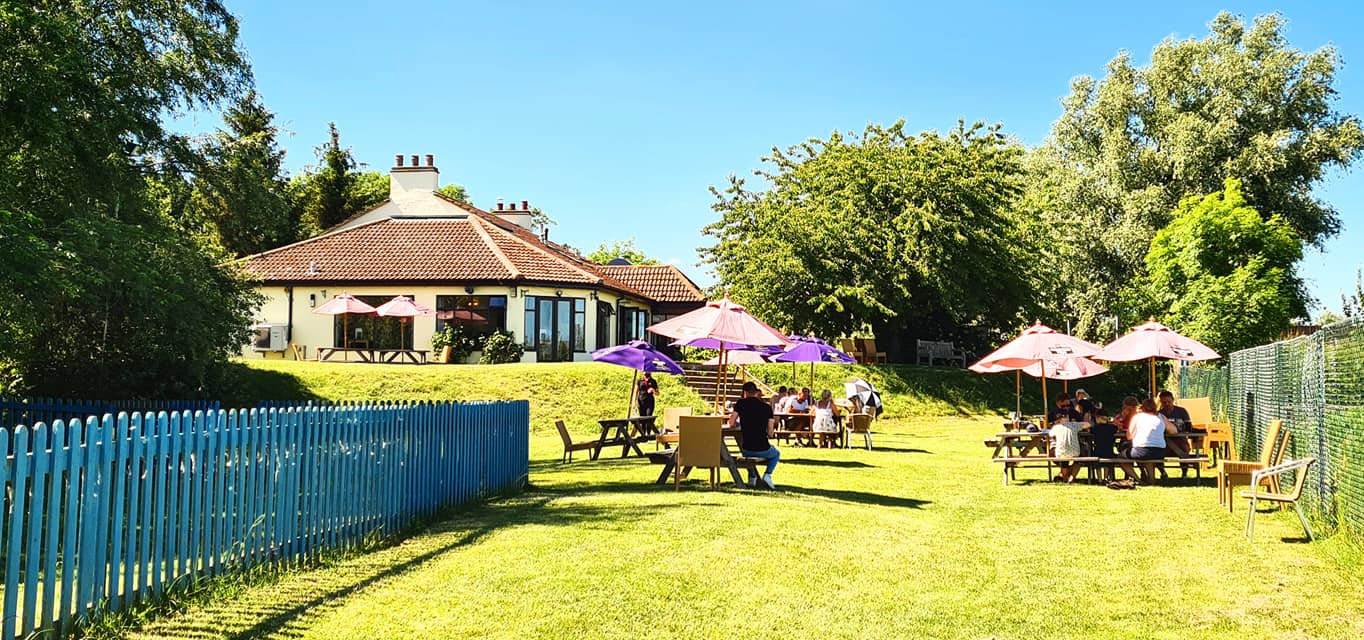
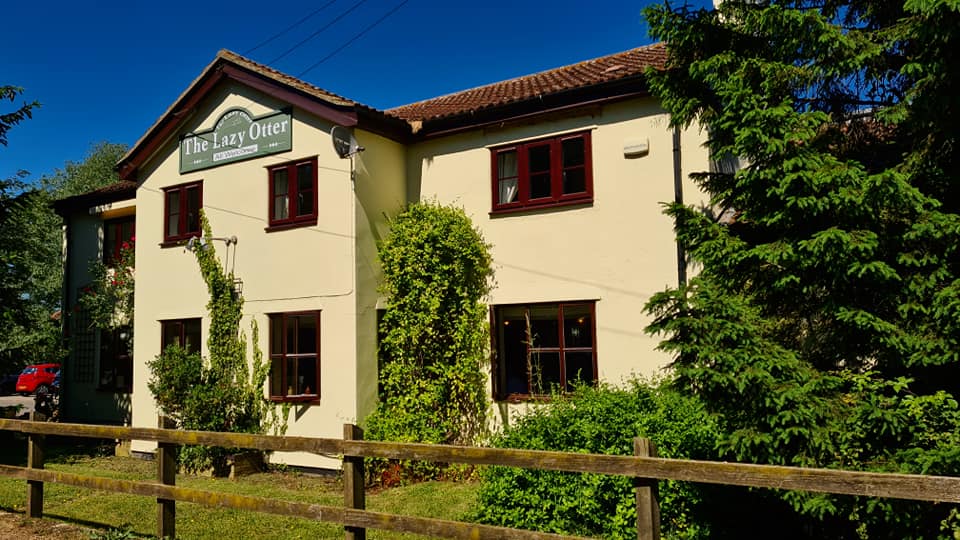
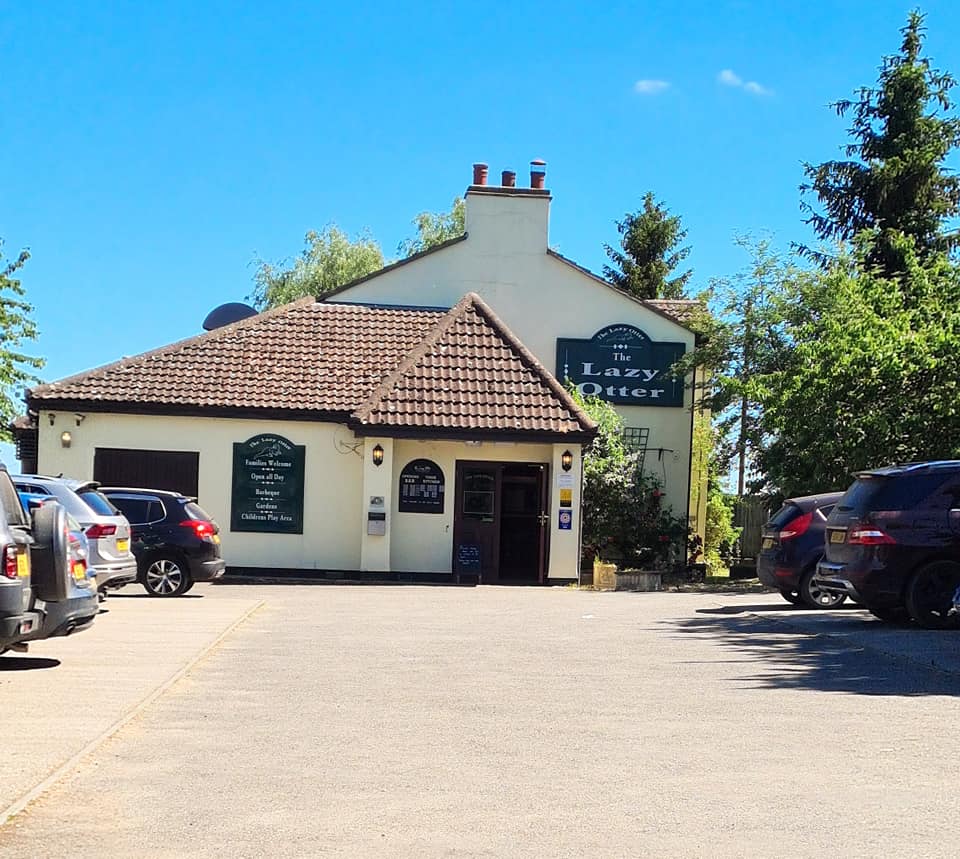
East Cambridgeshire District Council has refused a planning application to change the use of the Lazy Otter, a riverside public house near Stretham, into a mixed community venue and guest house, citing the unjustified loss of a valued community facility and failure to demonstrate local need for the proposed uses.
The application, submitted by Miss Rita Walsh, sought permission to conver part of the ground floor into a function room and letting out four first-floor bedrooms as guest accommodation.
Council’s Decision: Loss of Community Facility
The Council’s refusal states that the application failed to demonstrate that the Lazy Otter was neither viable nor likely to become viable as a public house.
Insufficient evidence was provided to show that the proposed community use would offer equivalent or better facilities or greater benefits to the local area.

The Council also found that the premises had not been adequately marketed for community purposes.
Additionally, the application’s proposal to introduce a guest house use was found to lack a clear localised need for such a town centre use in an out-of-town location.
Planning History: Repeated Applications, Appeals, and Enforcement
The officer’s report details a complex planning history for the Lazy Otter site, marked by multiple applications, refusals, appeals, and enforcement action.
As the report notes: “There have been three applications for a change of use of the pub since 2022.
“The first application was for a ‘Change of use of Public House (Sui Generis (formerly A4)) to Dwelling House (C3)’… and was refused by the LPA on the grounds that it would result in the loss of a community facility (the pub) and had failed to demonstrate that the facility was neither viable nor likely to become viable for its current community use or an alternative community use as required by Policy COM3 of the Local Plan.”
Following this refusal, the Council issued an Enforcement Notice against unauthorised residential use. The refusal and the enforcement notice were both appealed, but the Planning Inspectorate dismissed the appeals and upheld the enforcement notice (with amended wording), requiring the owner to cease the unauthorised residential use by August 2024.
A second application for “change of use from A4 (sui generis) to C3 accommodation – retrospective” was declined under provisions of the Town and Country Planning Act, as it was similar to a recently refused appeal and would have involved granting permission for a breach already subject to enforcement.
A third application for “change of use from A4 (sui generis) to C1 accommodation including minor external alterations” was also refused, with the subsequent appeal dismissed. The officer’s report summarises: “The refusal of planning permission was appealed, and the Planning Inspectorate subsequently dismissed the appeal.”
The current application, therefore, follows a series of unsuccessful attempts to change the use of the site, with the officer noting:
“Repeated applications and appeals are to ‘frustrate enforcement action’ against unauthorised current use as dwellinghouse.”
Officer’s Report: “Insufficient Information” and Community Response

The officer’s report provides extensive background on the site and the planning history. The Lazy Otter, currently closed, is located near the River Great Ouse and has previously operated as a destination pub with guest accommodation.
Consultations on the latest application drew 29 objections and 8 supportive comments.
Objectors, including local groups and associations, argued that the proposal would result in the loss of a unique riverside pub, harm tourism, and undermine social cohesion.
Supporters contended that the proposal would retain a community use and provide much-needed guest accommodation, noting challenges faced by the pub sector and the lack of local alternatives.
Policy Analysis and Planning Balance
The officer’s report details the relevant planning policies, including the Local Plan’s locational strategy, policies on community facilities, and national guidance.
While the proposal broadly aligned with policies supporting the reuse of buildings in the countryside, it failed to meet the criteria for loss of a community facility.
Quoting directly, the officer wrote: “Insufficient information has been provided to adequately demonstrate that the proposed F2 and C1 use would meet a local need or be viable, given which the proposal fails to comply with the requirements of Local Plan Policies COM1 and COM3.”
The report also highlighted that both the proposed community and guest house uses could feasibly be incorporated into the lawful public house use, supporting diversification without losing the community asset:
“It is considered that both of the proposed F2 and C1 uses could feasibly be incorporated into the lawful sui generis public house use, providing diversification and flexibility to support the retention of the existing community facility.”
The officer further noted: “The current application does not provide any evidence of further marketing at a realistic and appropriate sales price agreed with the Council, as the Appeal Inspector indicated would be required… nor has further evidence been submitted to demonstrate that the premises could not be viably operated as a public house. The first criterion of Policy COM3 has not, therefore, been fulfilled.”
Wider Impacts and Next Steps
The Council’s decision reflects significant weight given to the protection of community facilities and the need for robust evidence when proposing alternative uses.
The refusal means the Lazy Otter cannot proceed with the proposed changes, and the enforcement notice remains in effect. The future of the site will depend on compliance with planning regulations and any further applications that address the Council’s concerns.
As the officer concluded: “The proposed development fails to comply with Local Plan Policies COM1 and COM3, providing no evidence of a local need for the proposed tourism and community facilities in this location and failing to justify the loss of the existing community facility through a demonstration of either lack of viability or that it would be replaced with an equivalent or better community facility or one that would bring demonstrably greater benefits to the local area.”
Lazy Otter planning bid refused: officer’s report ‘Insufficient information… to demonstrate that the public house use is not viable’