
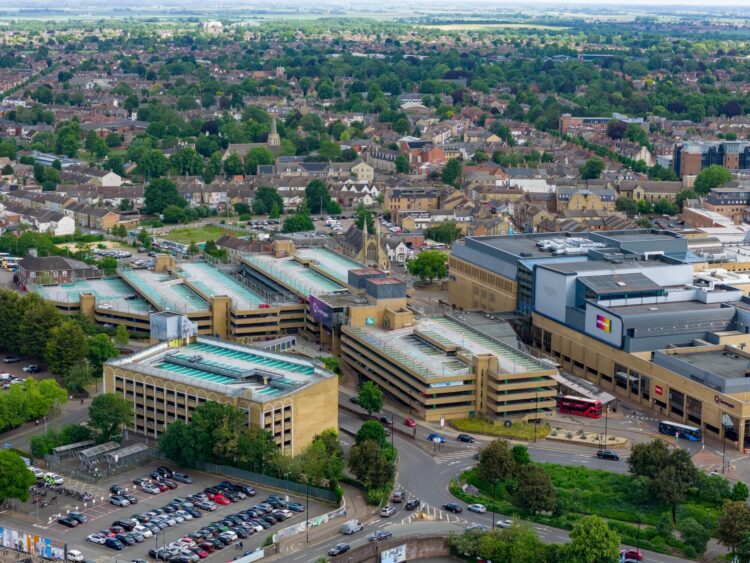
As the mayoral race for Cambridgeshire and Peterborough heated up, few pledges captured public attention like winning Conservative candidate Paul Bristow’s vow to deliver free parking in Peterborough and Huntingdonshire. The promise, outlined in his “Get Moving” manifesto, was pitched as a bold solution to revive struggling high streets, support local businesses, and make life easier for residents.
But is free parking the economic lifeline our towns need, or a costly gamble that could backfire? This article explores the arguments on both sides, drawing on local experience, national case studies, and the latest research.
The case for free parking: Boosting business and footfall
‘Bring back free parking’ – Bristow’s vision
At the heart of Paul Bristow’s campaign was a simple message: make it easier and cheaper for people to visit local centres. In his own words: “Our local centres need footfall to stay alive. Some have free parking, like Ely, thanks to East Cambridgeshire District Council. However, most market towns have expensive charges.

“For Peterborough and places like Huntingdon and St Neots, the cost of parking means customers lost to retail parks and online competition.
“We need to back our local shops. I will offer funding to these councils and work with them to deliver free parking, whether that’s for particular sites, particular days or across the board”.
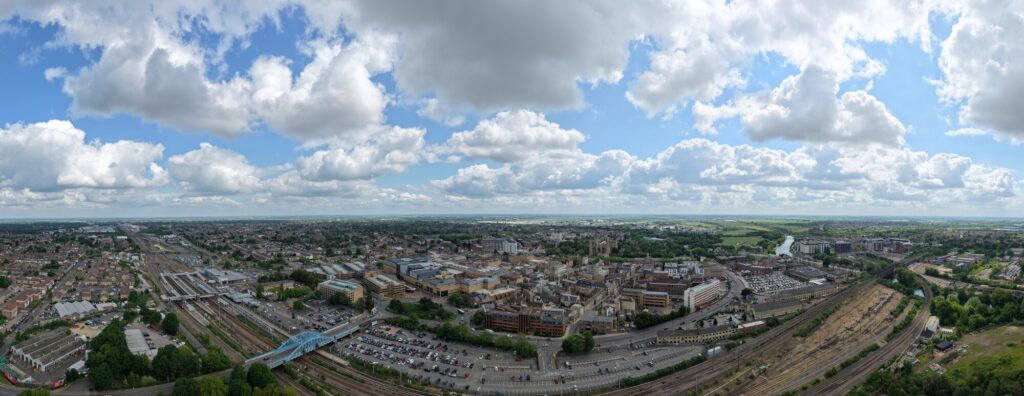
Expensive parking, he argues, is a barrier to trade, and free parking will help level the playing field for high street shops struggling against larger competitors.
Economic impact: What the evidence shows
The logic is straightforward: if parking is free, more people will come into town, spend money, and support local businesses. This is not just theory—there are real-world examples to back it up.
Ely (East Cambridgeshire):
Ely is often cited as a successful example of a market town with free parking, which has helped maintain high street vitality and attract shoppers from surrounding areas.
Bedford:
Bedford Borough Council introduced a four-hour free parking scheme in its Allhallows and Lurke Street multi-storey car parks to support local businesses and increase town centre footfall. The scheme was popular and credited with boosting visits and positive feedback from traders.
However, due to financial pressures, the council suspended the scheme in November 2025, though two hours of free parking at Queen Street and free parking on Sundays remain available. This highlights both the benefits and the sustainability challenges of such schemes.
Business and resident support:
Surveys in Peterborough have shown widespread support for free parking among both businesses and residents, who see it as a way to counteract the “threat to city and town centre vitality” posed by out-of-town competition.
“Businesses and residents tell me time and again that the Peterborough City Centre and St Neots Town Centre need plans to encourage people to visit. But we hear precious little from our councils. I am fed up of waiting, so I am going to do something about it,” said Bristow.
Levelling the playing field
Retail parks and supermarkets often offer free parking, giving them a significant advantage over town centres. By removing parking charges, councils can help local shops compete more effectively, especially as online shopping continues to grow.
Supporting hospitality and events
Cafés, restaurants, and pubs benefit from increased visitor numbers, especially during off-peak times. Free parking can also make it easier to host events, markets, and festivals that draw people into town.
The challenges and risks: Counting the cost
Loss of revenue for councils
Parking fees generate significant income for local councils, which is often used to fund essential services such as road maintenance, public transport subsidies, and community projects. Removing or reducing parking charges could create a budget shortfall, forcing councils to find alternative funding sources or cut services.
For example, Peterborough City Council generated over £5 million in profit from parking fees between 2022 and 2025. Offsetting this lost revenue requires careful budgeting and as seen in Bedford, councils must balance the benefits of free parking with the need to fund essential services.
Bristow’s plan addresses this having secured approval for a £1.5 million budget to fund a two-year free parking trial in city and town centres, including Peterborough and Huntingdonshire, starting in the 2026/27 financial year. He also pledged not to increase the mayoral precept, keeping it at £36 for a Band D property.
Increased traffic and congestion
Free parking may encourage more people to drive into city and town centres, potentially leading to higher traffic volumes, congestion, and increased air pollution—especially during peak times. This could undermine efforts to promote sustainable transport and active travel options.

Limited parking availability
With no cost barrier, parking spaces may fill up quickly, making it harder for shoppers and visitors to find available spots. Employees or commuters might occupy spaces intended for short-term shoppers, reducing turnover and the intended benefit for local businesses.
Impact on environmental goals
Encouraging more car journeys could conflict with local and national climate targets, as well as policies aimed at reducing emissions and promoting greener travel alternatives.
Financial sustainability
The long-term viability of free parking schemes depends on careful financial planning. If the scheme is not properly funded or if economic benefits do not offset lost revenue, councils may be forced to reintroduce charges or scale back the scheme.
Equity concerns
Free parking primarily benefits those who own and use cars, potentially disadvantaging residents who rely on public transport, cycling, or walking.
Enforcement and abuse
Without charges, there may be increased risk of abuse, such as overstaying time limits or misuse by non-shoppers, requiring additional enforcement resources.
Lessons from other towns: UK and international examples
Huddersfield, Warwick, Southampton, Torquay:
Research and parking guides list Huddersfield (11 streets), Warwick (10 streets), Southampton, and Torquay (9 streets) as UK towns and cities with significant free parking options, especially close to their centres.
Other UK Examples:
Whitstable, Leamington Spa, Loughborough, Reading, Ipswich, Colchester, Falmouth, Truro, Salisbury, Weston-Super-Mare, York, Harrogate, Wakefield, Whitby, Southport, Manchester (Park & Ride), Birmingham (Park & Ride), Cambridge (Park & Ride): These towns and cities offer various forms of free parking, including on-street, off-street, and park & ride schemes, often with time restrictions or limited to weekends.
International and small town case studies:
- Ecorse, Michigan (USA): Eliminated parking minimums in 2021, making it easier for businesses to occupy buildings and for the town to adapt to economic changes.
- Bandera, Texas (USA): Scrapped parking minimums and adopted parking maximums, allowing for more flexible use of space, and supporting the town’s unique character.
- Branson, Missouri (USA): Removed parking minimums and introduced parking maximums to prevent overbuilding and support tourism.
The local perspective: What’s next for Peterborough and Huntingdonshire?
Residents and businesses in Peterborough and Huntingdonshire could see free parking schemes rolled out within months, transforming the way people shop, travel, and spend time in their local centres.
His manifesto was filled with practical commitments, from fixing roads and opposing congestion charges to supporting local shops and improving public safety. But free parking was the headline-grabber.
Direct quotes from the manifesto
- “I will offer funding to these councils and work with them to deliver free parking, whether that’s for particular sites, particular days or across the board.”
- “Peterborough City Council has already said it would be willing to work with me to design a scheme.”
- “Combined with a zero-tolerance approach to anti-social behaviour, free parking would be massive step forward.”
Conclusion: Striking the right balance
Free parking is a powerful promise, and for many residents and businesses, it represents hope for a brighter, busier future. But it is not without risks. The challenge for local leaders is to strike the right balance—delivering the economic benefits of free parking while managing the financial, environmental, and operational challenges it brings.
One thing is clear: the future of our high streets and market towns depends on bold ideas, careful planning, and a willingness to adapt.
Whether free parking is the answer remains to be seen, but it is a conversation that Cambridgeshire cannot afford to ignore.
For more details on Paul Bristow’s manifesto and the full range of promises, visit the official campaign website or read the “Get Moving” manifesto here:
https://www.paulbristow.org.uk/sites/www.paulbristow.org.uk/files/2025-04/Get%20Moving.pdf