
For 19-year-old Lewis (name changed for privacy), a Saturday night drive ended in tragedy. A moment’s distraction, a split-second misjudgement, and a family lost a son. Stories like Lewis’s are becoming all too common in Cambridgeshire, where young drivers and motorcyclists are disproportionately involved in fatal collisions, according to the 2026 Road Safety Partnership update.
The report, compiled by Road Safety Manager Simon Burgin, paints a stark picture: while overall serious injuries are falling, young drivers — often inexperienced, sometimes reckless — remain at the heart of deadly crashes.
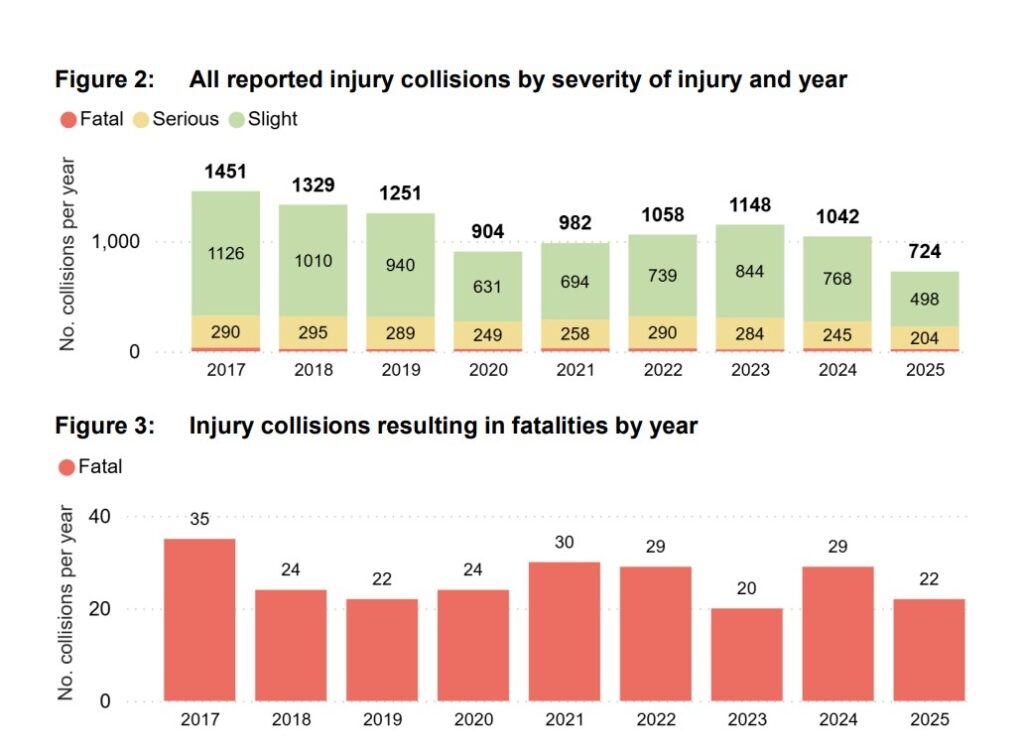
31 fatalities in 2024: who’s at risk?
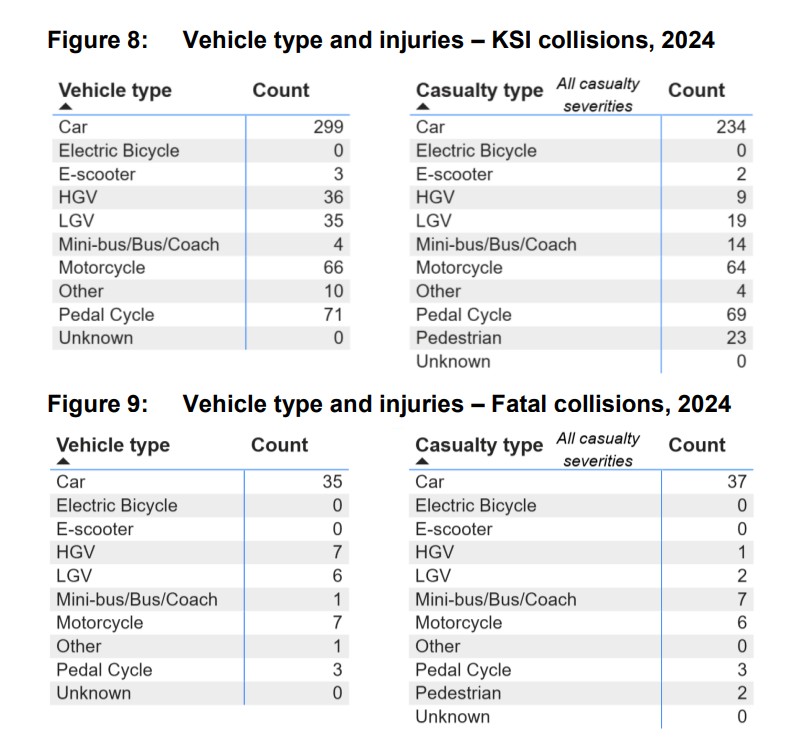
In 2024 alone, Cambridgeshire recorded:
- 274 KSI (killed or serious injury) collisions
- 524 vehicles involved
- 438 casualties
- 31 fatalities
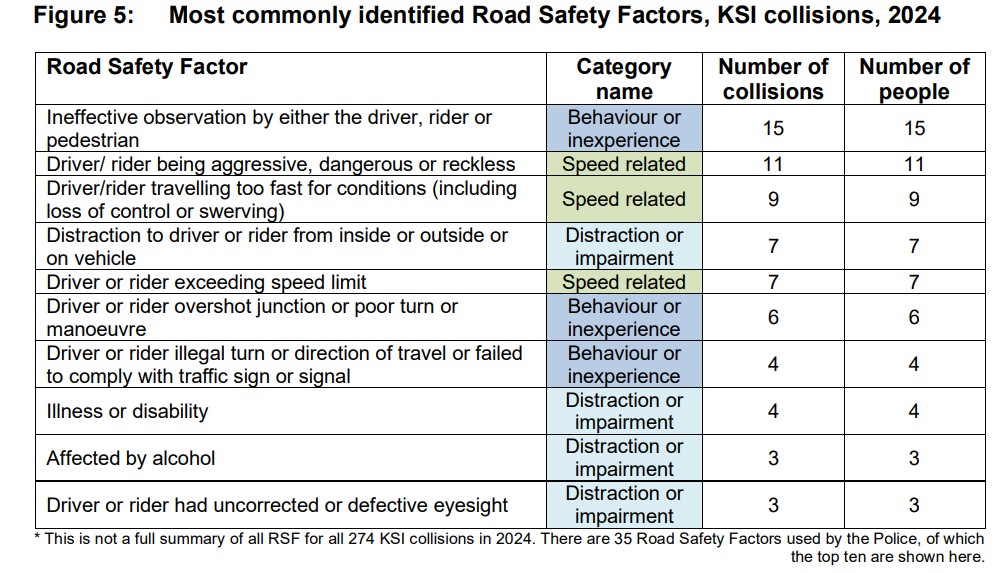
Young people under 25 were heavily represented, particularly in collisions involving cars and motorcycles. The so-called “Fatal Five” behaviours — distraction, excessive speed, alcohol or drug use, mobile phone use, and failure to wear seatbelts — continue to dominate.

Almost half of KSI collisions occur away from junctions, often on 50mph or 60mph roads. Dual carriageways with 70mph limits are statistically safer, likely due to traffic separation and road design.
Motorcyclists: a deadly risk
Motorcycles account for some of the most tragic and preventable deaths.
“At the time of writing (December 2025) the number of motorcyclists killed in collisions in 2025 is nine,” says Burgin. “This has surpassed the number of motorcyclists killed in collisions in all of 2024, which was six.
“All but one of these collisions have involved risk taking behaviour, including being unlicenced or unqualified to ride, excess alcohol/drugs and excessive speed. There is a lack of enforcement deterrent for motorcyclists across the county
Young riders are particularly vulnerable. Many are new to the road, often on high-powered bikes, and lacking experience to judge speed or hazards. These fatal crashes often involve collisions with cars — usually due to visibility issues, misjudged overtakes, or inexperience.
Car collisions: young drivers at the wheel
Data shows young drivers continue to crash more often than other age groups. Key factors include:
- Poor observation and distraction
- Speeding in inappropriate conditions
- Risk-taking behaviour at night or on rural roads
- Failure to anticipate motorcyclists or cyclists
A single high-speed collision can involve multiple vehicles, increasing casualties and severity. For example, on the A1307 between Swavesey and Bar Hill, confusion over road layout and overtaking hazards prompted a redesign, including lane reconfiguration and clearer signage, aimed at preventing young drivers from misjudging overtaking opportunities.
Pedestrians and cyclists: collateral damage
Young drivers and motorcyclists are not only at risk themselves — they pose a danger to others. Between 2022 and 2024:

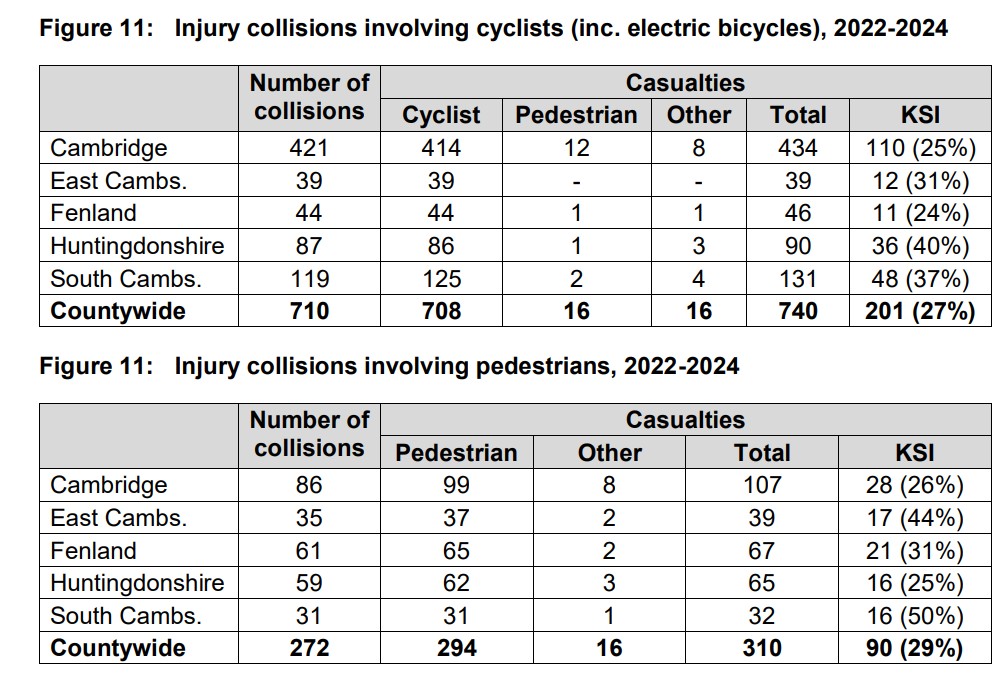
- Over 90% of pedal cyclist casualties occurred in collisions with motor vehicles
- 85% of pedestrian casualties involved vehicles
Education: starting before they drive
Cambridgeshire is addressing the problem through education, aiming to instil safe habits early:
- Junior and Youth Travel Ambassadors
- Safer Routes to School programmes
- Bikeability training
Organisations like First Car use social media campaigns to reach young drivers directly, promoting peer-driven messages about the dangers of speeding, alcohol, and distraction.
“Introducing the youngest road users to ‘safety first’ can influence their behaviour for life,” Burgin says.
Speed limits and enforcement: slowing the fatal trend
Engineering and enforcement measures are targeting high-risk behaviours:
- 20mph zones: Evidence shows reductions in casualties of up to 34% (Transport for London)
- A47 speed limit cut to 50mph, enforced with average speed cameras, aims to prevent high-speed crashes, particularly affecting young drivers and motorcyclists
- Expansion considered for A10, A141, and A142
Cluster site analysis identifies hotspots of repeated young driver collisions, enabling targeted interventions like junction redesigns, lane improvements, and enhanced signage.
Fatal review boards: learning from tragedy
Every fatal collision triggers a multi-agency review:
- Police, road safety officers, and highway teams assess the scene
- Immediate remediation or redesign is implemented
- Lessons inform county-wide strategies for high-risk young drivers
The human cost: beyond the numbers
Every statistic represents a family, a future cut short, or a young life changed forever. Cambridgeshire’s 2026 update makes clear: young drivers and motorcyclists need targeted action, from education and enforcement to engineering solutions.
Simon Burgin concludes: “It remains imperative that we support their safety culture as they transition, become more independent and become our transport users of the future.”
Vision Zero — zero deaths, zero life-changing injuries — remains the goal. But unless young people are educated, monitored, and protected, tragic collisions will continue to make headlines.