
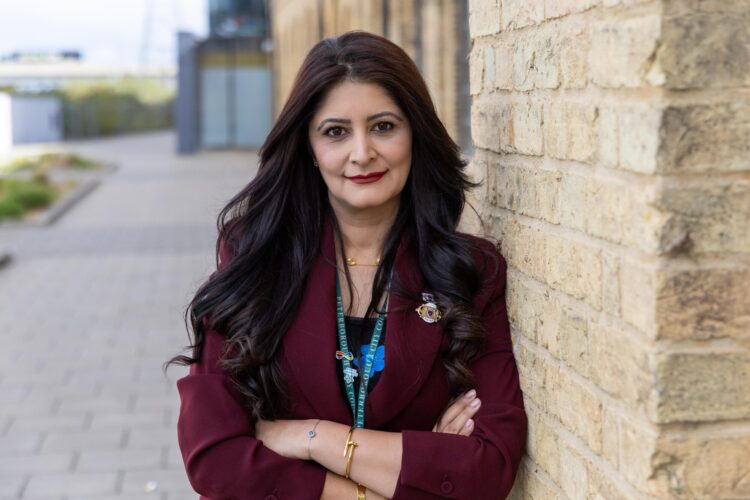
The 2026/27 budget for Peterborough City Council has been formally approved following a decisive debate at Full Council, with 39 councillors voting in favour, one against and 12 abstentions.
Council Leader Shabina Asad Qayyum described the financial plan as “the most secure and stable budget in decades” and said it marks a turning point for the authority after years of financial strain.
“Every councillor who voted in favour of tonight’s budget should look back and feel proud of supporting honesty and transparency,” she said after the vote. “This is how the future of Peterborough and its council should look. One of stability and strong foundations.”
She claimed the previous Conservative administration “had run our council down through racking up £100m of cost by cutting services to essential lifeline support and wanted you to pay for care”.
She added: “They bruised this city – we are healing it.”

A balanced budget – for the third year running
The newly approved budget underpins the council’s Medium-Term Financial Strategy (MTFS) through to 2028/29. It comes against what the authority itself describes as a challenging financial backdrop marked by high borrowing, low reserves and rising demand for statutory services.
Despite that, councillors were told the authority has now balanced its budget for three consecutive years.
“Our budget has been balanced for THREE years, not one,” said Cllr Asad Qayyum, who described Peterborough as now being run by a ‘coalition of common purpose’.
She added: “This is an administration that hasn’t just promised stability – we have delivered on it too.”
The council’s Section 25 Robustness Statement concludes that the budget estimates are “broadly realistic and deliverable, although not without risk.” Even so, reserves remain fragile. A February 2026 report warns: “Even if approved, reserves will remain insufficient for an authority facing such inherent risks and substantial net expenditure.”
https://twitter.com/docshab/status/2026811598665400351
Borrowing currently stands at around £500 million, with annual debt servicing costs approaching £40 million.
£346 million capital programme: regeneration and growth
Alongside day-to-day revenue spending, the council has set out an ambitious £346 million four-year capital programme.
Key projects include:
- Regeneration at Station Quarter
- A new leisure centre and swimming pool
- School expansions at Great Haddon
- Investment in special educational needs and disabilities (SEND) facilities
- Towns Fund-backed projects
Cllr Asad Qayyum said that abstaining from the budget effectively meant withholding support from these investments.
“This can also be interpreted as not supporting our capital programme which also sees our Station Quarter, swimming pool and more school and SEND places for our children,” she said.
Abstentions and criticism
All members of the Conservative Group abstained from the budget vote, with one Conservative councillor voting against. The Reform councillor also abstained, which Cllr Asad Qayyum acknowledged was his first Full Council meeting.
“Everyone else, cross party, across the chamber supported this budget,” she said. “The Tories kicked the can down the road and politically postured to the detriment of our residents. So, we acted.”
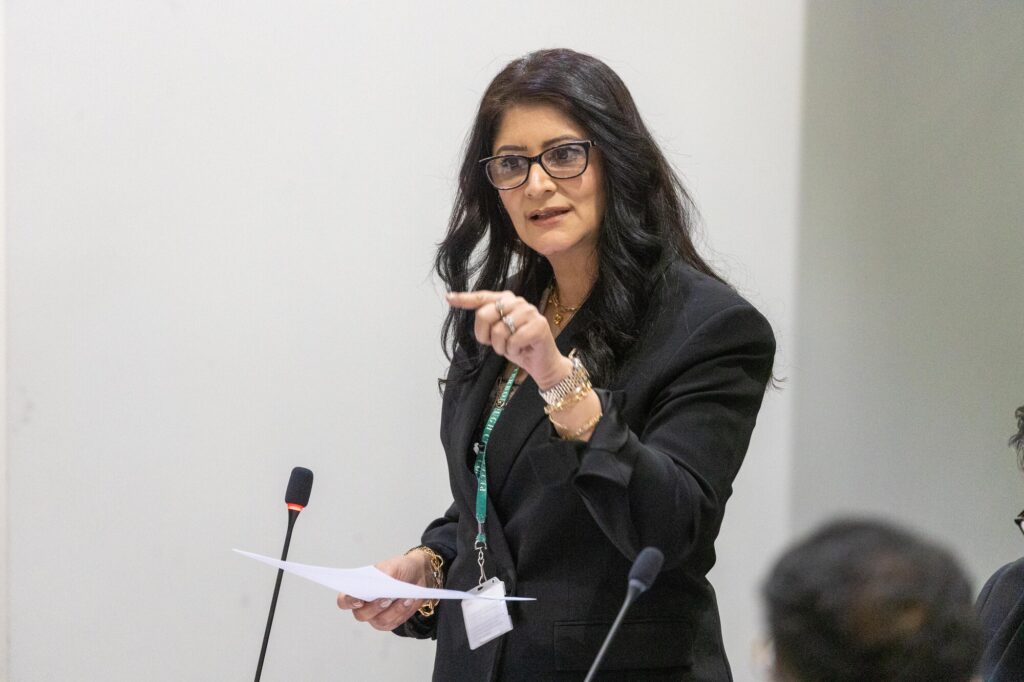
She was critical of what she described as “election delay rhetoric” and said the previous administration had left the council in an extremely difficult position.
“Their incompetence had left us on the verge of bankruptcy in 2021, and Peterborough residents have faced the consequences. We bailed them out by coming to the table back then.”
“They haven’t attended a single financial sustainability group meeting. Memories serve them short. They don’t care about this city.”
Liberal Democrats back ‘sensible and honest’ plan
Support for the budget was not confined to Labour members. Liberal Democrat group leader Christian Hogg urged Full Council to back what he described as a sensible and honest financial plan.
He praised council officers, including the statutory s151 officer, for producing a budget that balances not only in-year but across the medium term.
“A first indeed since I have been a councillor is a budget that not only balances for the coming year but also for the medium term going forward,” he said.
Cllr Hogg also highlighted the role of the three-party coalition in providing stability, noting that despite predictions from “naysayers,” the administration had stayed intact and delivered.

He said the change in direction had been enabled by the Government’s new fairer funding formula and positive engagement from local MPs.
“This is what stability looks like”
After the vote, Cllr Asad Qayyum posted on social media alongside Finance Lead Mohammed Jamil, thanking him for steering the council “through some tricky waters.”
“I’d like to thank Mohammed Jamil who has steered this ship through some tricky waters. And of course, my coalition members who gave their all to bring out the best in this budget so that services aren’t cut or compromised.”
She framed the budget as proof that cross-party working can deliver results.
“Our Labour-led coalition has been a success,” she said. “Don’t take my word for it – read the reports and see for yourself.”
“This is how the future of Peterborough and its council should look,” said the Leader. “One of stability and strong foundations.”
The debt debate: myth busting and context
One of the most contentious issues in recent years has been the council’s debt levels. In September last year, the authority published a “Myth busting – Council debt levels” article to explain how borrowing had reached £527 million as of March 2025.
Cllr Asad Qayyum referenced this during her speech, arguing that headline figures often lack context.
The council acknowledges the figure sounds high. Interest and principal repayments currently total £38 million annually, paid from the revenue budget.
However, it says there are “good reasons” for the increase over the past decade.
Since 2012, debt balances have risen from £143 million to £527 million, coinciding with reduced resources and surging demand – particularly for school places.
Borrowing since 2012 includes:
- £120 million to build and extend schools, on top of £218 million in Government grants (total school investment of £338 million)
- £100 million for new roads and upgrades, including parkway bridges and LED street lighting
- £76 million to design and build the Energy from Waste Plant at Fengate, which generates income and reduces landfill charges
- £53 million to purchase Sand Martin House, where borrowing costs are lower than previous rent payments
The council has delivered £1.1 billion in capital investment since 2012, funded through £577 million of borrowing, £497 million in grants and contributions, and £59 million from leases, capital receipts and loan repayments.
Our Ask the Cabinet podcast this month features Peterborough City Council leader Cllr Shabina Qayyum, and Cabinet Member for Housing and Regulatory Services and Liberal Democrat group leader Cllr Christian Hogg.
They discuss the city’s Visioning Project; our City of Culture Bid…
— Peterborough City Council (@PeterboroughCC) February 24, 2026
New borrowing is now tightly restricted. In 2024/25, just £3 million was borrowed to fund the capital programme. On average, historic debt is being reduced by around £20 million each year.
“It is a priority for the council to seek to manage and, when possible, reduce this figure with any new borrowing being heavily scrutinised,” the September release stated.
FOOTNOTE: Budget approval will see Council Tax rise by 4.99 per cent but includes 2.00 per cent ring fenced for adult social care services.
BACKGROUND
In December the Government provided long-awaited relief and greater certainty for Peterborough City Council’s finances, with a significant uplift in its budget expected over the coming years.
The council’s Core Spending Power – the total funding available for local services, including Government grants as well as income from Council Tax and Business Rates – will increase by £76 million by 2028/29 compared with 2025/26. This represents a 31 per cent rise in the authority’s spending power and is expected to strengthen its ability to protect frontline services and invest in priority areas for residents.
The boost follows the Government’s announcement of its Fairer Funding settlement, which changes the funding formulas used to allocate money to councils across England and Wales. The revised approach is designed to channel more support towards areas experiencing higher levels of deprivation and increased demand for services, a longstanding concern for Peterborough.
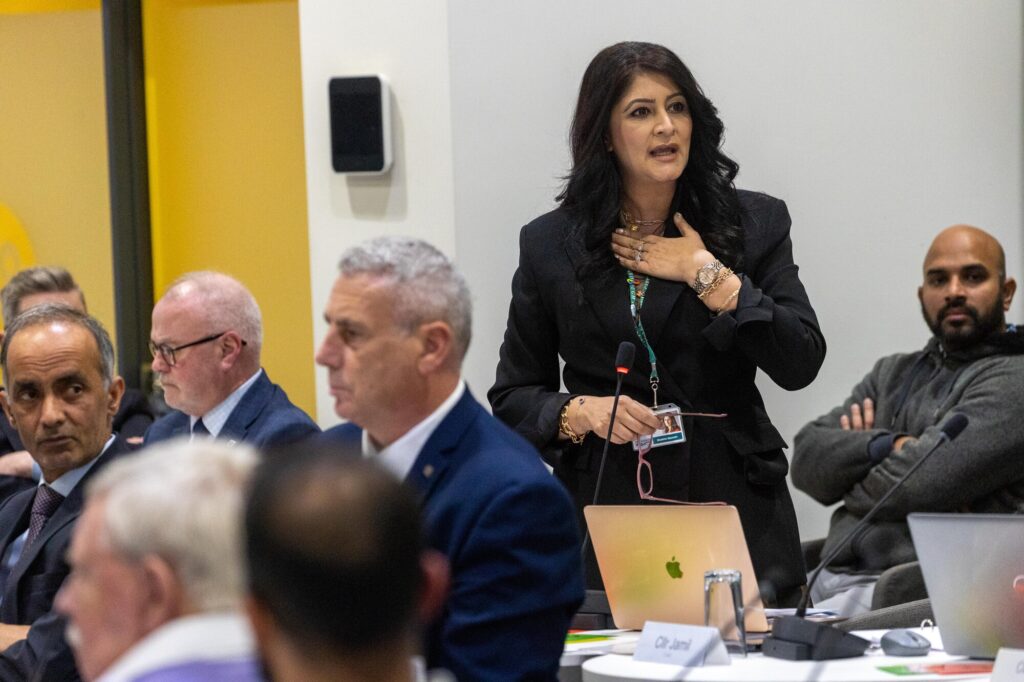
Councillor Shabina Qayyum, leader of Peterborough City Council, welcomed the announcement, describing it as a “hugely important moment” for the city.
“This is the most exciting Christmas present we could ever have hoped for,” she said. “I would like to thank our MPs for their support in banging the drum loudly for fairer funding for local authorities. For years we have called for further funding to help us pay for the increased demand on our services compared to other areas – we have finally been listened to.”
She added that while the council has worked hard to stabilise its finances after years of budget pressures and cuts, fair funding had always been essential to securing Peterborough’s long-term future.
“This settlement gives us the certainty we need to plan ahead – with our funding increasing over the next three years – helping us to protect vital services, improve our financial health and invest in the things that matter most to residents,” she said.
The agreement marks the first multi-year settlement for councils in a decade, aiming to simplify dozens of funding streams and provide greater financial stability to local authorities.