
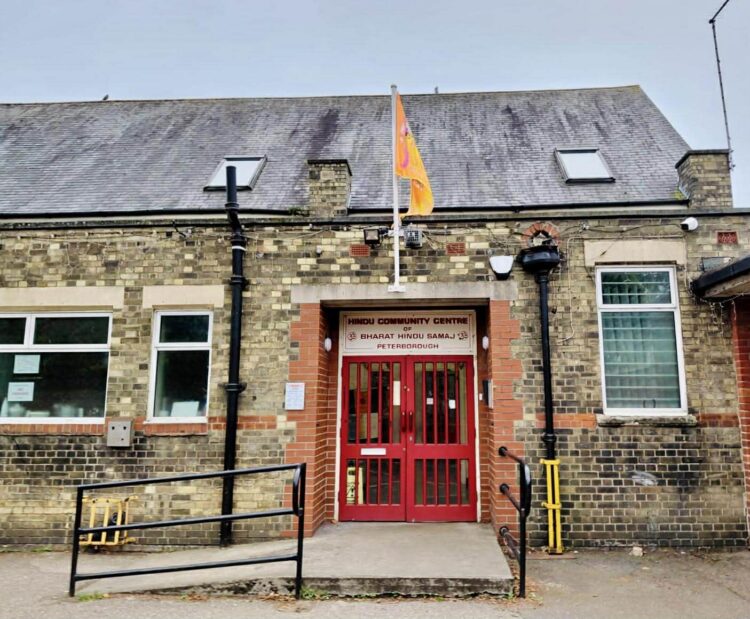
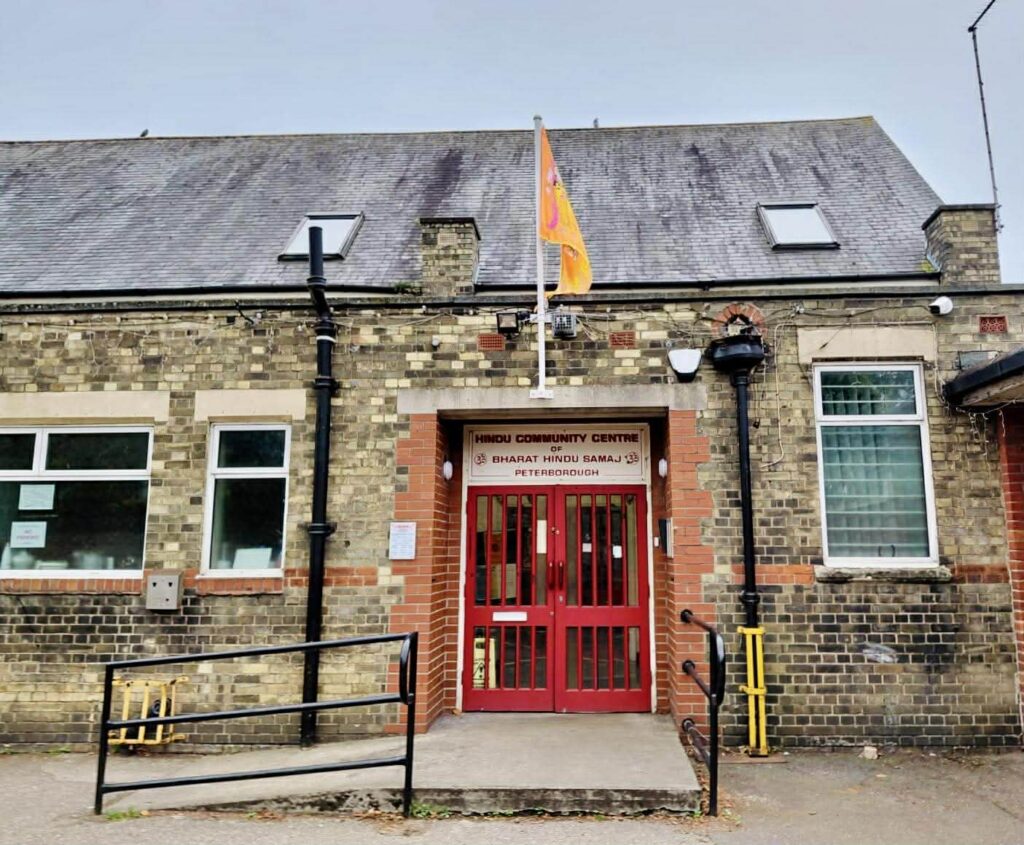
A High Court judge has dramatically intervened to halt the proposed sale of a Peterborough community complex at the centre of a bitter dispute. In an urgent order handed down on Thursday (27 February), the Administrative Court of the King’s Bench Division issued a prohibitory injunction preventing Peterborough City Council from taking any “irreversible step” toward disposing of the New England Complex — home to the Bharat Hindu Samaj Temple for nearly four decades.
The ruling, made by Mr Justice Fordham, freezes the situation while the court considers a full judicial review challenge brought by the temple’s governing body.
For thousands of worshippers who feared imminent displacement, the decision represents a temporary reprieve — and a recognition, at least at this early stage, that their case raises serious legal questions.
Judge criticises lack of transparency
In unusually direct reasoning accompanying the order, the judge suggested the council’s own handling of communications had contributed to the emergency intervention.

“The defendant appears to have brought this situation on itself,” Mr Justice Fordham wrote.
He noted the council had received correspondence and acknowledged concerns but had provided no substantive response or transparency regarding the practical position of the sale.
Ordinarily, the court would hesitate to grant interim relief having heard only one side, the judge said. However, he concluded the risk that the legal challenge could be undermined by undisclosed actions justified immediate intervention.
“This is a holding order,” he stated, adding that there was a “strong prima facie case” and that the balance of convenience favoured protecting the property until the court could properly assess the dispute.
The injunction carries serious legal force. Any breach could lead to contempt of court proceedings.
A community facing loss
The New England Complex has housed the Bharat Hindu Samaj Temple since 1986 and serves an estimated 14,000 people across Peterborough and neighbouring counties including Cambridgeshire, Norfolk, Lincolnshire and Leicestershire.
Two weeks ago, worshippers told the BBC they were “heartbroken” after learning their second bid to purchase the site had failed.
The council’s cabinet voted to sell the property to an undisclosed bidder as part of efforts to balance its budget, despite the temple offering £1.3 million following years of fundraising.
Ekta Patel, the temple’s vice-president, said at the time the community had “left no stones unturned and knocked on all doors to save it”.
“It’s a very emotional time for us,” she said. “Many of our congregation are in their pension age and worked hard to keep this running all these years.”
Trustee Gauri Chaudhary described the potential sale as far more than a property transaction, warning it risked displacing a cultural and spiritual centre built entirely through community effort.
Temple leaders said elderly worshippers in particular faced losing a “crucial lifeline”, while the wider Hindu community could be left without a functional spiritual home within travelling distance.
Cabinet decision rooted in financial pressures
At the heart of the dispute lies a detailed cabinet report approved on 10 February authorising disposal of the council’s freehold interest in the complex.
The report followed scrutiny intervention after councillors determined earlier decision-making lacked sufficient information.
Cabinet was asked to reconsider the sale with additional material, including:
- full scoring methodology for bidders,
- evaluation weightings,
- a comprehensive Equality Impact Assessment, and
- assurances regarding existing tenants.
However, the report made clear from the outset that the process would not reopen bidding or alter outcomes.
“This report does not invite new bids, re-score existing bids, or amend the evaluation outcome,” it stated.
How the temple lost the bid
The council used a weighted evaluation system balancing financial return against community benefit.
Bids were assessed using:
- 70% weighting — financial consideration and deliverability
- 30% weighting — social value and community benefit
Officials argued the heavier financial weighting reflected risk management rather than policy preference.
The council cited funding certainty, transaction risk, and delays to receiving capital receipts as decisive considerations.
Sensitivity testing showed that alternative scoring models narrowed margins between bidders but did not change rankings — meaning the preferred bidder remained ahead of the temple’s proposal.

An independent valuation concluded the sale represented the “best consideration reasonably obtainable,” a legal requirement under local government law.
Equality concerns acknowledged — but limited
Perhaps most contentious was the Equality Impact Assessment.
The council acknowledged one tenant provided a faith-based facility with “limited comparable alternatives locally,” meaning relocation could disproportionately affect people with protected characteristics.
Yet the report emphasised equality considerations did not influence scoring.
Instead, risks were addressed through tenancy protections and post-sale governance arrangements.
Cabinet ultimately judged the remaining equality and community cohesion risk to be “low to medium and reasonable in the circumstances,” concluding impacts were more about perception than discrimination.
For temple supporters, this distinction became a focal point of anger — and now appears central to the judicial review challenge.
Legal battle now underway
The High Court’s order does not decide who is right. Instead, it preserves the status quo while judges examine whether the council’s decision was lawful.
Under directions issued alongside the injunction:
- The council and interested parties must file evidence by 4pm on 3 March.
- The temple must respond by 4pm on 4 March.
- A judge will reconsider whether to maintain the injunction after 5 March.
The judicial review will examine whether the council acted lawfully, fairly and proportionately when approving the disposal.
Crucially, Mr Justice Fordham stressed he had not yet assessed all legal arguments — only that one ground appeared strong enough to justify urgent protection.
Council response and position
When the cabinet decision was announced earlier this month, Mohammed Jamil, cabinet member for finance and corporate governance, acknowledged community concerns.
“We fully understand the concerns of the Hindu community and will continue to work with them and the building’s other tenants to support anyone affected by this decision,” he said.
The council also emphasised the building was being sold with tenants in place, not vacant possession, and that existing lease rights would continue under statutory protections.
Officials argue the complex is a non-operational asset in deteriorating condition requiring significant investment, and that selling it removes maintenance liabilities while generating funds for priority public services.
More than a property dispute
Temple leaders argue decades of voluntary effort, cultural education, and spiritual support cannot easily be reduced to weighted scoring models.
A fragile moment of hope
By freezing the sale, the judge has ensured that no irreversible action can take place before the lawfulness of the decision is tested openly.
The coming days will determine whether the injunction remains in force and whether the judicial review proceeds to a full hearing.
In reality the court has not saved the temple. It has not overturned the council’s decision.
But it has stopped the clock.
That pause — however temporary — has become a small but meaningful glimmer of hope.
- A petition to ‘Stop the unethical sale of Peterborough’s only Hindu temple’ is here:
UPDATE: A council spokesperson said: “We are aware of the legal action being pursued in relation to the sale of the New England Complex and will now engage in the legal process. Separately, Council Officers continue to liaise with all affected parties in this matter.”