

More than 2,300 children across Cambridgeshire are waiting for autism or ADHD assessments, with over a thousand stuck on lists for more than a year and some families enduring waits of up to three years, according to new figures presented to county councillors.
A hard‑hitting report laid before Cambridgeshire County Council’s Health Scrutiny Committee reveals a local system buckling under rising demand, workforce shortages and spiralling caseload complexity—leaving parents in limbo and children waiting through critical years of development.
Health leaders conceded that despite pilot projects and emergency funding, demand for autism assessments in Cambridgeshire has grown faster than the NHS’s ability to deliver them.
“Demand for and complexity of neurodevelopmental assessments has increased faster than diagnostic capacity, resulting in longer waiting times nationally and locally,” the report states.
Primary‑school children bearing the brunt

Autism assessments for younger children are carried out by Cambridgeshire Community Services NHS Trust (CCS), which has seen referrals surge since the pandemic.
Before Covid, the service received fewer than 100 referrals a month. Since early 2022, that number has jumped to more than 135 per month, with unpredictable peaks that make staffing and clinic planning increasingly difficult.
As of March 2026, CCS reported:
- 2,385 Cambridgeshire children waiting for their first neurodevelopmental assessment
- 1,007 children waiting between one and two years
- 130 children waiting between two and three years
The report confirms that while children under five are generally assessed more quickly, the pressure is now overwhelmingly concentrated among primary‑school‑aged children.
For families, that means children can spend most—or all—of their early school years without clarity or formal recognition of their needs.
Teenagers facing year‑long waits
Older children and teenagers are assessed by Cambridgeshire and Peterborough NHS Foundation Trust (CPFT) through specialist CAMHS neurodevelopmental teams.
Waiting times here also remain lengthy and uneven across the county. Children in South Cambridgeshire, Cambridge City and East Cambridgeshire have waited over 50 weeks at peak points, while those in Fenland and Huntingdonshire typically wait just over 40 weeks, though the report notes significant fluctuations during 2025.
One of the key pressures is increasing complexity.
“Many children and young people referred present with co‑occurring needs, such as ADHD or learning disabilities, which require more detailed multidisciplinary assessments and therefore longer clinical input,” the report explains.
Workforce stretched across too many roles
CCS warned councillors that community paediatricians—the clinicians carrying out many autism assessments—are also responsible for a wide range of statutory work, including:
- Supporting children with learning disabilities
- Providing medical care to special schools
- Safeguarding and child protection work
- Audiology and developmental clinics
Balancing these responsibilities limits how quickly autism assessments can be delivered.
The report acknowledges the real‑world impact on families:
“It can be difficult to provide families with precise timelines for when their child’s assessment will take place, which can understandably add to uncertainty while waiting.”
Families turning private as waits grow
Faced with mounting delays, increasing numbers of Cambridgeshire families are seeking assessments through the Right to Choose route or paying privately—something health leaders warned risks creating inequality.
“Local referral figures may not fully reflect overall demand, as an increasing number of families are seeking assessments through Right to Choose or private routes,” the report notes.
For families without the means to go private, the wait continues.
Support was offered; however, diagnosis continued to function as a gatekeeping mechanism.
Health leaders stressed that under the Children and Families Act, children should receive help based on need, not diagnosis, through schools, CAMHS, the YOUnited hub and community services.
But the report accepts that many parents feel a formal diagnosis remains a gateway to real support.
“A key challenge for local systems is the tension between a needs‑led framework and the experience of many families that diagnosis is required before support can be accessed,” it states.
Emergency action for longest waits
In response to the growing backlog, the NHS in Cambridgeshire has introduced a series of short‑term measures.
At CCS, a temporary multidisciplinary team has been redeployed to focus solely on children who have waited the longest aiming to assess 200 children who have already been waiting more than 104 weeks.

CPFT has:
- Introduced weekend autism clinics
- Commissioned an external provider to complete around 300 additional autism assessments
These measures are funded through short‑term NHS England investment.
CAMHS overhaul underway
Alongside emergency fixes, CPFT is undertaking a large‑scale CAMHS Transformation Programme to redesign pathways and reduce waiting lists.
The programme aims to:
- Streamline autism and ADHD pathways
- Improve productivity and workforce flexibility
- Reduce inequalities between areas of Cambridgeshire
The report says the goal is clearer services and better access—but it is still very much a work in progress.
Major rethink planned across Cambridgeshire
From April, responsibility for strategic commissioning moved to the new Central East Integrated Care Board, which plans a whole‑system redesign of neurodevelopmental services.
Proposals include:
- A single front door for referrals
- Shared triage across services
- Closer work with schools and early‑help teams
- Local, coordinated assessment models
These will be evaluated and co‑designed with families before wider rollout.
A problem that won’t disappear
Despite pilot projects, extra clinics and restructuring plans, the report concludes with a blunt assessment:
“The challenges of increased awareness, demand for diagnosis and strained resources remain a system and national challenge.”
For Cambridgeshire parents watching the clock tick on childhoods, that message will land heavily.
The NHS says improvements are coming—but the figures laid before councillors make clear that for many families, the wait is far from over.
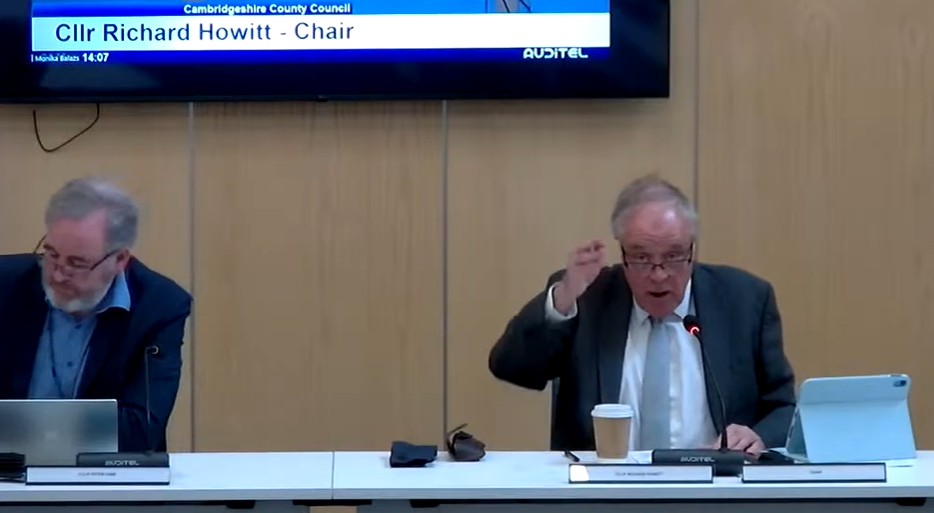
The Cambridgeshire County Council Health Scrutiny Committee meeting on 24 March 2026.
The committee examined growing pressures on children’s autism and ADHD services, with senior NHS leaders acknowledging long waits, rising demand and system-wide constraints.
Opening the session, Pam Green, Director for Neighbourhood Health, Place and Partnerships at the Integrated Care Board (ICB)—the body responsible for planning and commissioning NHS services locally—set out the wider context.
She warned that the organisation is undergoing a major restructure, including a 50% workforce reduction and the merger of three ICBs into a new Central East system. While this has slowed some responses to scrutiny, she insisted that improving children’s health and neurodiversity services remains a central priority.
Kathryn Goose, Head of Children and Young People’s Mental Health at the ICB, who oversees strategic planning for these services, outlined the scale of demand. Autism and ADHD were considered together due to overlapping needs and pathways.
She explained that referrals have risen sharply both nationally and locally, significantly outstripping capacity. Waiting times remain long and fluctuate during the year, often linked to school referral patterns.
Although short-term national funding has been used to ease pressure, Goose made clear that longer-term solutions are still needed. She also highlighted ongoing workforce shortages, particularly among community paediatricians who carry out many assessments.
From a service delivery perspective, John Peberdy, Director for Children and Young People’s Health Services at Cambridgeshire Community Services (CCS) NHS Trust, which provides assessments for younger children, described waiting times as “unhelpful and disappointing” but driven by demand.
He pointed to early support initiatives, including community workshops designed to help families while they wait. He also noted that very young children with the most complex needs are prioritised and often assessed more quickly. However, he cautioned that diagnosis alone does not guarantee improved outcomes, with some children continuing to face challenges such as poor school attendance.
Caroline Simmons, Operations Director for the Children and Families Directorate at Cambridgeshire and Peterborough NHS Foundation Trust (CPFT), which delivers services for older children through mental health teams, highlighted increasing complexity among referrals.
Many young people present with co-occurring mental health conditions, meaning services must triage based on need rather than diagnosis alone. She also noted changing patterns in referrals, including a higher proportion of girls being identified in adolescence, and increasing awareness of links between neurodiversity and gender identity.
Councillors raised concerns about the sharp rise in referrals, the impact of proposed SEND reforms, and the lack of a clear long-term plan to reduce waiting lists. Officers agreed that new approaches are required, including greater use of multidisciplinary teams—such as occupational therapists, speech and language therapists and nurses—to reduce reliance on paediatricians.
A key issue discussed was access to support without a formal diagnosis. While the legal framework requires support to be based on need, not diagnosis, officials acknowledged that many families feel they must “fight” to secure help. Concerns were also raised about inconsistencies in how diagnoses obtained through the Right to Choose pathway are recognised, with the ICB working to introduce clearer quality assurance processes.
Looking ahead, leaders said the new, larger ICB offers an opportunity to redesign services by streamlining referral pathways, strengthening early intervention and improving coordination with schools.
However, they were clear that without addressing workforce shortages and capacity limits, progress in reducing waiting times is likely to remain slow.