
Nearly six years after Peterborough City Council paid out £57,000 for specialist perimeter fencing at Werrington Sports Field, the metal panels and gates remain stacked in storage, unused and unseen by the public they were meant to serve.
The delay has become more than a logistical inconvenience. It now raises a deeper, unresolved question at the heart of council decision-making: why was a procurement contract awarded, approved and paid for when final planning permission had not been granted?
A Freedom of Information investigation by CambsNews has revealed that the council moved ahead with procurement in 2020 despite knowing that a key planning condition — the agreement governing community access to the sports field — had not been resolved.
That agreement was not a minor technicality. It was central to whether the fencing could ever lawfully be installed.
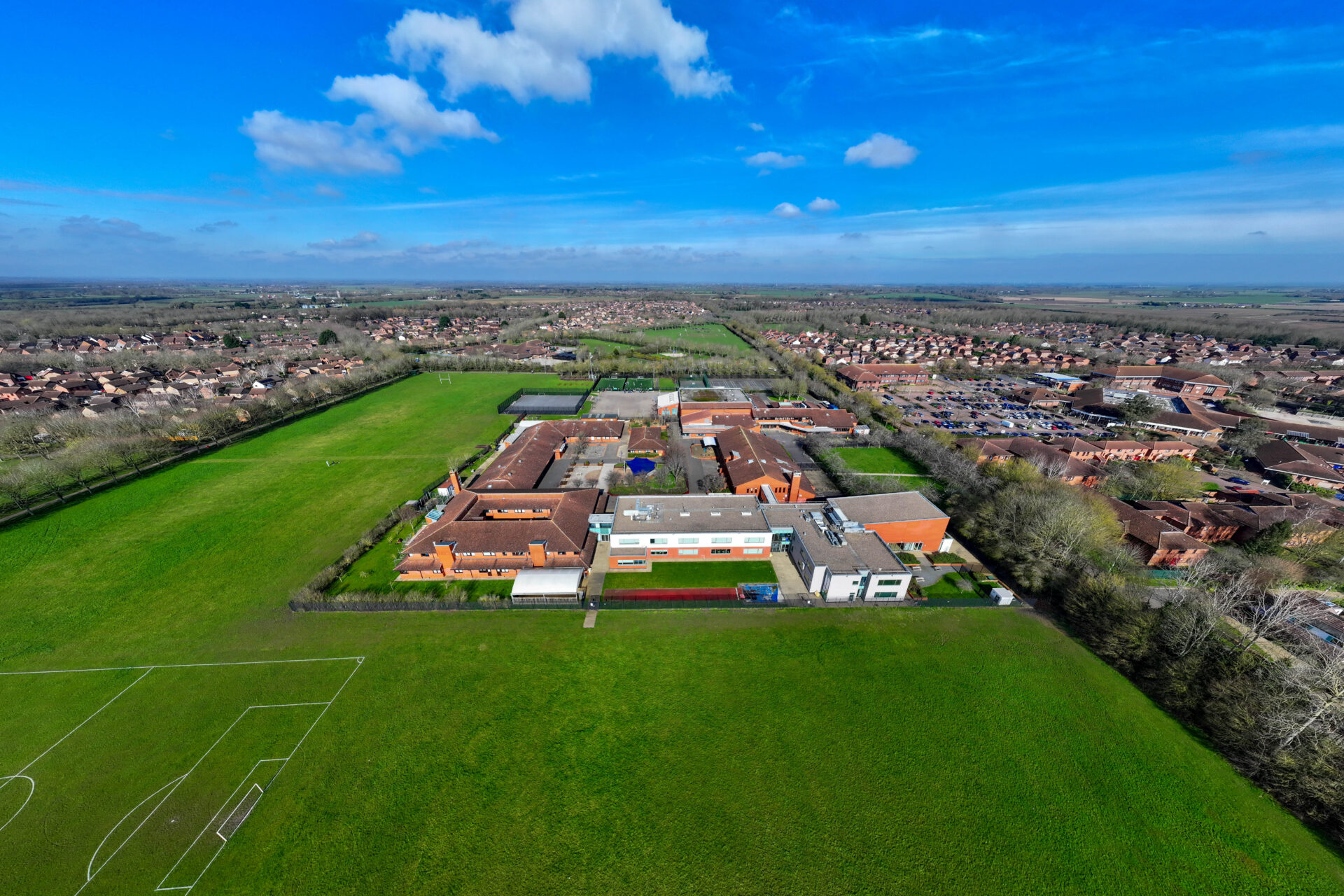
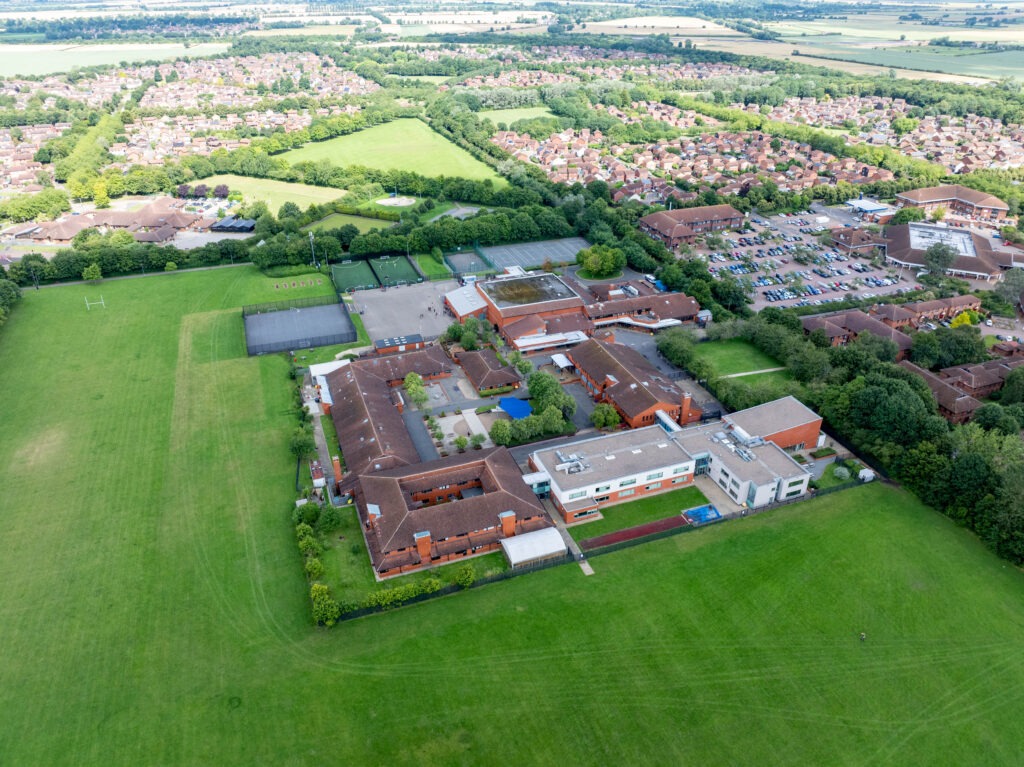

The case centres on Werrington Sports Field, part of the grounds at Ken Stimpson Community School, now Ken Stimpson Academy.

In March 2020, the city council’s planning committee approved proposals to enclose part of the playing fields with 2.4-metre-high fencing. The intention was to safeguard school facilities during the day while preserving public access outside school hours.
That balance between school security and community use was the core justification for allowing fencing on land that had traditionally been open to the public.
And it was also the source of immediate controversy.
While the committee approved the principle of enclosure, the permission was tightly controlled.
Chief among the conditions was a requirement for a Community Use Agreement, to be developed in consultation with Sport England and approved by the local planning authority before construction could begin. Until that agreement was finalised, the planning permission was incomplete.
That condition has never been discharged.
Yet within months of the planning decision, the council pressed ahead with procurement.
By August 10, 2020, just five months after the conditional approval, the council issued a tender for the supply and installation of fencing.
Bidders were given only 11 days to respond. Five suppliers expressed interest; four submitted compliant bids.
Garfield Builders Ltd, a Peterborough-based firm, won the contract with the lowest-priced compliant tender at £73,236.28, exclusive of VAT. The council’s evaluation awarded the bid a 100 per cent price score, ranking it first. Other bids came in only marginally higher, but Garfield was deemed the most competitive.
What stands out is not simply that a contract was awarded, but that it was awarded with full knowledge that the fencing could not yet be installed.
Internal documents obtained under the Freedom of Information Act show that senior officers were explicitly aware of the unresolved planning position. The Director’s Contract Award Report acknowledged that planning approval was subject to “several technical conditions”, with the Community Use Agreement described as “the most important”.
The report stated plainly: “This agreement must be finalised before construction can begin.”
Despite this, the same report went on to recommend approval of the contract award. It attempted to draw a distinction between awarding a contract and activating it, stating:
“Although the contract award is now being approved, it will not be activated until planning pre-construction conditions are satisfied.”
That assurance, however, does little to explain why procurement — and later payment — was authorised at all, given the known risk that the planning conditions remained unresolved.
The approval process itself was extensive. Five levels of sign-off were required, including director-level approval by Wendi Ogle-Welbourn, legal approval from Howard Russell, financial approval from Fiona Chapman, and procurement approval from George Wallace. Peter Carpenter, Director of Resources, was named as the officer responsible for submitting the report.
This was not an administrative oversight or a junior decision. It was a formally sanctioned process involving senior leadership across legal, financial and procurement functions.
The council also ruled out a “do nothing” option, describing it as “not possible due to explicit planning committee authorisation”. That reasoning is striking, given that the same planning committee authorisation was explicitly conditional and dependent on unresolved agreements.
In other words, officers treated the planning decision as a mandate to proceed, even though the permission itself had not yet crystallised into something buildable.
The consequences of that assumption became clear in January 2021, when the council paid Garfield Builders £57,549.08 exclusive of VAT, across two payments made on the same day.

One payment was for £44,866.73, the other for £12,682.35. Both were described as “supply only of fencing and gates”.
What remains unclear is how those payments relate to the original contract value of £73,236.28.
A purchase order for that amount was issued on October 6, 2020, followed by a second purchase order on November 15, 2020, for £12,682.35. The council has yet to explain whether the second order was part of the original contract, an amendment, or an additional commitment.
Nor has the council clarified whether the total contract sum covered installation as originally intended, or whether installation has effectively fallen away, leaving the authority with a stockpile of unused materials and no clear route to deployment.
What is clear is that the fencing was delivered and paid for — and then put into storage.
Nearly six years on, the panels, posts and gates remain unused. The council has refused to disclose where the fencing is being stored, whether it is held on council premises or by a third party, or whether ongoing storage, handling or insurance costs are being incurred.
There is also no confirmed timetable for installation, and no public indication that the Community Use Agreement required by the planning committee is any closer to being resolved.
The fencing itself was substantial. The specification included heavy-duty Euroguard Flatform weldmesh panels, powder-coated steel posts, and a series of single-leaf and double-leaf security gates.
The panels, standing approximately 2.43 metres high, were designed to enclose three football-pitch-sized areas of the site. The gates were intended to provide controlled access for staff, grounds teams and emergency services.
All of it remains unused.
At the heart of the issue is a question of governance and risk management. The council knowingly committed public funds to a project that could not proceed without third-party agreement and planning sign-off. It did so on the basis that installation would simply be delayed until conditions were met.
But what if those conditions were never met?
That is precisely what has happened.
The unresolved dispute over community access — the very issue that the Community Use Agreement was meant to settle — has stalled the project indefinitely.
Yet the financial commitment was already made, and the assets already paid for.
This raises further questions about value for money. Installation prices agreed in 2020 may no longer be valid. Market conditions, labour costs and materials pricing have changed significantly since then. The council has not confirmed whether it intends to revalidate costs, renegotiate terms, or retender the installation element altogether.
It also raises questions about procurement practice. The 11-day tender window was short. While it produced competitive bids, the council has not explained whether it assessed the impact of that compressed timescale on competition or long-term value.
Most fundamentally, it raises the question that still has no public answer: why go out to procurement at all when final planning permission had not been granted?
Awarding a contract before planning conditions are discharged is not illegal, but it is a calculated risk. In this case, it was a risk taken with full awareness that the project could not proceed without agreement from Sport England and the community — agreement that was neither secured nor guaranteed.
The result is £57,000 of public money tied up in assets that have delivered no benefit, six years of delay, and a growing list of unanswered questions.
A new Freedom of Information request submitted on January 8, 2025, seeks clarity on these issues. It asks the council to explain the structure of the contract, the rationale for early procurement, the governance and risk assessments undertaken, the current condition and location of the fencing, and whether additional costs have been incurred.
Until those answers are provided, the fencing at Werrington Sports Field stands — metaphorically — as a symbol of a decision made too early, on assumptions that did not hold, and at a cost the public is still paying.
The unanswered question remains: who decided it was acceptable to buy first, and ask permission later — and why?