
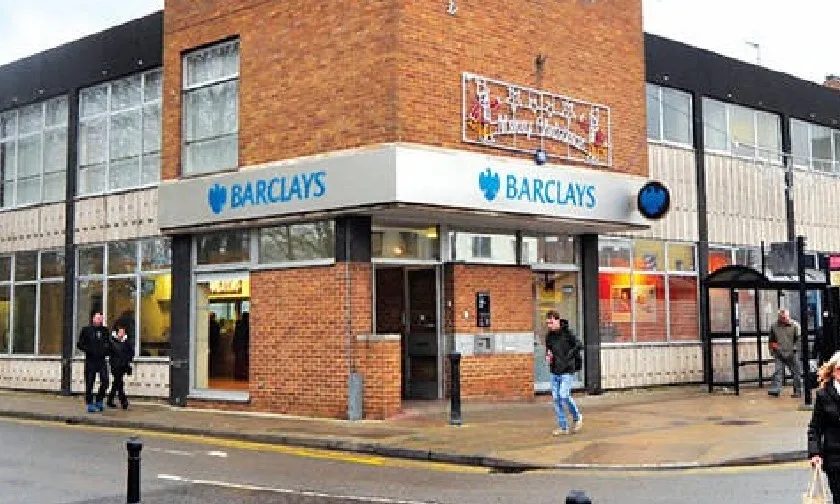
Fenland District Council has defended its decision to spend more than £1.12 million of public money buying and demolishing the former Barclays Bank in March, insisting the project was never intended to generate a financial return and should be judged as part of a wider regeneration strategy.
The council’s position, set out in a statement issued on February 3, comes amid growing controversy after Freedom of Information figures obtained by CambsNews confirmed that the cleared site — acquired for £750,000 and demolished at a cost of £371,880.08 — is now being marketed for £295,000.
While the council says the figures tell only part of the story, the arithmetic is impossible to ignore: a seven-figure public outlay has so far resulted in an empty, fenced-off plot on one of March’s most prominent corners — and a decision taken against the advice of senior and experienced council officers.
“Not a commercial investment”
Fenland District Council says the purchase and demolition of the former bank must not be viewed as a standalone commercial transaction.

Cllr Chris Seaton, lead member of the March Future High Streets steering group, said the scheme was a regeneration intervention, fully funded by central government through the Future High Streets Fund (FHSF).
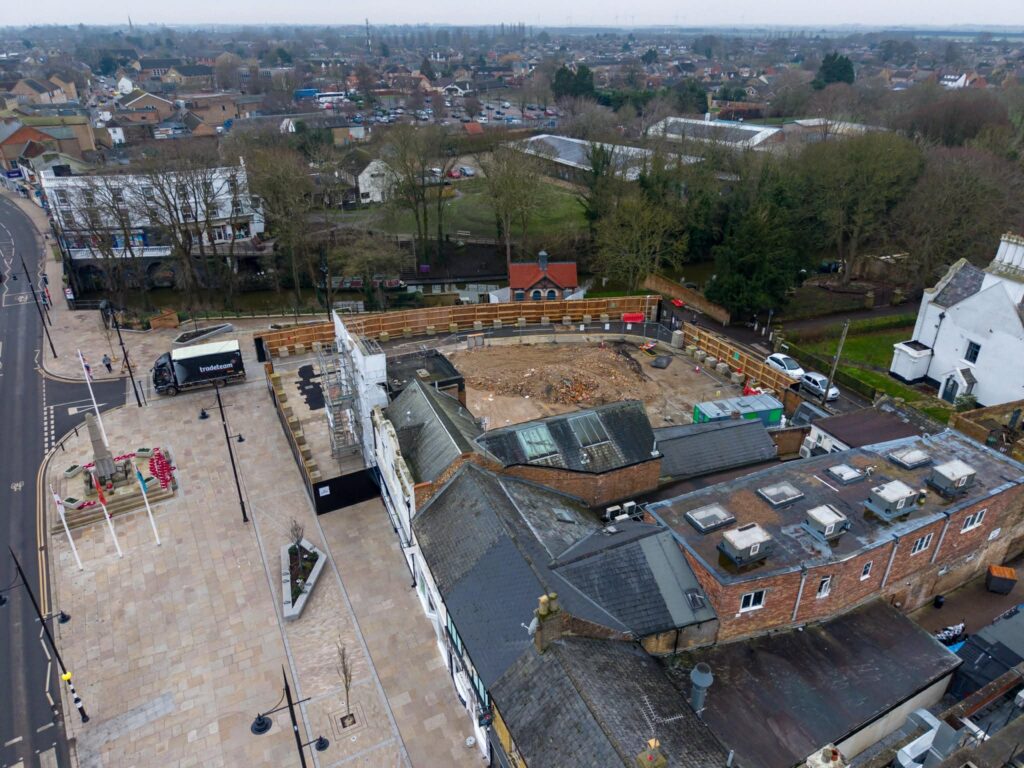
“The development of this site is not a commercial investment, and it was never about generating a profit or income for the Council,” he said. “It was designed to address what residents had called an ‘eyesore’ of a building and to unlock a key town centre site where the market had previously failed.
“Regeneration schemes do not often create income, which is why they are grant funded. It is accepted that the wider economic and societal benefits they bring outweigh the capital outlay.”
The council has repeatedly stressed that no council tax or Fenland District Council core budgets were used, and that the acquisition, demolition and site preparation were all approved by government as part of the FHSF governance process.
A flagship site — and the final piece
According to the council, the former Barclays site represents the final phase of a regeneration programme that has already delivered changes across March town centre.
These include improvements to public realm, lighting and planting, reduced vacancy rates, increased footfall and dwell time, higher land values, additional parking at City Road car park, a revamped Market Place, new public toilets, reduced congestion, shorter journey times, and improved air quality.
The council also says the site played a practical role during delivery of those works, acting as a compound and welfare base for contractors, resulting in cost and time savings elsewhere in the programme.
Creating a viable development site in a prominent town centre location, it argues, is a recognised outcome of the Future High Streets Fund — particularly where private investment has stalled for years.
The numbers that won’t go away
Yet for many residents and observers, the figures dominate the debate.
FOI responses confirm:
• £750,000 paid to acquire the vacant former bank in 2023
• £371,880.08 spent demolishing it
• £1,121,880.08 total public spend
The same land is now being marketed for £295,000 — less than 40 per cent of its purchase price, and barely a quarter of the combined acquisition and demolition cost.
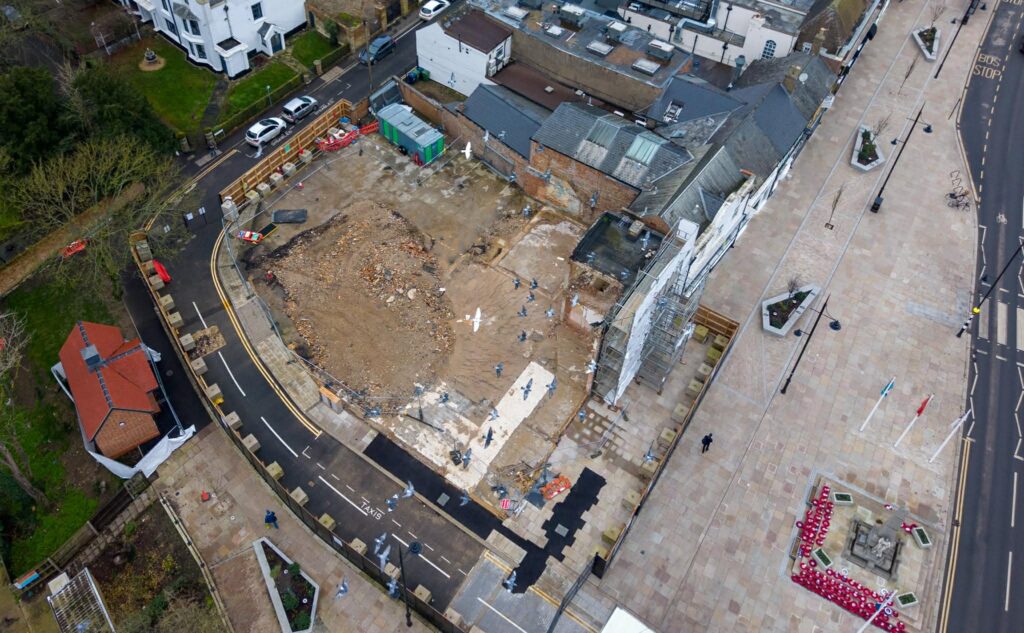
Even allowing for regeneration benefits elsewhere, critics argue the optics are stark. Public money — whether from central government or local budgets — is still public money, and opportunities to use it are finite.
Officers said: don’t demolish
At the heart of the controversy lies a decision taken in direct contradiction of professional advice.
Senior planning and conservation officers explicitly recommended that the former Barclays Bank should not be demolished without a replacement scheme in place.
Their written reports warned:
• the building was not structurally unsound
• reuse options had not been seriously explored
• demolition risked creating a long-term “missing tooth” in the March Conservation Area
• a vacant plot could undermine surrounding regeneration for years
Officers argued that an unpopular or outdated building was still preferable to a prolonged void in the street scene — particularly given the site’s location between the Grade II-listed war memorial and historic Bank House.
Those warnings were unanimous, unambiguous — and ultimately ignored.
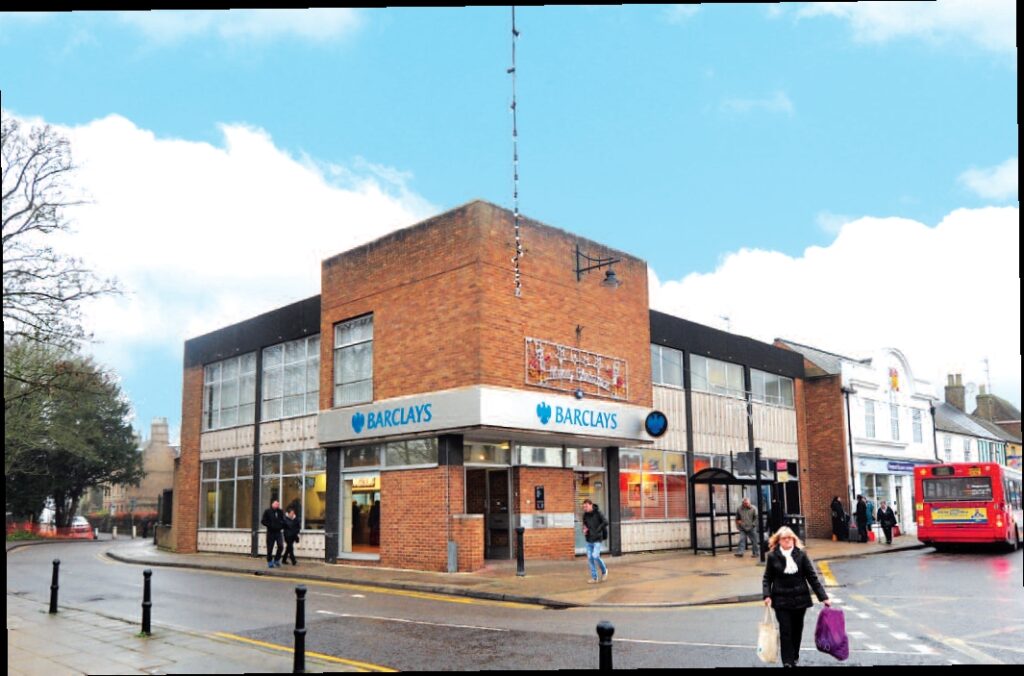
Councillors voted unanimously to approve demolition, citing vandalism concerns, asbestos, security risks, and the building’s unpopularity.
A gamble without a plan
Crucially, demolition went ahead without an approved redevelopment scheme, no confirmed developer, and no guarantee that rebuilding would follow.
Planning officers warned that flattening the building first amounted to a gamble — one that could leave the town staring at an empty, fenced site for years.
That risk has already materialised.
Today, there is:
• no approved planning application
• no named development partner
• no construction timetable
Instead, the council has stepped back, placing the land on the open market and inviting private developers to determine its future.
“Unlocking the site” — or retreating?
Fenland District Council says interest in the site has increased since demolition, with several bids already received.
Cllr Seaton said: “Before demolition, there was little to no interest in the site. Since clearing it, we have already received several bids, which clearly demonstrates the regeneration intervention has been successful.”
Any sale, the council says, will include contractual deadlines requiring submission of a full planning application and commencement of construction, to avoid long-term vacancy.
But critics argue that selling the site — rather than bringing forward a council-led scheme — represents a quiet retreat from the original ambition.
Minutes of a December 2024 Cabinet meeting show that the council considered commissioning a full planning design for the site but abandoned the idea after concluding it would be “time consuming and costly” and offered no guarantee of market demand.
For opponents, that admission raises uncomfortable questions about why demolition was pursued before those risks were resolved.
Was reuse ever properly tested?
One of the most persistent criticisms is whether demolition was ever truly necessary.
Across the UK, former bank buildings — many vacated during high street banking contraction — have been successfully converted into cafés, clinics, homes, offices, and community hubs.
Planning officers explicitly noted that there had been no serious attempt to market the building for reuse before demolition was approved.
Once demolished, critics argue, those options vanished permanently — along with a building that, while unpopular with some, still formed part of the historic townscape.
Council: regeneration is not about quick returns
Fenland District Council maintains that judging the project solely on sale value misses the point.
“Regeneration is not about quick financial returns,” Cllr Seaton said. “It’s about creating a town centre that works better for residents, businesses, and visitors.
“March is now in a much stronger position than it was, and the Barclays site is a key part of that transformation.”
The council also points to a positive Benefit-Cost Ratio assessed as part of the government approval process.
A question of stewardship
However, the issue is not whether regeneration has benefits, but whether this specific decision represented good stewardship of scarce public funds — particularly when professional advice warned against it.
As residents pass the fenced-off plot on Broad Street, next to the war memorial and newly improved public realm, the debate is no longer abstract.
The gamble officers warned about is now a visible reality.
Whether the site ultimately delivers the homes, businesses or facilities promised remains to be seen. Until then, one fact is undisputed: more than £1.12 million of public money has already been spent — and nothing has yet been built in its place.