
A Whittlesey community group is urging residents to engage actively with an upcoming public health information session on Saxon Pit, warning that the findings of a recent report risk being misunderstood if taken out of context.
Saxongate, which has been closely involved in planning and environmental issues linked to the site, says the level of detail now being shared is “necessary rather than optional” given the number of overlapping planning, permitting and public health processes affecting the area.
“We recognise this is a detailed update,” a spokesperson said, “but that level of detail is necessary given the complexity of the current planning, permitting, and public health issues. Residents deserve clarity, not headlines that oversimplify what is actually a very complex picture.”
Cambridgeshire County Council Public Health will hold a public health information session regarding Saxon Pit and other issues on Wednesday 4 February 2026, from 3pm to 7pm, at Manor Leisure Centre, Station Road, Whittlesey. The event will run as a drop-in session, allowing residents to attend at any point during the afternoon or early evening.
According to Saxongate, the session will allow residents to ask questions about the public health report on Saxon Pit and about Public Health’s response to the current planning variation submitted by Johnsons Aggregates and Recycling Ltd (JARL).

It will also gather residents’ views on how to progress the report’s recommendations, including future meetings, community representation, a cumulative health impact assessment and an air quality monitoring strategy.
“The session is a positive step,” Saxongate said. “It gives residents the opportunity to hear directly from officers and to understand the public health work in relation to current and ongoing activity affecting the area.”

The session is hosted by Cambridgeshire County Council Public Health, supported by Fenland District Council Environmental Health. Officers from the Environment Agency and Cambridgeshire County Council’s Waste Planning Authority are also expected to attend. Residents unable to attend can submit views and questions in writing to PublicHealth.AdminTeam@cambridgeshire.gov.uk.
Saxongate has raised detailed questions about the public health report and is seeking access to the base data used to inform it. The group acknowledges that some of this data may be tied to live planning and permitting decisions.
“We understand that there are constraints on what can be released while decisions are ongoing,” the group said. “But it is important for residents to understand what data is and is not available for scrutiny, so the report’s findings can be placed in proper context alongside those live processes.”
The group is also keen to challenge what it describes as a growing misconception that the report shows there are “no issues” at Saxon Pit.
“That is not what the report says,” Saxongate said. “The public health assessment sits alongside a separate Public Health objection to the current JARL planning variation. That objection draws on evidence from current operations, including dust, odour, noise and chemical risk, and it highlights clear gaps in monitoring.”
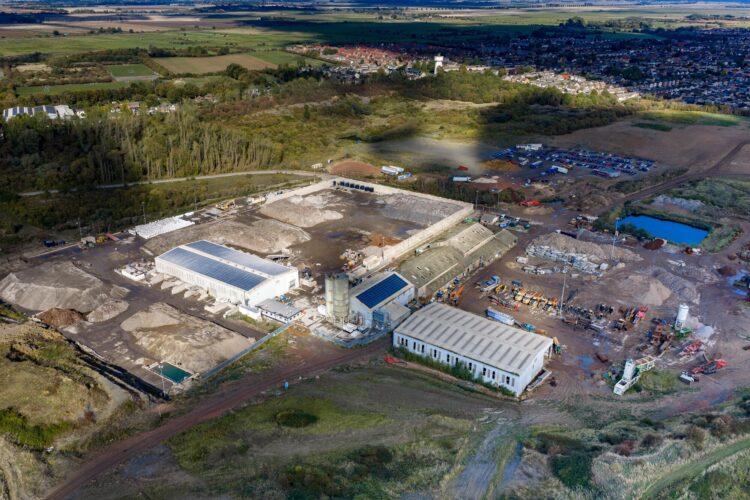
Saxongate notes that proposals to double throughput and introduce outdoor crushing remain live and contested, and that the assessment considers cumulative impacts across the wider area, including Forterra at King’s Dyke.

“Residents are dealing with multiple sites, multiple regulators and multiple consultations at the same time,” the group said. “It’s understandable that people feel unsure how best to engage or what questions to ask. We’re happy to offer support and practical context to help residents navigate that.”
At a meeting of Whittlesey Town Council on Thursday 22 January 2026, a new team was selected for the Johnsons liaison group. This includes County Councillor Chris Boden, Fenland District Councillor and Town Councillor Alec Banton, and ward councillor Peter Bibb.
The Town Council also voted to submit a further advisory planning comment referencing the Director of Public Health’s recent objection and recommendations.
“The Town Council has been clear that its role is advisory only,” Saxongate said. “It is not the decision-making authority.”
Saxongate expressed serious concern about the operator-led liaison meetings where complaints about odour, dust and noise are discussed. Residents have been excluded from these meetings since November 2024, and records are not routinely published.
The group said: “The most recent liaison meeting minutes record that 100 per cent of odour complaints considered at that meeting were attributed away from JARL, despite the Environment Agency having previously confirmed that the smell of IBA has been detected outside the site perimeter.
On throughput Saxongate points out that the current numbers are 250k of IBA and 50k of C&D.
“They now want 460k of IBA and 150K of C&D and bring in outdoor crushing (including for the IBA),” said the Saxongate spokesperson. “If you include the C&D waste then double throughput is fine to say. On IBA alone it is 84%.
“It is shocking they are doing this on a section 75 variation; we think there should be a new application.
“It is telling that the EA permit application includes a new site area not covered by the planning. We imagine they will apply for that planning at a later date, small chunks to avoid a full planning which would open up all conditions and mitigations for renewal.
“Whittlesey Town Council/ Fenland District Council have shown no interest in helping us push that gap and Cambridgeshire County Council say their legal advice shows they are ok.”
Saxongate says it has identified inaccuracies and ambiguities in the liaison records and is formally challenging them. The group plans to publish recent minutes with its own commentary and is calling for residents to be given notice of meetings, a route to raise questions, and automatic access to approved minutes.
Turning back to the public health report itself, Saxongate stresses that it explicitly calls for more evidence.
“The report does not identify a current public health risk within its defined scope,” the group said, “but it also states that air quality is not monitored at the site boundary, that dust has been recorded but not analysed, and that no firm health assumptions can be drawn on that basis.”
“For these reasons,” the group added, “the absence of detected harm should not be read as evidence that harm is absent.”
Saxongate says the February session will shape how engagement continues, including decisions about community representation.
It is encouraging residents to attend where possible, to share views directly with Public Health, and to join its mailing list so more people can stay informed as developments continue.