

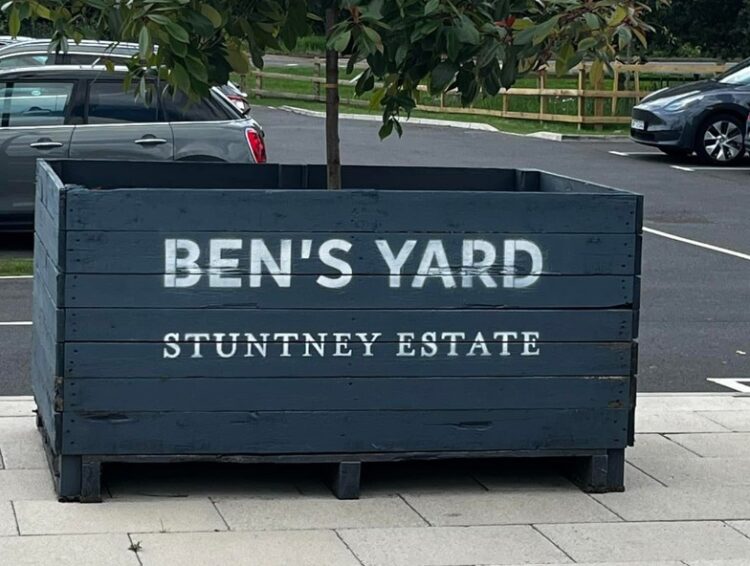
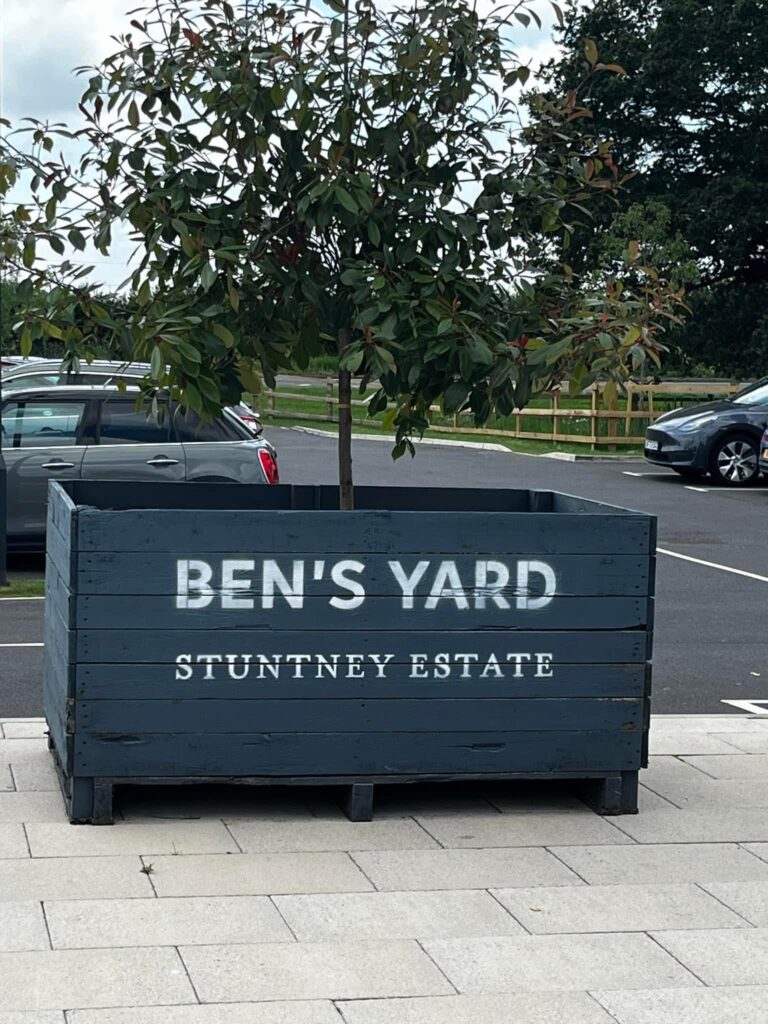
A confidential report detailing the commercial struggles and financial pressures facing Ben’s Yard in Stuntney near Ely unexpectedly entered the public domain after being uploaded to East Cambridgeshire District Council’s planning register.
The document, originally marked “confidential” and intended only for the client and their representatives, became temporarily accessible to anyone through the council’s online planning portal.
It formed part of a major planning application that could reshape the future of Ben’s Yard, with the owners seeking permission to significantly broaden what the rural retail and leisure site is allowed to offer.
After being alerted by CambsNews, Carter Jonas, their agents, contacted the council to ensure its removal although the substantive bid for change of use remains.
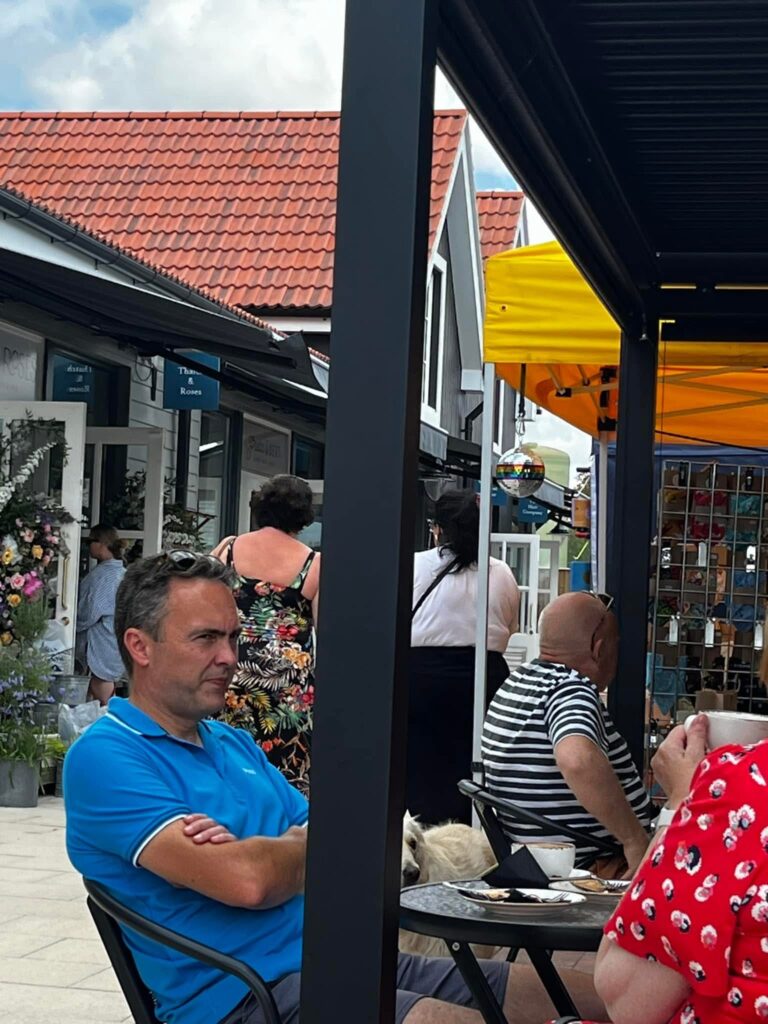
At the heart of the proposal is a request to expand permitted uses under the new Class E categories, allowing a wider range of businesses to operate from the site.

CambsNews redacts names of businesses owing money
One of the documents contained sensitive information, including the names of businesses that have left Ben’s Yard owing substantial sums of money.
CambsNews reviewed the report but has chosen to redact the identities of those businesses in this article.
This editorial decision is made out of respect for the individuals and companies involved, despite the fact that the information was, for a time, technically available in the public domain.
The focus, CambsNews believes, should remain on the systemic issues highlighted by the report, rather than singling out struggling local enterprises during a difficult economic period.
A family’s diversification journey
Ben’s Yard is owned by Victoria and Alastair Morbey, whose family has farmed the 2,500-acre Stuntney Estate for generations.
The estate, operated by Cole Ambrose Ltd, produces wheat, oilseed rape, sugar beet, potatoes, and other horticultural crops.
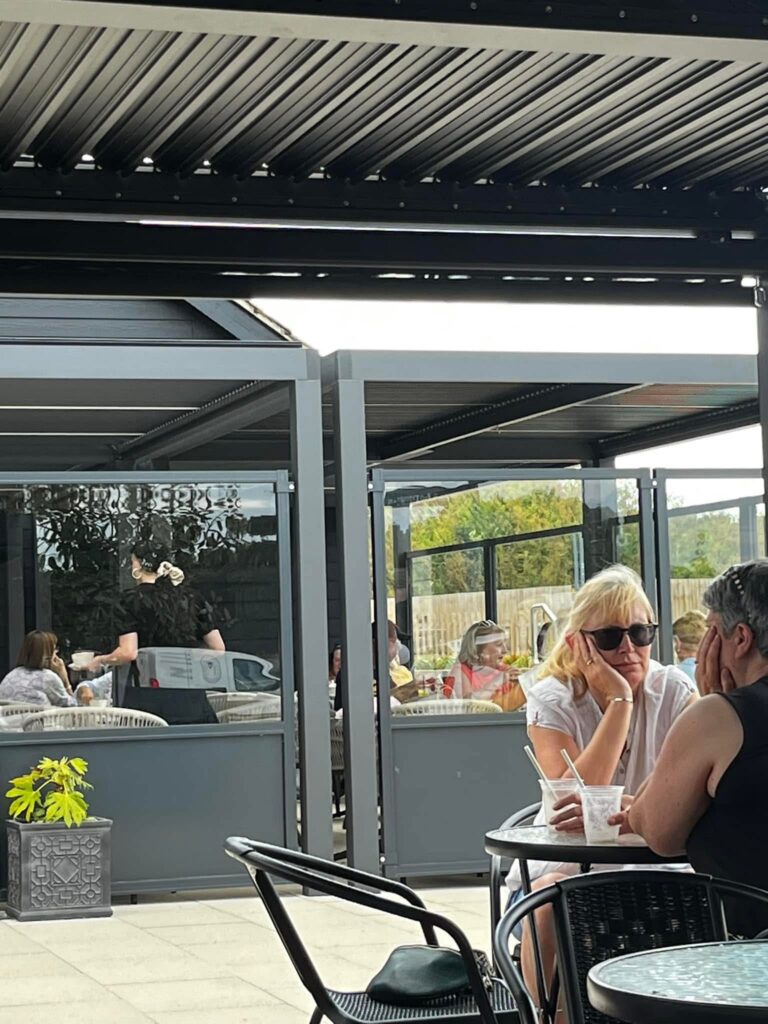
A planning statement explains that Ben’s Yard was created as part of a wider strategy to secure the estate’s future beyond farming:
“Ben’s Yard was conceived primarily as a farm diversification project, on the basis that the Stuntney Estate could no longer rely on agriculture to provide the long-term financial security and investment.”
Instead, the Morbey family hoped new revenue streams such as rental income from retail, leisure, and business uses would help sustain the estate for the long term.
The vision was to create a high-quality, locally owned destination that would strengthen both the estate and the wider community.
A vision for rural retail — and the harsh reality
Ben’s Yard was conceived as a vibrant leisure and retail hub, designed to attract independent retailers, cafés, restaurants, and service providers not typically found in nearby town centres such as Ely.
The original business plan, dating back to 2018, aimed to complement local high streets rather than compete with them.
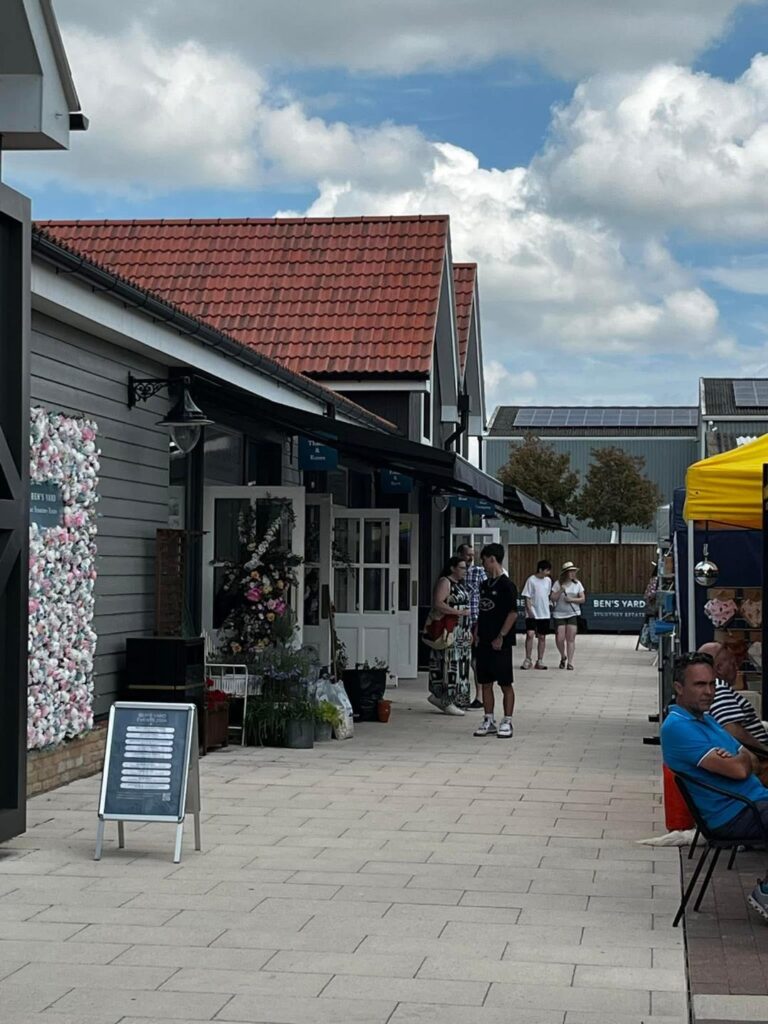
But the newly public report reveals that strict planning conditions have made it difficult to attract and retain tenants.
These restrictions include:
- Limits on floor space
- Restrictions on the use of mezzanine floors
- A ban on “retail multiples” — chains with more than nine outlets
Combined with wider economic challenges, the result has been high turnover of businesses and mounting losses for the site’s owners.
Hundreds of enquiries, few long-term tenants
According to the report, Ben’s Yard has been the subject of extensive national marketing.
More than 315 companies were targeted directly, with thousands of online views for available units.
Yet strict planning conditions meant many potential tenants had to be turned away — particularly those needing larger spaces, those classified as “multiples,” or those already operating in Ely, Soham, or Littleport.
The report suggests these constraints forced management to rely heavily on young or start-up businesses, which often come with higher risk.
Many struggled to survive, leading to a cycle of departures, vacancies, and unpaid debts.
Financial losses mount as tenants depart
The most striking section of the report details businesses that have left Ben’s Yard owing money.
In total, six businesses are reported to have departed before reaching their first lease break option, leaving behind unpaid rent, utilities, service charges, and insurance costs totalling more than £79,000 — excluding legal and professional fees.
The report states bluntly: “This position is clearly untenable with the need to loosen restrictions on occupant types and quality of occupants required to secure businesses that will perform and not leave with significant debts owing.”
CambsNews again confirmed it will not publish the names of those businesses, recognising that many small enterprises are facing unprecedented pressures in the current economic climate.
Support offered — but not enough
The report highlights the support provided to tenants, including generous rent-free periods.
Some businesses were given up to six months rent-free, and in one case as long as 15 months, to help them establish themselves.
Despite these efforts, the combination of planning restrictions and market conditions proved too difficult for many.
The statement notes: “Currently, 8 of the 14 units are either vacant, at risk, or subject to ongoing legal proceedings.”
The dominance of small or start-up businesses — driven largely by planning conditions — has contributed to business failures, rent arrears, and a growing sense of decline.
That decline, the report warns, undermines confidence among customers and prospective tenants alike.
Planning restrictions under fire
Several national and regional businesses reportedly expressed interest but could not proceed.
Examples included a national beer, wine and spirits retailer, a clothing retailer, and a handmade furniture company — all needing more space or falling foul of the “multiples” rule.
The report argues: “Limiting occupiers of Ben’s Yard to those with 9 or less outlets has restricted the quality of occupier… The planning condition directly resulted in the inability to secure this well established and known business.”
The authors suggest such businesses could have acted as a major draw, boosting footfall for surrounding tenants.
Market analysis: national and local trends
The report also places Ben’s Yard’s struggles within the wider context of the UK retail sector.
It notes that economic growth has been sluggish, inflation remains a concern, and consumer confidence is still fragile.
While there are modest signs of improvement, the outlook remains uncertain.
Locally, Ely’s high street has benefited from the cathedral, supermarkets, and steady visitor traffic.
Ben’s Yard, located around two miles away, relies on being a destination in its own right, with lower daily footfall.
The contrast, the report suggests, is stark.
What the planning application seeks
The planning application is wide-ranging and designed to address the very issues identified in the report.
Broader use classes
Owners want permission for a much wider mix of uses beyond retail, including:
- Gyms
- Offices
- Dentists and vets
- Day nurseries
- Indoor soft play
- Microbreweries
- Dog grooming
- Art display spaces
- Agricultural storage
The report stresses: “The expansion of permitted use classes is not to facilitate a full move away from a retail-led scheme… but to enable greater diversity and flexibility.”
Mezzanine floors
The application requests mezzanine floors be allowed for independent use, rather than limited to storage or ancillary space.
Changes to hours and definitions
The owners also want:
- Expanded operating hours
- More seasonal events
- A new definition of “retail multiple,” increasing the outlet limit from 9 to 100
Why the changes are needed
The report is candid about the risks of doing nothing.
It warns: “The need to adapt to survive is ever stronger… To give the development a fighting chance, there is the need to review the current planning restrictions.”
Without change, the owners argue Ben’s Yard cannot compete as a destination business, lacking the built-in footfall that town centres enjoy.
For now, the future of Ben’s Yard rests with planners — and with whether restrictions designed to protect local high streets may now be threatening the survival of one of East Cambridgeshire’s most ambitious rural diversification projects.