
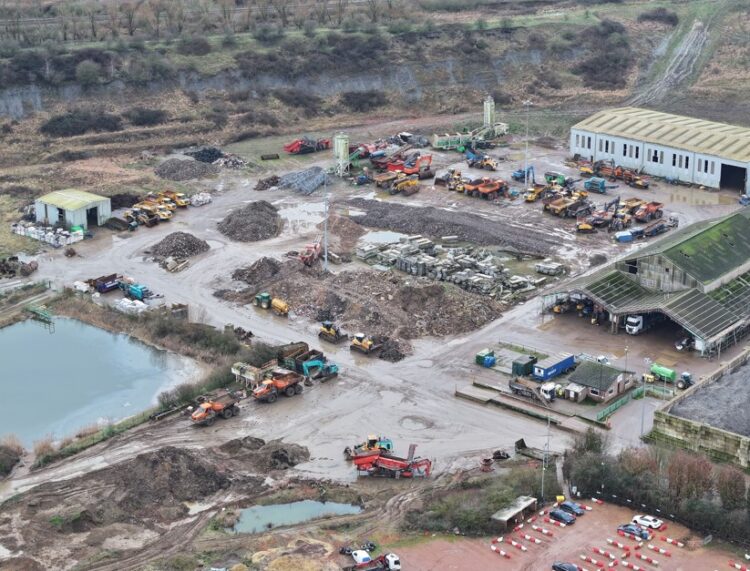
In a landmark decision welcomed by campaigners and residents, Cambridgeshire County Council today voted to refuse the planning application to expand operations at Saxon Pit in Whittlesey.
The proposal to refuse was put forward by Cllr Sam Hoy of Fenland and seconded by Cllr Ian Gardner of Huntingdonshire. After robust debate, the refusal was passed by five votes to three at the council’s planning committee meeting.
Why councillors rejected the expansion
The application sought to increase throughput of waste at Building 1 and extend operating hours. Councillors concluded that doing so would significantly intensify long-standing concerns around noise and dust.
Members agreed that the expansion would “adversely affect the health and well-being of the local community,” placing it in conflict with Policy 18 of the Cambridgeshire and Peterborough Minerals and Waste Local Plan (July 2021) and Policies LP2 and LP16 of the Fenland Local Plan (May 2014).
Residents had repeatedly raised fears about airborne dust, increased crushing activity and longer daily operations. Councillors determined that the cumulative impact would go beyond acceptable limits for nearby homes.
Highway capacity and air quality fears
A second and decisive reason for refusal centred on transport and air quality.
The committee found it had not been demonstrated that the development—when considered alongside other existing and recent decisions—would avoid unacceptable impacts on highway capacity and related air quality. As a result, the proposal was judged contrary to Policy 18 and Policy 23 of the Minerals and Waste Local Plan and Policies LP2, LP15 and LP16 of the Fenland Local Plan.
Concerns focused on rising HGV movements, road safety, congestion and associated emissions affecting Whittlesey and surrounding routes.
A victory for community voices
The 5–3 decision marks a significant moment for local residents who have campaigned for tighter scrutiny of waste operations in the area. By refusing the application, councillors signalled that health, environmental protection and infrastructure capacity must take precedence over intensification of industrial activity.
For many in Whittlesey, today’s vote represents not just a planning outcome, but a clear affirmation that community well-being remains at the heart of local decision-making.