
For more than a decade, the murder of 86-year-old retired postmistress Una Crown haunted detectives in Cambridgeshire. Her death in January 2013, inside her quiet bungalow in Wisbech, initially appeared to be a tragic and confusing unexplained incident. There was no clear suspect, no forced entry, and no immediate forensic breakthrough that could point investigators toward a killer.
That changed years later when a single piece of preserved DNA evidence was re-examined using modern forensic techniques. What followed was one of the most significant cold case convictions in recent Cambridgeshire history, culminating in the life imprisonment of her neighbour, David Newton.
The case is now being brought to television audiences in a two-part special of 24 Hours in Police Custody, as detectives reveal how a dormant investigation was revived, rebuilt, and ultimately solved.
A quiet life interrupted in Wisbech
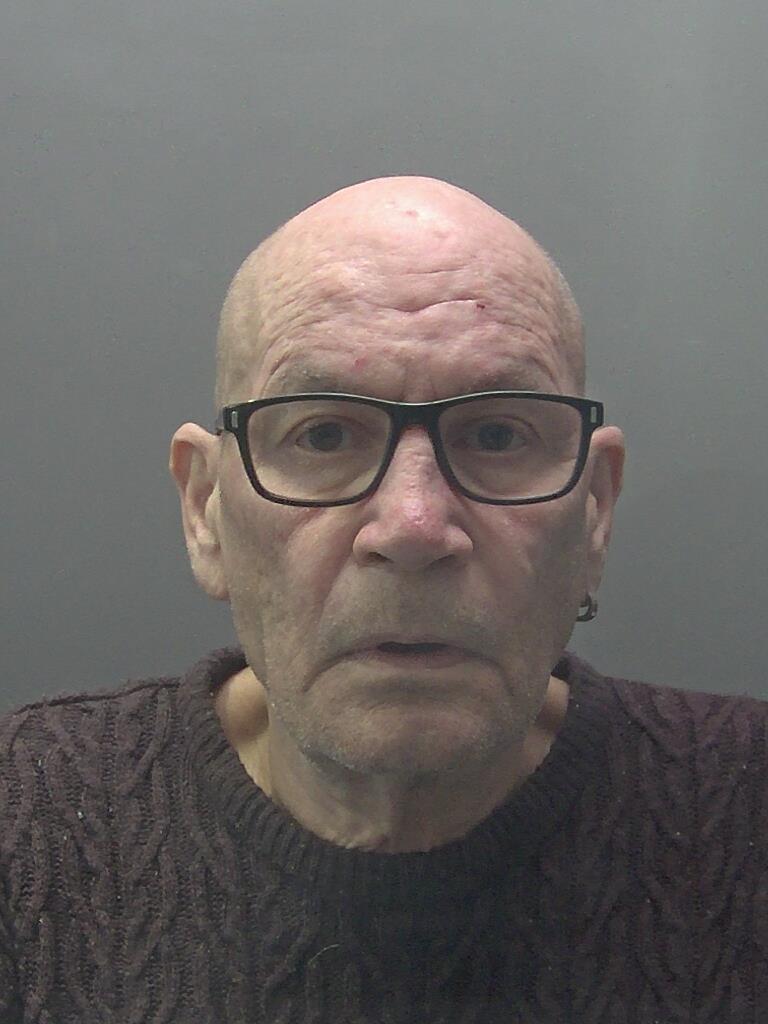
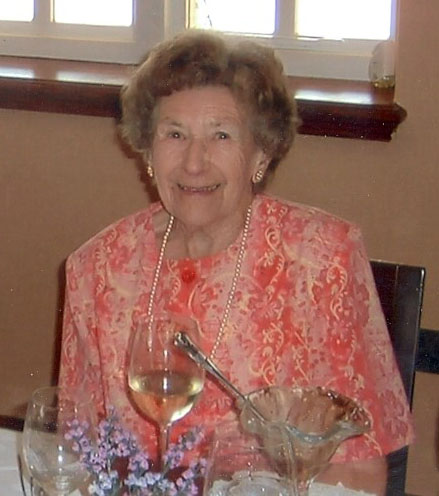
Una Crown lived alone in her bungalow on Magazine Lane in Wisbech, Cambridgeshire. She was 86 years old at the time of her death, a retired postmistress described by those who knew her as independent, active, and “feisty”.

On the evening of 12 January 2013, she had been speaking to a neighbour on the telephone around 5pm. She spoke of her plans for a quiet evening at home. Nothing in the conversation suggested danger or distress.
Sometime after that call ended, she was attacked inside her home.
Her body was later discovered by family members and a neighbour. She had suffered multiple stab wounds to her neck and chest. In an attempt to conceal the crime, fires had been started within the property.
The scene was deeply disturbing—but at the time, it did not immediately yield answers.
Early investigation and missed opportunities
Initial police response in 2013 did not classify the death as suspicious. That early assumption proved critical. The scene was not fully preserved, and investigative opportunities were lost in the crucial first hours.
Years later, in sentencing remarks, Mr Justice Garnham would acknowledge this failure, noting that Cambridgeshire Constabulary had “quite rightly apologised” to the victim’s family for the early handling of the case.
Despite the setback, the case file was never closed permanently. It remained within the force’s cold case review system.
That decision would prove decisive.
The breakthrough: DNA hidden beneath her fingernails
The turning point came more than ten years after the killing.
During the original post-mortem examination, forensic teams had taken nail clippings from Una Crown’s hands. At the time, the DNA technology available was not advanced enough to extract meaningful identifying information beyond the victim herself.
But when the case was revisited, those same samples were retested using modern forensic methods.
This time, male DNA was identified beneath her fingernails.
The result was significant: it placed another individual at the scene of a violent struggle.
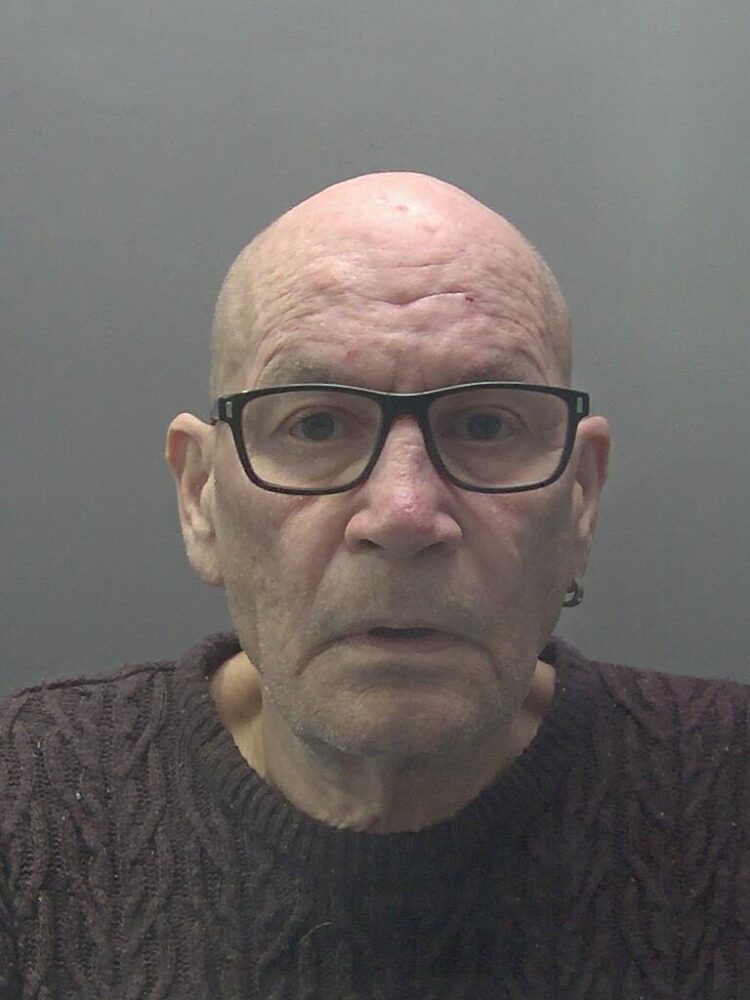
That DNA profile was matched to David Newton, a man who lived just a short distance away from Una Crown’s home in Wisbech.
A neighbour in plain sight
The discovery that the suspect was a neighbour fundamentally changed the direction of the investigation.
Newton, born in 1954, had previously been spoken to in 2013 during the initial inquiry. However, without the forensic evidence available today, there was no basis for charges at the time.
Following the DNA match, investigators undertook extensive work to rule out male relatives in his paternal line and to build a comprehensive evidential case. Officers travelled across the country to eliminate alternative explanations and strengthen the forensic link.
What emerged was a prosecution case built around one central proposition: that Newton had entered Una Crown’s home, attacked her with extreme violence, and attempted to destroy evidence by setting fires before leaving the scene.
CPS case and trial evidence
The Crown Prosecution Service East of England described the forensic breakthrough as critical to securing a conviction.
During the three-week trial at Cambridge Crown Court, prosecutors relied heavily on DNA evidence recovered from nail clippings taken during the post-mortem. That DNA matched David Newton and was presented as proof he had been present during a violent struggle.
The CPS argued that Newton had entered the property, confronted the victim, and inflicted multiple wounds before setting fires inside the bungalow in an attempt to destroy evidence.
Matthew Golby of the CPS said: “For more than a decade, David Newton thought he could get away with murder. Today’s verdict proves otherwise.”

He added that advancements in forensic science had provided the “compelling link” needed to bring Newton before the court and secure justice for Una Crown’s family.
The jury verdict
After hearing weeks of evidence, the jury at Cambridge Crown Court found David Newton guilty of murder in February 2025.
The conviction ended a long search for answers that had lasted more than 12 years.
For Una Crown’s family, the verdict represented long-awaited closure—but it also reopened painful questions about how such a violent crime could initially go undetected.
Judge’s sentencing remarks: “ferocious and sustained attack”
At sentencing, Mr Justice Garnham delivered a detailed account of the crime, describing it as a “ferocious and sustained knife attack on a defenceless old lady in her own home.”
The judge found that Newton had entered the victim’s home uninvited, likely using a copied key or exploiting prior access. He described Una Crown as a petite but independent woman who lived alone and was highly unlikely to have willingly admitted him.
Once inside, a confrontation occurred.
The court heard that Una Crown suffered blunt force trauma before being subjected to a prolonged knife attack. She sustained multiple stab wounds to the neck and chest, including injuries that fractured ribs and penetrated her heart and lungs.

“The Cold Case Murder” is due be shown at 9pm on Channel 4 on Monday and Tuesday (13 and 14 April).
She also suffered defensive injuries to her hands, indicating a desperate attempt to protect herself during the attack.
The judge concluded that Newton intended to kill.
After the attack, he attempted to set fires inside the property, which the court found were intended to destroy evidence.
He also took £80 from the victim’s purse, which was later deposited into his bank account.
Sentencing outcome
David Newton was sentenced to life imprisonment with a minimum term of 21 years.
The judge noted aggravating factors including:
- The victim’s extreme vulnerability due to age and frailty
- The sustained nature of the attack
- The use of a large kitchen knife
- The attempt to destroy evidence through fire
- The invasion of the victim’s home
Mitigating factors were limited to Newton’s age and health conditions.
Time already spent on remand was deducted from the minimum term calculation.
Police reflection: “she solved her own case”
Detective Superintendent Iain Moor, who led the renewed investigation, described the case as a demonstration of persistence in cold case policing.
He said Newton believed he had “got away with it” for more than a decade, but that forensic science ultimately exposed the truth.
He also reflected emotionally on the case, stating that Una Crown effectively “solved her own case” through the evidence she left behind during her struggle.
From cold case to television documentary
The investigation will now be broadcast in a two-part special of 24 Hours in Police Custody, retitled The Cold Case Murder.
The programme follows the Major Crime Unit as they reopen the case, re-examine forensic evidence, and reconstruct the events leading to Newton’s conviction.
The documentary highlights both the breakthrough in DNA science and the painstaking detective work required to turn a cold case into a courtroom conviction.
Conclusion: justice after more than a decade
The murder of Una Crown remained unsolved for over 12 years, a period during which her family lived without answers.
The eventual conviction of David Newton demonstrates the enduring reach of modern forensic science and the persistence of cold case investigators.
“The Cold Case Murder” is due be shown at 9pm on Channel 4 on Monday and Tuesday (13 and 14 April).
What began as a tragic and confusing death in a quiet bungalow ended as a landmark murder conviction—one defined by forensic precision and a reminder that even the longest-unsolved crimes can eventually be solved.