

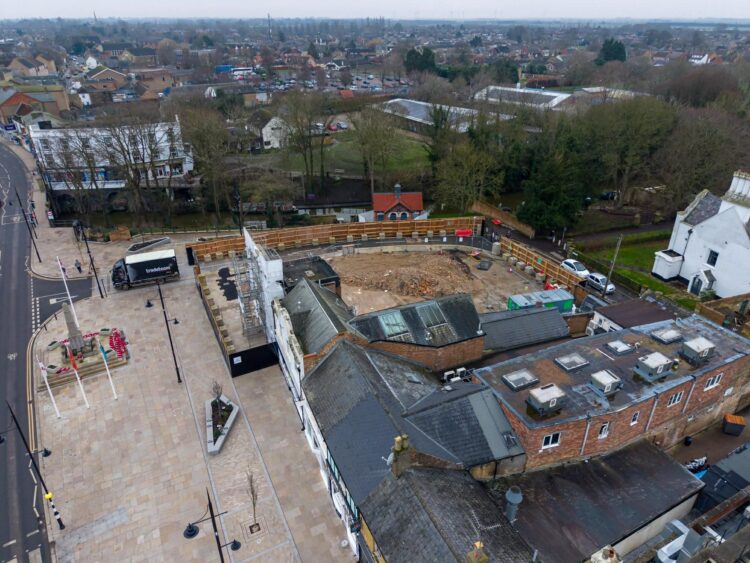
Fenland District Council has abruptly changed course in the sale of the former Barclays Bank site in March — moving away from a normal open-market disposal and instead demanding sealed bids within days, in what critics are likely to see as an attempt to secure a quick exit from a deepening public controversy.
The surprise shift comes immediately after CambsNews revealed the scale of the financial losses attached to the project: more than £1.12 million spent buying and demolishing the building, only for the cleared plot to be marketed at £295,000.
Yet despite issuing a lengthy press release this week defending its actions, the council made no mention at all that the sale process has now been accelerated into a “best and final offers” tender — with councillors overseeing the outcome.
The omission raises fresh questions about transparency, accountability, and whether the council is now scrambling to conclude a politically toxic disposal as fast as possible.
From open sale… to rushed sealed bids

The cleared site at 2 Broad Street, March, once home to Barclays Bank, was originally marketed in a conventional way: advertised openly, with time for negotiations and expressions of interest.
That approach has now been dropped.
Instead, buyers have been instructed that the sale has entered a sealed bid stage — meaning developers must submit their highest offer immediately, with no second chances.
The deadline is strikingly tight:
- 12 noon, Friday 13 February 2026
Offers must be submitted in writing as sealed tenders, either by post or email, with supporting proof of funds.
Once bids close, there will be:
- No opportunity to increase offers
- No escalating bids accepted
- No negotiation period
The council also reserves the right not to accept the highest bid — or any bid at all.
In other words: one shot, final offer, done.
Councillors will choose the winning bid
Perhaps most unusually, the decision will not be made quietly by officers or agents.
Instead, documents obtained by CambsNews confirm that all offers will be reported on 16 February, and the final decision will be taken by the elected members of Fenland District Council.
That places councillors directly back at the centre of a scheme they already voted through unanimously — including the demolition itself, carried out against clear professional advice.
For many residents, it will look less like a routine land sale and more like political damage control.
Why the sudden rush?
Best-and-final sealed bids are typically used when a seller wants speed, certainty, or closure.
In this case, the urgency is hard to ignore.
Developers are being forced to assemble legal paperwork, financial evidence, and binding commitments in a matter of days.
Buyers must also contractually undertake to:
- Submit a planning application within 6 months
- Begin construction within 6 months of consent
- Start work no later than 24 months after completion
The council appears determined to prevent the site becoming an embarrassing long-term void.
But the sudden switch also suggests something else: the authority wants this dealt with quickly, before the controversy grows further.
Press release defence — but no mention of sealed bids
The timing is what makes this so politically sensitive.
Only days ago, Fenland issued a public statement attempting to justify the demolition and spending, insisting it was never about money.
Cllr Chris Seaton, lead member of the March Future High Streets steering group, said:
“The development of this site is not a commercial investment, and it was never about generating a profit or income for the Council.”
He added: “It was designed to address what residents had called an ‘eyesore’ of a building and to unlock a key town centre site where the market had previously failed.”
The council stressed repeatedly that: “Regeneration schemes do not often create income… the wider economic and societal benefits they bring outweigh the capital outlay.”
Yet nowhere in that carefully managed defence did Fenland disclose that it has now moved into a sealed bid disposal process with an urgent deadline and councillor sign-off.
For critics, that is not a minor detail — it is the clearest sign yet that the council is changing strategy under pressure.
A £1.12m gamble — now heading for a cut-price sale
CambsNews FOI figures confirmed:
- £750,000 to buy the vacant bank
- £371,880.08 to demolish it
- Total: £1,121,880.08
And now:
- Site marketed for £295,000
Even allowing for grant funding, this is still public money — and the loss is unavoidable.
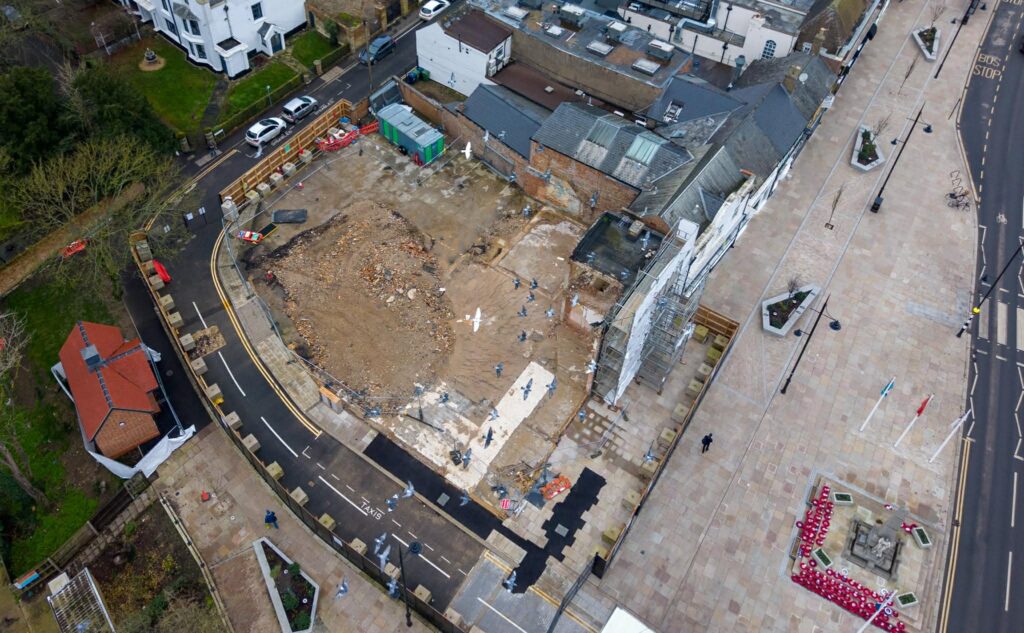
Residents are left staring at a fenced-off corner plot on one of March’s most prominent streets.
No building. No scheme. No developer.
Just an empty space where a substantial building once stood.
Officers warned against demolition — councillors ignored them
The controversy is sharpened by the fact that senior planning and conservation officers explicitly advised against flattening the bank without a replacement plan.
They warned:
- The building was not structurally unsound
- Reuse options had not been properly explored
- Demolition risked a long-term “missing tooth” in the conservation area
Those warnings were ignored.
Councillors voted unanimously for demolition anyway.
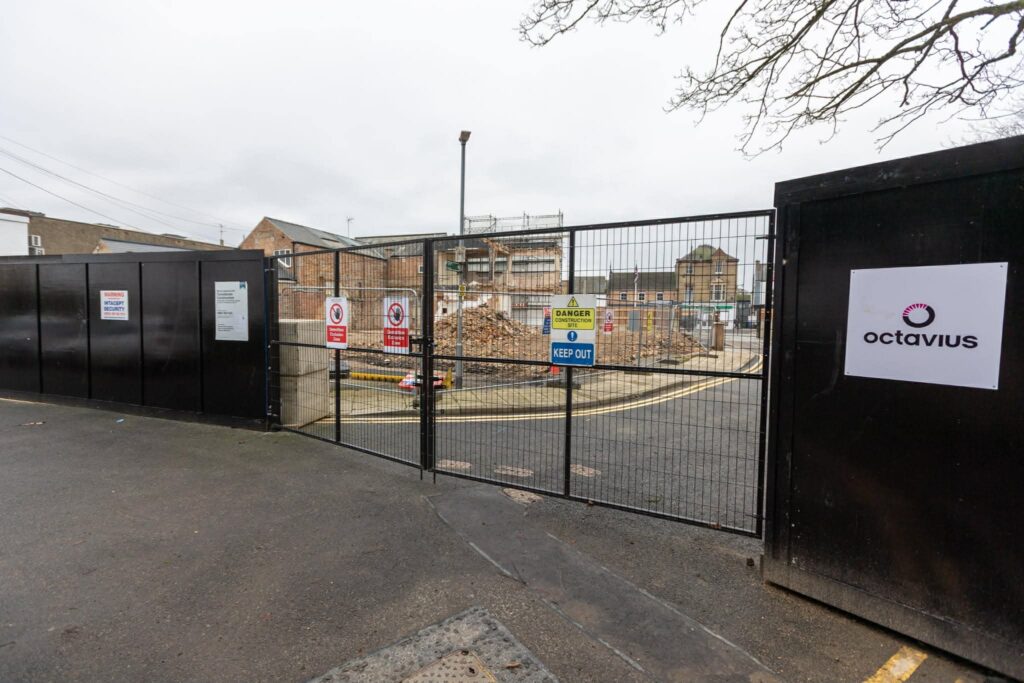
Now, the gamble has materialised exactly as officers feared: an empty plot, no redevelopment partner, and the council trying to sell quickly.
From regeneration flagship to fire sale?
Fenland insists the demolition “unlocked” the site.
But selling the land off rapidly — under sealed bids — looks increasingly like retreat, not regeneration leadership.
If demolition was meant to enable a planned transformation, why is the council now stepping back entirely and asking the private market to decide what happens?
And if the sealed bid rush reflects strong interest, why was the public not told plainly in this week’s press release?
The question Fenland still cannot answer
The council says: “Regeneration is not about quick financial returns.”
But the sealed bid process now is about a quick result.
A tight deadline. One final offer. Councillors choosing the winner.
After £1.12m has already been spent, Fenland appears desperate to bring this saga to a close — quietly, quickly, and before the political fallout worsens.
The council’s regeneration gamble has left a hole in the town centre.
And now, with sealed bids rushed through in days, the question is unavoidable:
Why the hurry — and why wasn’t the public told?