
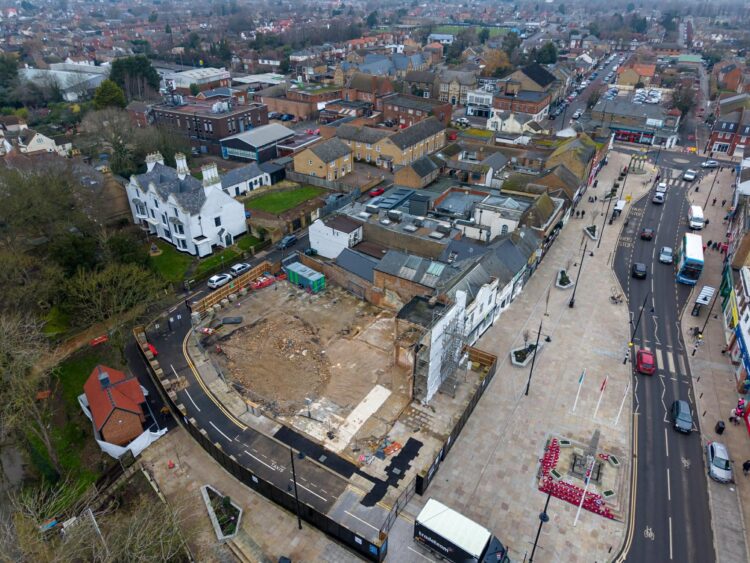
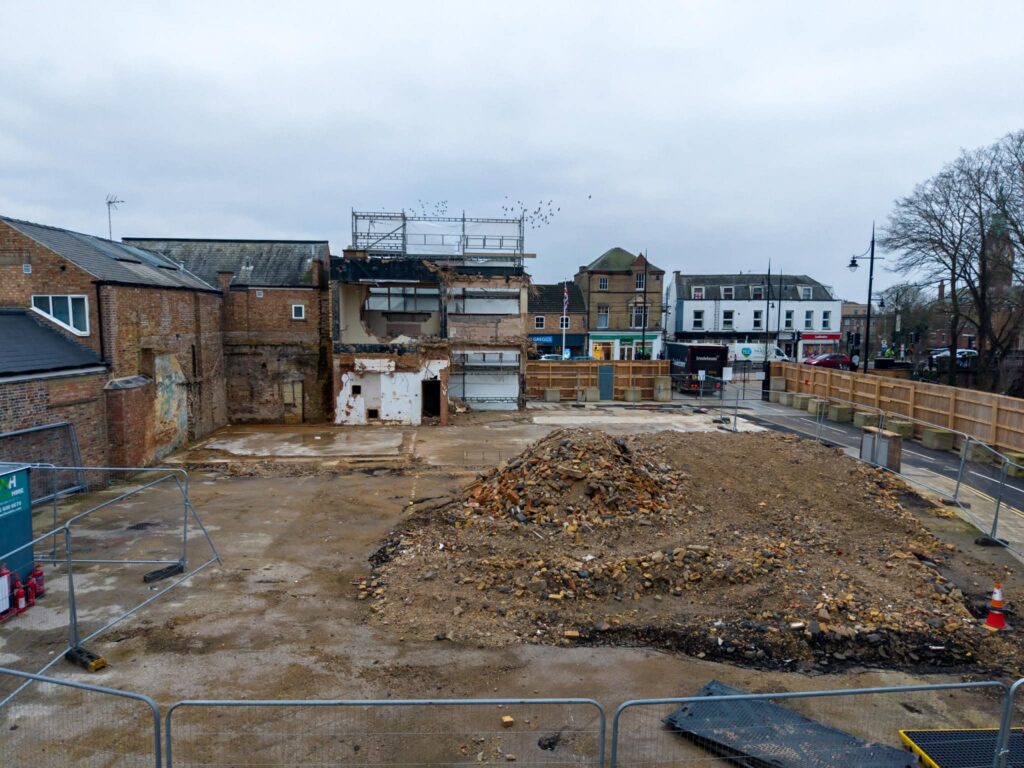
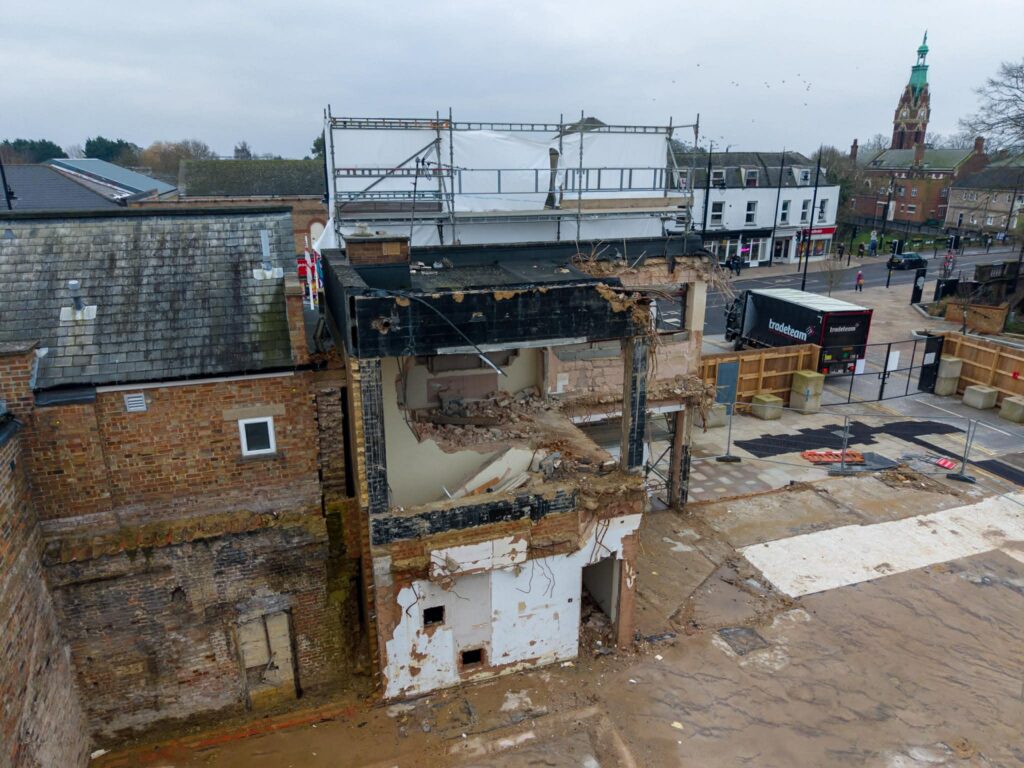
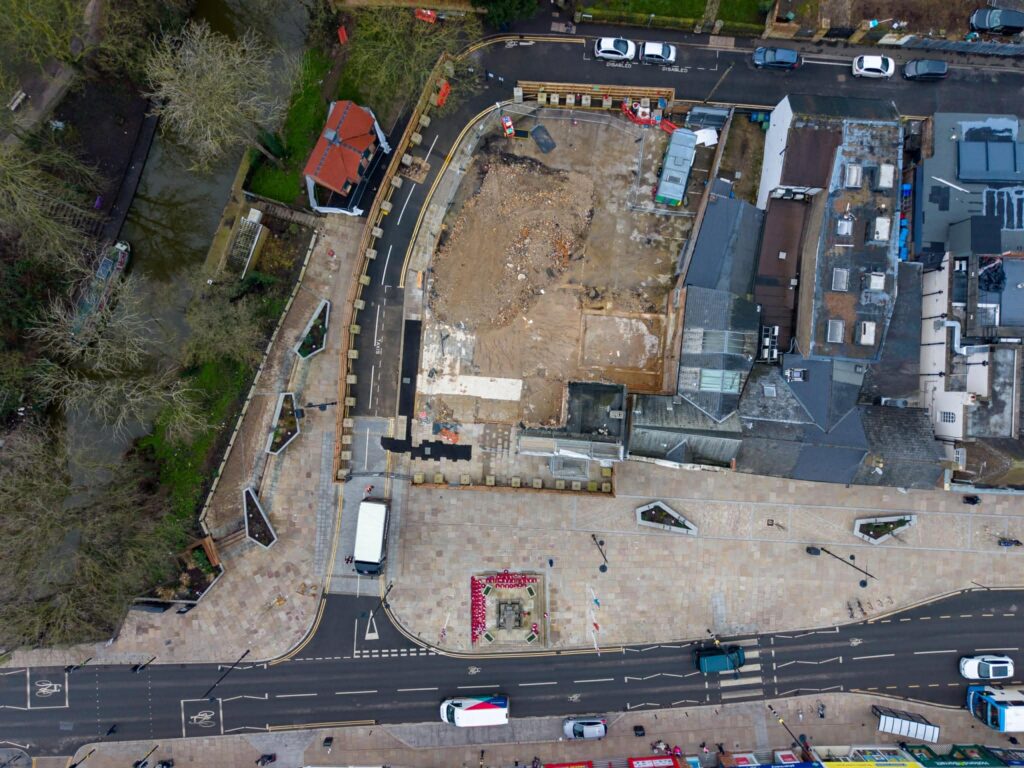
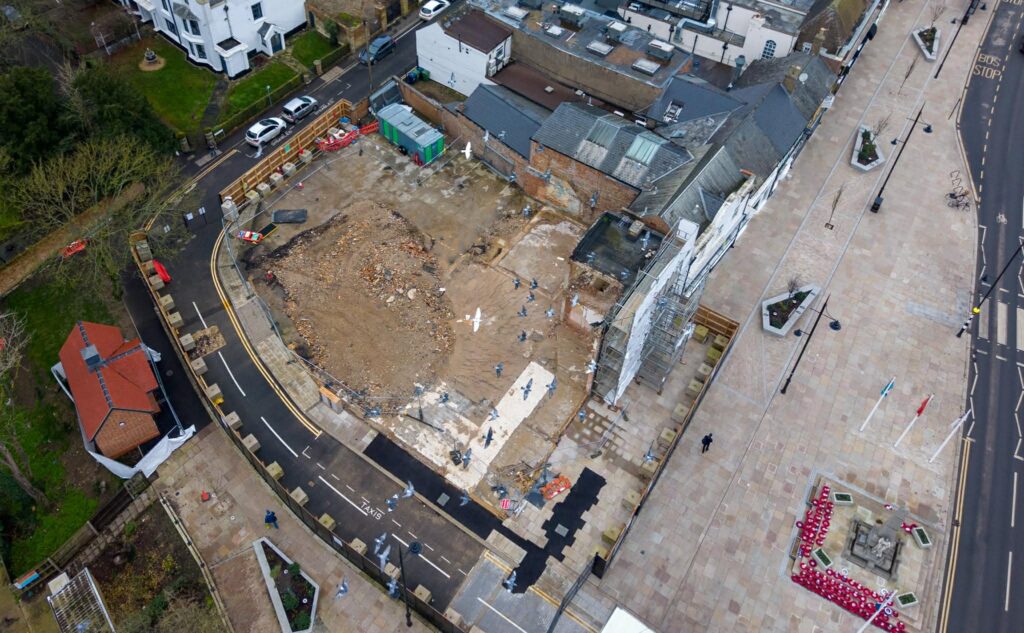
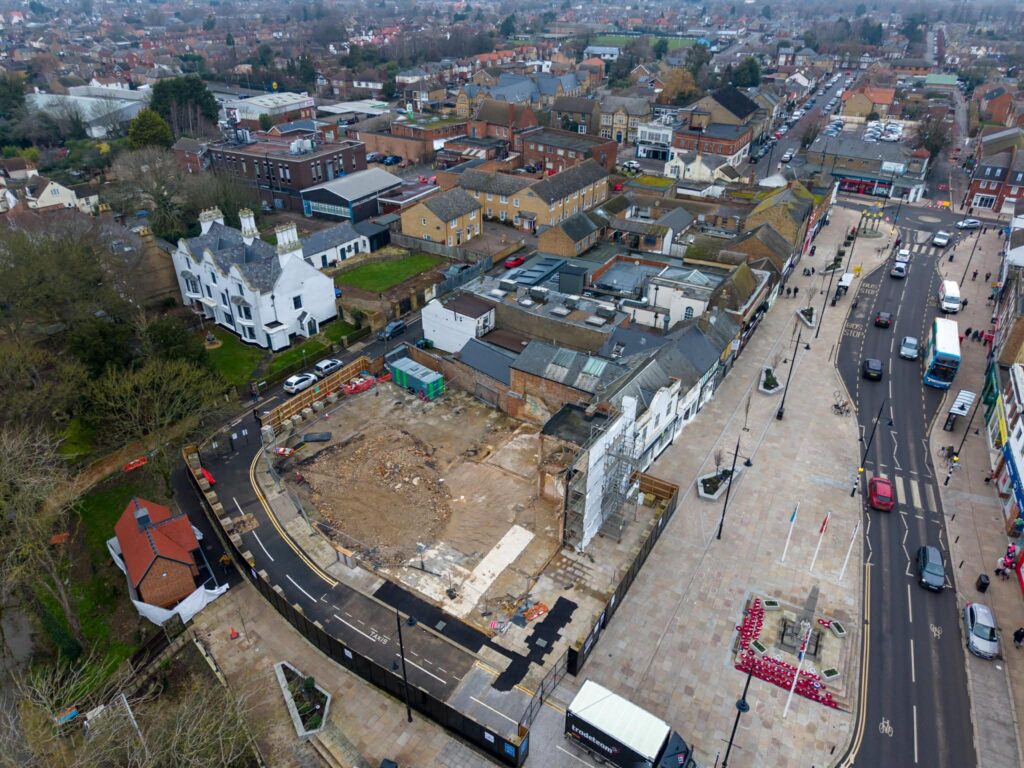
Exclusive photos taken by CambsNews lay bare the end result of Fenland District Council’s flagship regeneration gamble — a vast, gaping hole in the heart of March town centre where the former Barclays Bank once stood.
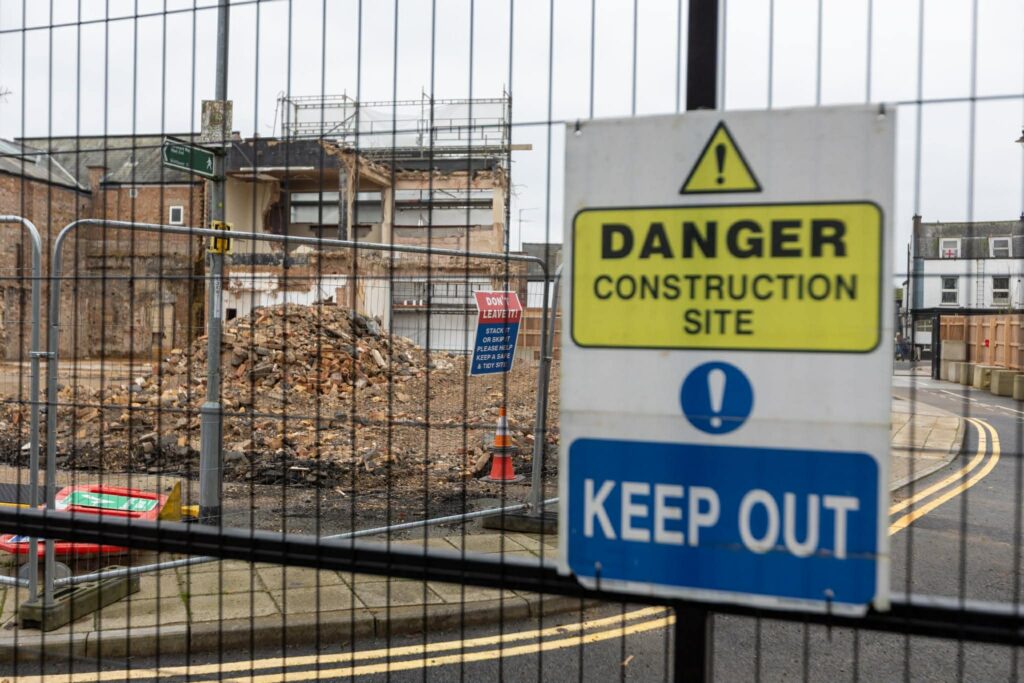
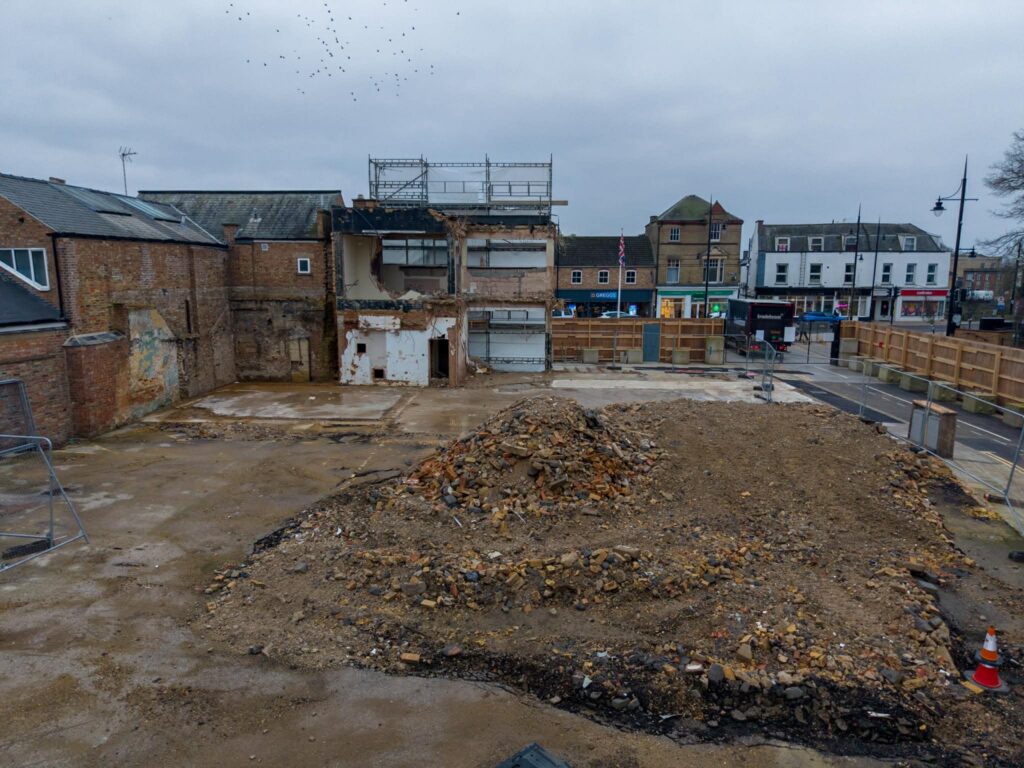
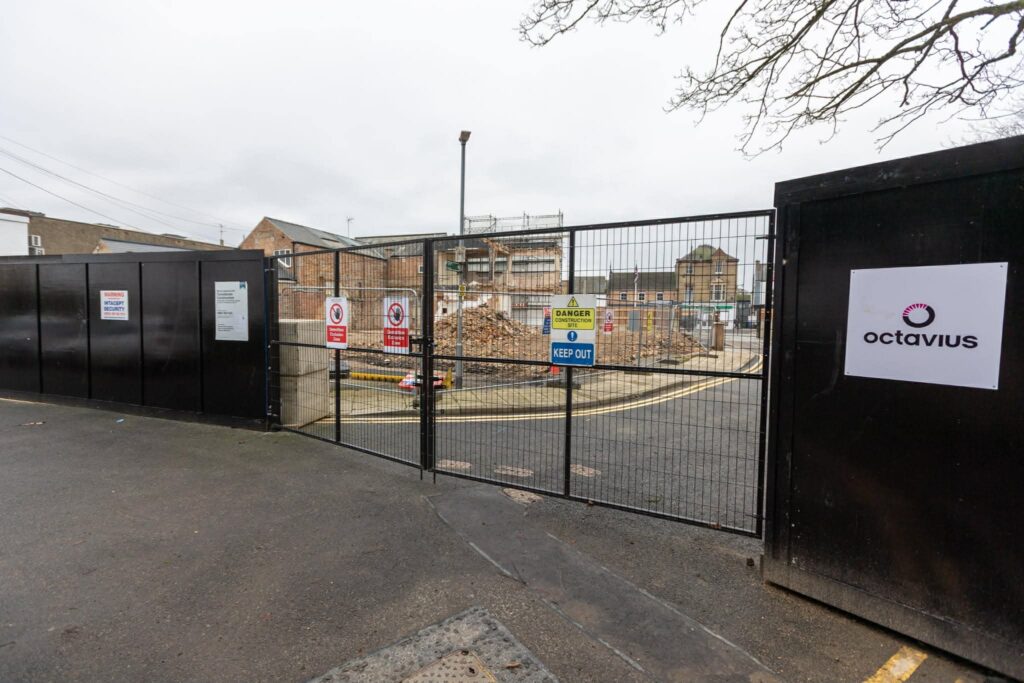
The images show the full scale of the cleared site on Broad Street, fenced off and empty, looming beside the war memorial and newly improved public realm. What they cannot show is the full cost of how March got here.
That has now been revealed.
A Freedom of Information response confirms that Fenland taxpayers — via public funds — have paid more than £1.12 MILLION to buy and demolish the former Barclays Bank building, only for the land to be put up for sale for £295,000.
The true cost — finally in black and white

According to the FOI response, Fenland District Council paid:
- £750,000 to purchase the vacant Barclays Bank building in 2023
- £371,880.08 to demolish it
That brings the confirmed public spend to £1,121,880.08.
The same site is now being marketed by Eddisons Commercial and Maxey Grounds for £295,000 — less than 40 per cent of what the council originally paid, and barely a quarter of the total outlay once demolition is included.
The arithmetic is stark.
£1.12 million spent.
£295,000 return.
A gap of £826,880 — before fencing, security, holding costs and professional fees are even factored in.
What the demolition bill covered
The FOI response confirms that the £371,880 demolition bill covered:
- demolition works
- traffic management
- equipment
- contractors
All of it was funded through the Government’s Future High Streets Fund — a programme designed to revive town centres, not erase buildings and leave empty plots behind.
Fenland District Council said the building was purchased at a price “commensurate with the asking price at the time” and that government approval was granted for both acquisition and demolition under FHSF governance.
But critics say the figures now laid out raise profound questions about value for money.
Bought for £750k — sold for £295k
When the council bought the former Barclays Bank — vacant for two years at the time — senior figures described it as a “fantastic opportunity” and a “defining step” in the regeneration of March.
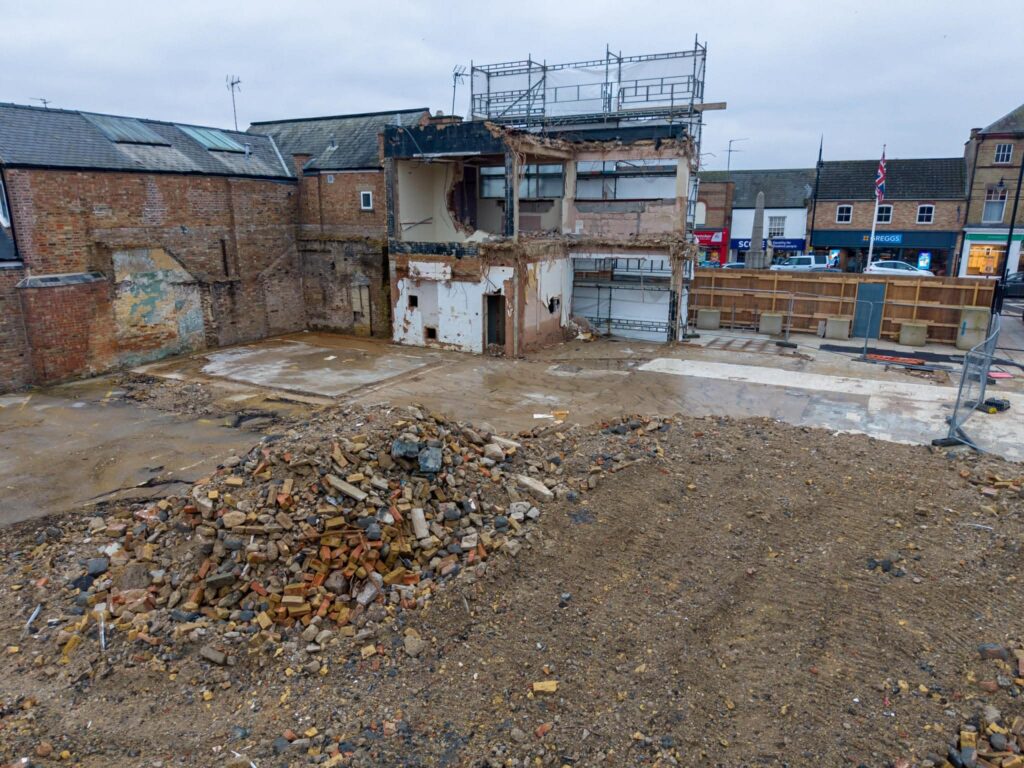
The site occupies one of the most prominent positions in the town centre, adjacent to the war memorial and overlooking riverside public realm works.
Yet two years later, there is no development, no approved scheme and no named partner.
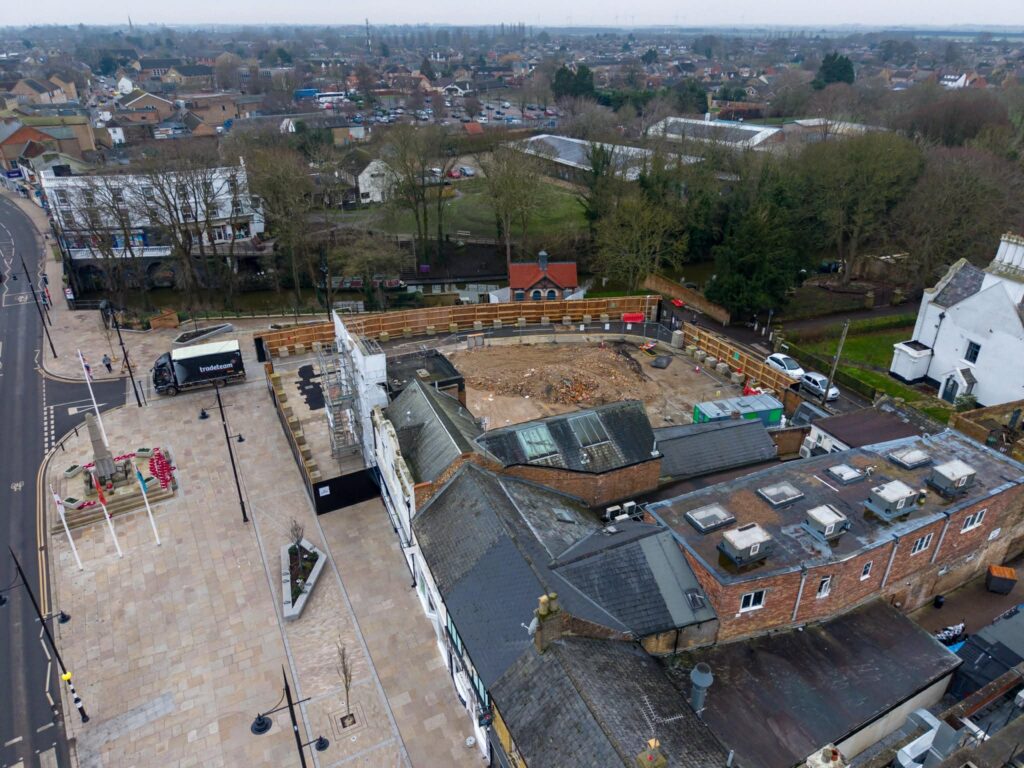
Instead, the cleared land is being offered to the open market at a fraction of its original cost.
Warnings ignored — officers proved right
Perhaps most damaging is the fact that council planning officers explicitly warned against demolishing the building without a replacement scheme lined up.
Their advice was clear and on record:
- the building was not structurally unsound
- reuse had not been seriously explored
- demolition risked creating a long-term “missing tooth” in the conservation area
Despite those warnings, councillors unanimously approved demolition, citing vandalism concerns, asbestos and the building’s unpopularity.
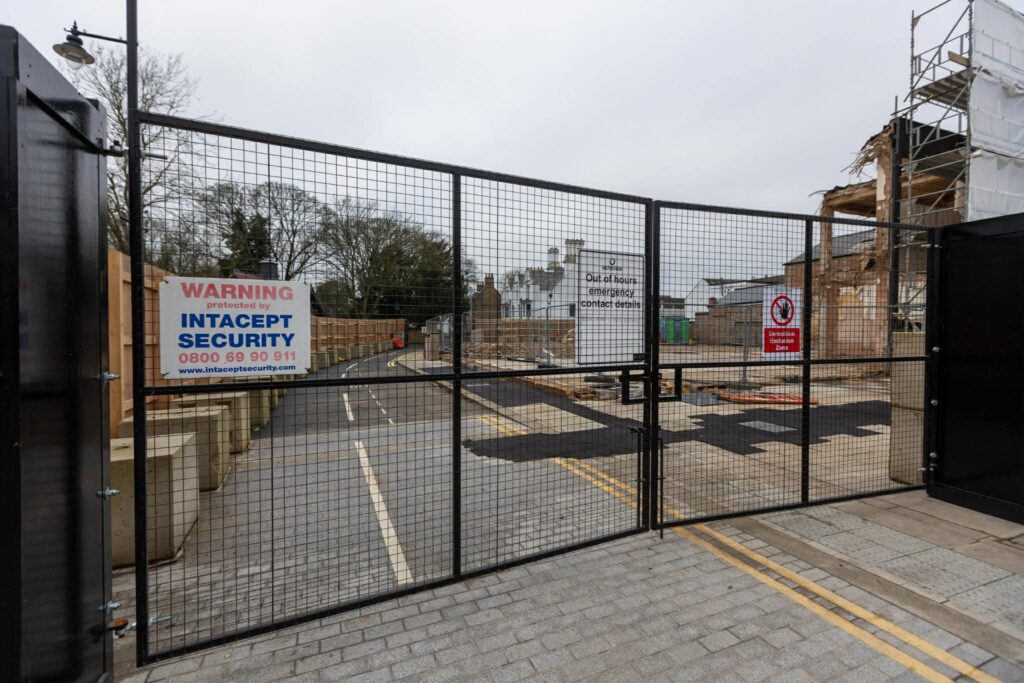
Officers warned the town could be left staring at a fenced void for years.
That warning now looks uncomfortably prophetic.
From regeneration to retreat
Instead of unveiling a new development, Fenland District Council has effectively stepped back from the site altogether.
The land is now being sold, with private developers invited to decide its future.
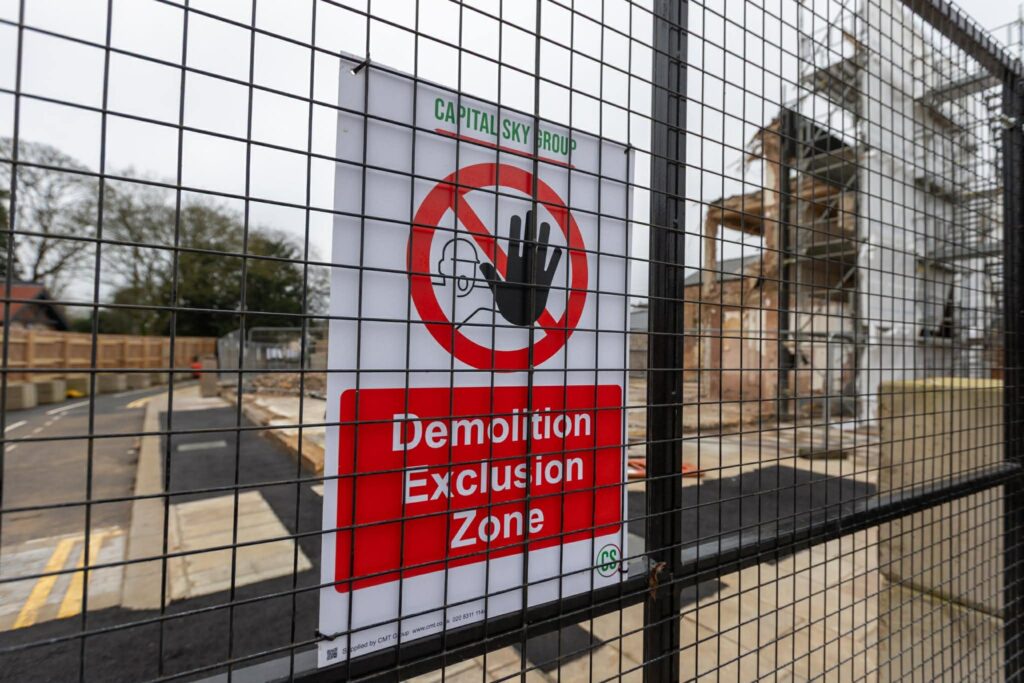
Sales particulars talk optimistically about “new beginnings” and “flexible planning potential”, but make no mention of:
- the £750,000 purchase price
- the £371,880 demolition bill
- or the combined £1.12 million public investment
There is currently no developer, no timetable and no planning consent.
Council defence
In its FOI response, the council stressed that the acquisition and demolition were funded entirely through central government grant, not council tax, and were intended to unlock wider socio-economic benefits rather than deliver a direct financial return.
It said the site was used as a compound and welfare base for surrounding public realm works, saving time and money elsewhere, and argued demolition enabled wider regeneration.
The council added that any sale will include contractual deadlines to prevent long-term vacancy, and that any capital receipts will be retained for community benefit.
A question that won’t go away
Whatever the funding source, it remains public money.
And for many March residents, the reality is impossible to ignore.
They now look at an empty, fenced-off plot on one of the town’s most visible corners — a hole in the ground that cost more than £1.12 million to create.
As the exclusive CambsNews photos show, nothing stands there now but absence.
And one question continues to echo across Broad Street:
How did a flagship regeneration project end up costing more than a million pounds — and leaving nothing behind but a “For Sale” sign?