
Cambridgeshire County Council’s Planning Committee is facing mounting pressure to postpone a decision on expanding incinerator bottom ash (IBA) operations at Saxon Pit, Whittlesey, after a series of last-minute submissions exposed sharply conflicting assessments of environmental and public health risk.
The application seeks to almost double IBA throughput at the site, introduce outdoor crushing and screening, increase heavy goods vehicle movements and raise stockpile heights.
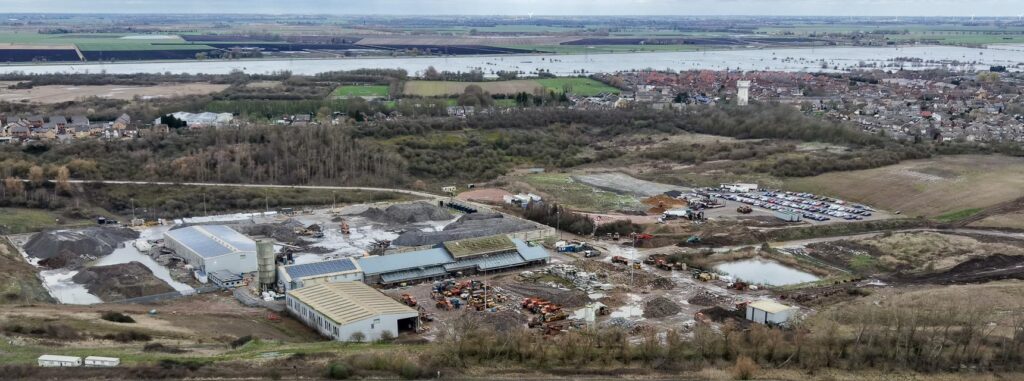
The expansion bid is being made by Johnson Aggregates Recycling Limited who run the construction and demolition and incinerator bottom ash (IBA) recycling plant at the former Saxon Brickworks; they want to increase the amount of waste processed from 250,000 tonnes annually to 614,000 tonnes.
Officers have recommended approval.
But in the 48 hours before the vote, residents, regulators and independent experts have published or disclosed material that paints markedly different pictures of risk — prompting the Saxongate Residents Group to argue that councillors cannot reasonably be expected to assimilate the full evidential picture in time.
“No Identified Public Health Risk” — But On What Basis?
Central to the dispute is the conclusion by the UK Health Security Agency (UKHSA) that there are “no identified public health risks” from current site operations.
That conclusion relied in part on data supplied by the Environment Agency concerning water and sediment testing at and downstream of the site’s discharge point into King’s Dyke.
However, an independent scientific peer review by Dr Andrew Neil Rollinson — released publicly by the Saxongate Residents Group on the eve of the committee meeting — argues that the headline reassurance rests on a limited evidential base.
Dr Rollinson’s review highlights reliance on discrete sampling events rather than a longitudinal, multi-season dataset; soil testing restricted to lead and cadmium despite sediment enrichment of other metals; and a single macroinvertebrate survey conducted without concurrent chemical analysis.
He also notes that incinerator bottom ash was not assessed as a distinct contamination pathway and that irrigation and crop-spraying routes were screened out despite abstraction licences existing for water from King’s Dyke.
His conclusion is not that harm has been proven, but that the “no identified public health risk” finding should not be treated as determinative given dataset limitations and the narrow framing of exposure pathways.
January Results, “Anomalies” and Unpublished Modelling
The controversy intensified on 20 February when the Environment Agency disclosed sediment contamination data under Environmental Information Regulations. Those January 2025 samples identified elevated metal concentrations at and downstream of the discharge point.
Two working days before the planning determination, the agency wrote to residents stating that the January results were preliminary and anomalous. It said additional sampling and “extensive modelling” undertaken during 2025 demonstrated no environmental harm and supported the decision to issue a discharge permit.
In correspondence dated 2 March, the agency reiterated that its National Permitting Service water quality scientists had carried out further sampling and modelling to assess impacts on chemistry and ecology. It said an ecological survey confirmed species present were those expected in such a watercourse and were not negatively impacted by pollution.
The agency expressed confidence that modelling, regulatory controls, backstop limits and monitoring requirements within the permit provide sustained environmental protection.
However, the modelling methodology, hydrological assumptions and detailed discharge permit conditions are not yet fully in the public domain.
Residents argue that without publication of the modelling framework — including whether low-flow, reversed-flow and seasonally variable conditions in the managed King’s Dyke drainage system were explicitly assessed — councillors are being asked to rely on conclusions rather than transparent evidence.
“With only two apparent sampling points in time, it is not self-evident that one dataset invalidates the other,” the residents group wrote in its formal response. It also questioned whether cumulative annual contaminant mass loading over decades of expanded operations has been quantified.
Technical Planning Critique Surfaces Late
Compounding concerns is a 43-page technical planning critique prepared by Dr Rollinson in November 2025 that was submitted during the application process but was not published on the council’s planning portal at the time.
The document has now been uploaded following a request by county councillor Chris Boden just days before the committee meeting.
In a material objection lodged this week, Cllr Chris Boden highlighted that the applicant’s dust assessment relies on quarrying guidance rather than recognised industry guidance specific to incinerator bottom ash processing. Dr Rollinson’s report also examines issues including outdoor processing, dust characterisation, leachate control and surface water management.
Residents say the late publication of the critique — alongside new Environment Agency disclosures and internal review confirmation — has created an evolving evidential landscape that councillors have had minimal time to digest.
Confirmed Breach Adds to Concerns
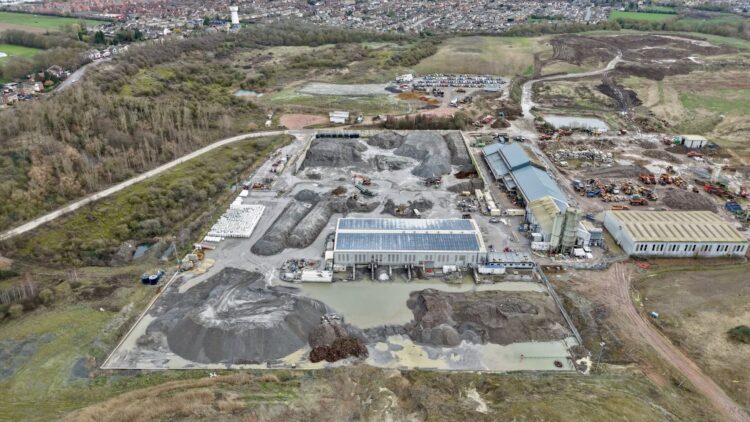
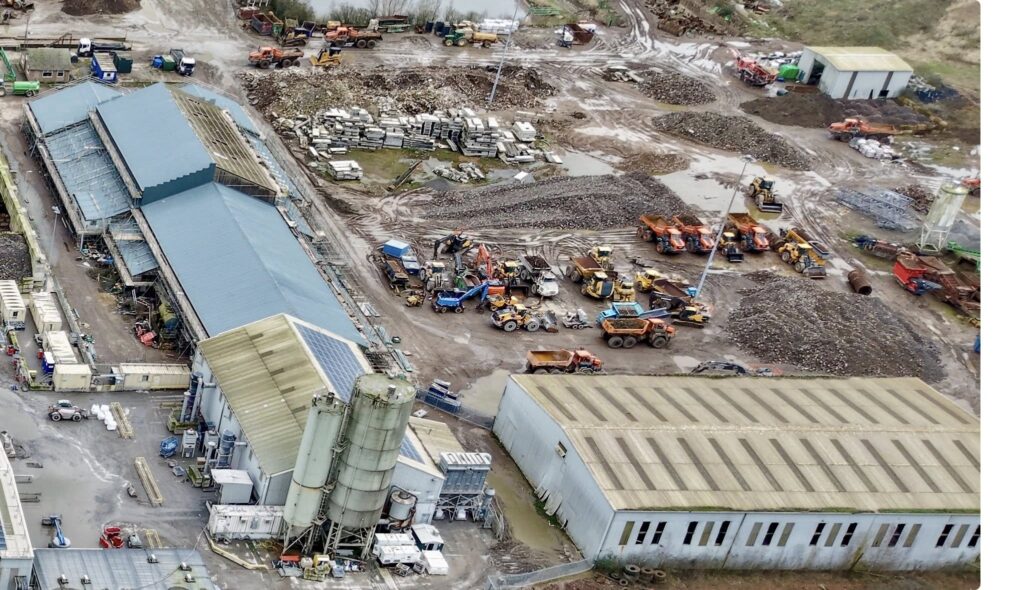
At the same time, Cambridgeshire County Council enforcement officers have confirmed in writing that incinerator bottom ash has been stored outside the approved Waste Reception Area, in breach of Condition 25 of the existing planning permission.
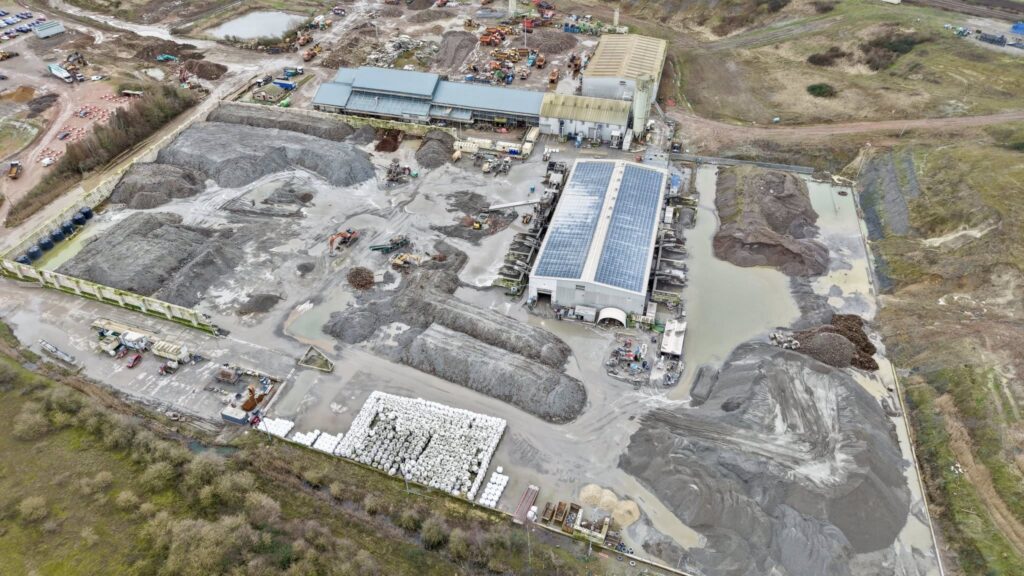
Aerial images taken on 1 March appear to show external stockpiling and operational doors open, contrary to stated containment measures.
For residents, the confirmed breach is not merely a planning technicality but a material factor in risk assessment. They argue that modelling and regulatory controls may assume idealised containment conditions that do not always reflect observed operations on the ground.
“Overwhelming Pressure” for Postponement
The Saxongate Residents Group says it is not asking councillors to determine that harm has occurred. Instead, it argues there is now “overwhelming pressure” to at least postpone the decision until all relevant information — including full modelling methodology, permit conditions and the outcome of the Environment Agency’s internal review — is properly assimilated.
Members of Cambridgeshire County Council’s Planning Committee must weigh officer recommendations for approval against conflicting technical interpretations of risk, newly surfaced documentation and ongoing regulatory review.
With substantial expansion proposed — including near-doubling of IBA throughput and more intensive processing — residents contend that a short deferral would allow decision-makers, public health officials and drainage authorities to assess the complete evidential position.
As councillors convene, the central question is no longer simply whether Saxon Pit can expand — but whether the scientific and regulatory picture is sufficiently settled to justify deciding n
NB: PLANNING COMMITEE AT 10AM AT NEW SHIRE HALL, ALCONBURY, MARCH 4TH