
The road to hell is often said to be paved with good intentions — and Peterborough City Council’s August 2020 decision at the height of the Covid pandemic may be a textbook example. As previously reported in August 2020, the council approved the freehold purchase of 62–68 Bridge Street — the former TK Maxx / New Look (Woolworths) building — as the proposed home for a new library and cultural hub.
The decision report framed the purchase as urgent: TK Maxx’s lease was due to expire in March 2021, and council officers warned the site could be boarded up, harming the “highly prominent” southern gateway to Bridge Street and “sending the wrong signals” about Peterborough as a place to invest.
But, as CambsNews can now reveal, the same report recorded, in plain terms, that the council proposed paying more than the building’s retail market value — and quantified that gap.
And within a short space of time, the building was being sold off because refurbishing it for its intended Towns Fund purpose was “no longer economically viable.”
By the time disposal was approved, the council’s own papers acknowledged that the sale value was less than the price paid in 2020.

What follows is the documented decision trail — what was said at the point of purchase, how it was justified, how the plan changed, and how the council ended up disposing of the site.
EXHIBIT A — The 10% premium was documented upfront
The critical valuation line appears in the August 2020 acquisition report:
“The valuation report indicates a market value of £3.45m i.e. 10% below the proposed purchase price if valued as a commercial retail property.”
In other words, the council’s own report acknowledged the independent retail market valuation was lower than what the council proposed to pay.
Officers then set out the rationale for paying that premium by pivoting to an alternative valuation basis — the operational public‑service logic: “If valued for the purpose of delivering public services, i.e. as a council operational property, then its ‘fair value’ will exceed £8m.”
“The valuation follows Treasury Red Book guidance and takes account of the costs that would need to be incurred if the building required to be replaced.”
The report’s formal recommendations then asked the Cabinet Member to approve both the purchase and associated costs:
The Cabinet Member was recommended to:
1. Approve the freehold acquisition of 62–68 Bridge Street, Peterborough.
2. Approve associated stamp duty land tax and professional fees.
3. Approve a contribution towards building conversion and fit out costs, subject to confirmation of financial support from the Towns Fund.
Who signed off in 2020 — and who the report says was consulted
The acquisition report sets out that this was a delegated decision: “This report is for Cllr Peter Hiller to consider exercising delegated authority…”
It also states the recommendation followed internal senior discussion and consultation with named Cabinet leads: “This report follows discussion within the Council Management Team and consultation with the relevant Cabinet lead members for Strategic Planning, Commercial Strategy and Investment (Councillor Hiller); Waste, Street Scene and Environment (Councillor Marco Cereste) and Housing, Culture and Recreation (Councillor Steve Allen).
So while Cllr Hiller was the formal decision‑taker under delegated authority, the report itself records that the proposal was discussed with the council management team and consulted on with other senior Cabinet members named in the document.
The purchase came with breathtaking assumptions.
The 2020 purchase noted that buying circa 89,000 sq ft over three floors “in a highly prominent location towards the south end of Bridge Street” and “their proximity to Town Hall” arguably make the council “a special purchase”.
The foundations for the purchase began in May 2020, when council officers sought approval to begin a business case for the acquisition.
“The opportunity to acquire the building at this point is a timely one,” says a council report, acknowledging that the town board set up in January 2020 had been overseeing the basis of the city’s bid for the government’s towns fund.
It was linked to work and support from support from the Arts Council, to consult upon and to develop a cultural strategy for Peterborough.
“62-68 Bridge Street presents an opportunity to develop a new library and cultural hub for the city with a range of other related community and council uses,” says the report.
“The second and third floor of the building and the former New Look shop also provide opportunities to attract commercial income for office and retail uses.
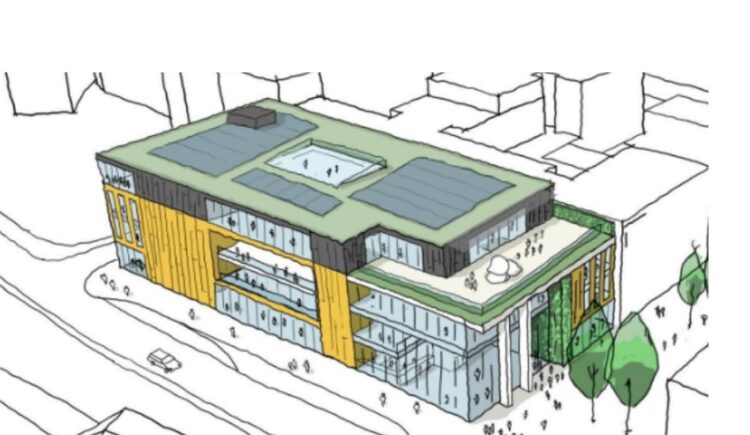
“Council officers have commissioned a concept design for the buildings from architect 3D Reid. In addition, a capacity study has been undertaken on the existing library site to assess its potential value as a site for future residential development including active ground floor uses”.
It adds: “There is an opportunity for the council to consolidate key operations in the area from Bridge Street to Fletton Quays while also delivering improvements to service delivery and efficiency.
“This will be achieved by converting the properties at 62-68 Bridge Street to create a multi-purpose hub including a new library, community facilities, meeting rooms, rehearsal rooms and studio space for cultural activities, together with access to facilities for community learning and education”.
It reported the valuation report indicating a market value of £3.45m i.e. 10% below the proposed purchase price if valued as a commercial retail property.
“However, the council is in a competitive bidding position and the valuation, which is less than 50% of the price paid in 2011, is understandably cautious, given the current Covid 19 impacts on retail and commercial property,” says the report.
“The purchase of 62-68 Bridge Street will also free up opportunities for disposal of other council owned properties, realising efficiency savings and capital receipts.
“The valuation report also states that, if valued for the purpose of delivering public services, i.e. as a council operational property, then its ‘fair value’ will exceed £8m.
“The valuation follows Treasury Red Book guidance and takes account of the costs that would need to be incurred if the building required to be replaced.”
The objectives were admirable, explaining how “the proposed acquisition will allow the council to create a new multi-purpose community hub enabling council services to be relocated from existing buildings that could subsequently be disposed of or leased out to deliver savings for the council and potential sources of new income.
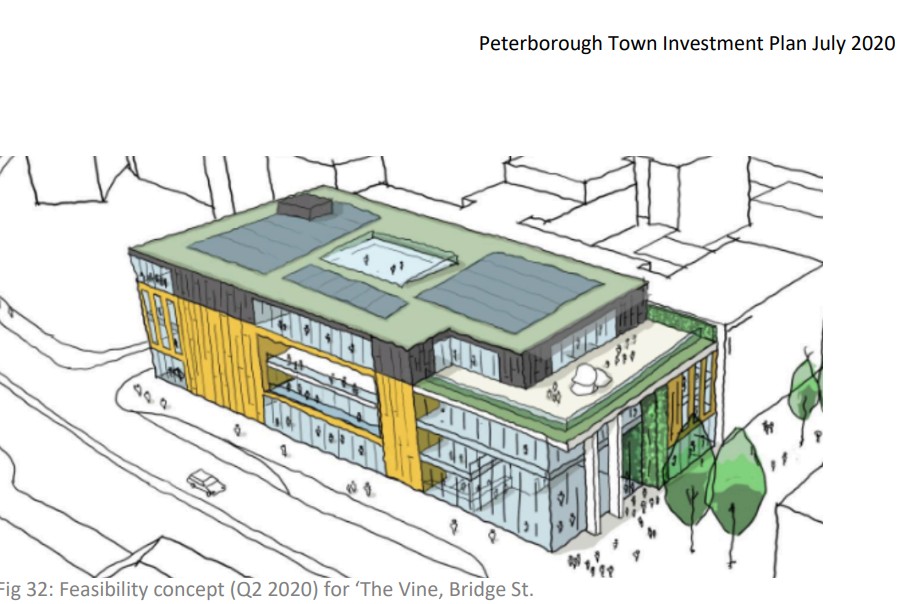
“ Work has been done on to prepare an outline accommodation schedule for the building showing how it could be sub-divided providing a new central library as its anchor occupier and a range of other spaces that could be used to provide offices, studio, meeting and conference room space with the New Look Unit let out as retail or related space e.g. a food hall”.

Allowing 62-68 Bridge Street to remain empty “would leave a major void unit in Bridge Street at a time when the UK’s ‘High Street’ retail industry has been struggling to compete as a result on online shopping, out of city centre retail parks and the rise of value retailers, as well as serious new challenges in the wake of the Coronavirus pandemic.
“There is a very real danger that this highly prominent site could in a worst case scenario be boarded up for some time or subject to occupational uses that would be sub optimal in this location, eroding the attractiveness of this highly prominent part of Bridge Street and sending the wrong signals about Peterborough as a vibrant location for investment”.
The purchase, having been agreed, went ahead. At speed, even to the point that should the town board agree, “the council would be expected to exchange contracts and make a deposit of 10% of the agreed purchase price (£400,000 by the end of August 2020) with the balance of funding due upon completion once the outcome of the Towns Fund bid is known.
“There is a financial risk should the Towns Fund bid fail. Feedback to date from Government has been positive and it is considered a manageable risk.”
And so it was documented that “the council will purchase the building for £3.975k plus stamp duty land tax and will contribute up to £5m towards the refurbishment costs.
“The Towns Board has approved a bid of £10m towards the refurbishment costs within the Towns Fund Bid of £25m.”
However, the project assumptions were tightly coupled to the building’s conversion — and the report itself acknowledged market uncertainty around future lettings, particularly in a Covid‑hit environment.
2022: the recklessness of the purchase begins to become apparent
Minutes of the January town board reveal “it is no longer possible to commit Peterborough City Council borrowing to support town board projects”.
The Vine is one of those no longer receiving council support although the board is optimistic that delivery “at a reduced scale” is still possible. The board heard that although the TK Maxx building had been bought, city council of an additional £7.4m borrowing to support it was no longer there.
The board agreed to retain the TKK building for the Vine, looking to find an alternative use for the neighbouring former New Look site.
By June 2022 optimism remained rife for the TKK hub for education, community culture local enterprises use. Tetra Tech appointed as the design team, Local Spaces contract for design operator, stakeholder workshops scheduled, with Cllr Wayne Fitzgerald advising that “the board needs to have confidence in the provider that they will deliver what they say they will deliver”.
Board meeting September 30: Confidence remains with decision to seek Government approval for the changes to the project. Board presented with 3 options, one of which was to cancel it altogether. However they agreed to plough on and explore “other potential funding streams”.
November 2022: Contingencies discussed but outline business case for using just former TKK building agreed for submission to Government.
2023: the strategic pivot — The Vine moved elsewhere
By 2023, the council’s public record shows a clear break with the original Bridge Street plan. The council’s own Vine project page states:
“This replaces the previous plan to use the former TK Maxx building in Bridge Street.”
It also dates the shift: “The change of approach… was proposed at the… Towns Fund board meeting… 10 May 2023.”
By that stage, The Vine was to be across multiple sites — including Central Library, Goods Shed, and Peterscourt — rather than being concentrated in the Bridge Street building.
Town board meeting of May 10 – the first since the previous December – and notification that the Government would be happy if the Vine project was delivered across different locations.
The funding gap remained, the city retained new operator and a new “multi-disciplinary design team”.
The minutes record: “The financial figures …. identify a £5m funding gap” if the TKK building is used.
2024: formal confirmation that Bridge Street was out
Council disposal papers later confirm that government formally approved an adjusted scheme excluding Bridge Street:
“MHCLG gave formal delegated Project Adjustment Report (PAR) approval on 19 December 2024 for the Vine two site option which excluded the former TK Maxx and New Look building.”
This is a key governance milestone: it confirms, at programme level, that the Towns Fund flagship no longer required the Bridge Street site.
2025: the council declares the building surplus — and prepares to sell
By July 2025, Cabinet was being told the building was to be sold because conversion for The Vine was no longer viable. The local democracy reporting summary of the Cabinet agenda described the building as being proposed for sale because it was “no longer economically viable.”
The council’s own disposal report put it more formally: “This property was acquired for the Vine project in 2020 and it has subsequently been established that the refurbishment of the building for this purpose is no longer economically viable within the budget envelope available…”
The same report records the acquisition cost as: “acquired… using Towns Fund grant funding with a total spend of £4,164,346.”
At this stage, the building’s role had shifted from “flagship hub” to “surplus asset”, and the council’s attention turned to disposal and recycling proceeds back into the Towns Fund programme.
December 2025: marketing results, six bids, and a sale agreed
Cabinet minutes and the formal decision record show what happened next. A council decision notice states Cabinet resolved to dispose of the building to Bridge Street (March) Limited, and to recycle net sale proceeds back into the Towns Fund budget.
Peterborough City Council’s Bridge Street story is a cautionary tale: visionary ambition, pandemic pressure, and financial optimism collided, leaving a high-profile site abandoned in practical terms, even as intentions remained noble.