
With local elections due in May, Peterborough City Council is heading into the final weeks of the municipal year under intense financial pressure, as senior councillors prepare to scrutinise a forecast £5.9 million overspend on this year’s budget.
A detailed Quarter 3 Budgetary Control Report, authored by Emma Riding, Service Director for Financial Management and Deputy S151 Officer, will be presented to the Sustainable Future City Council Scrutiny Committee on 19 March 2026.
The report lays bare what it describes as “significant and ongoing financial challenges” facing the authority, with overspending driven by delayed savings, rising service pressures and continued exposure to high‑risk capital projects.
Although the council has succeeded in marginally improving its position since the previous quarter, the underlying message is stark: without urgent mitigation, reserves will be further depleted and financial resilience weakened at precisely the moment voters are preparing to pass judgement on the administration’s record.
Overspend persists despite marginal improvement

The report confirms that, as of 31 December 2025, the council is projecting an overspend of £5.9m, equivalent to 2.5% of its £233m net revenue budget.
While this represents a £0.1m improvement on the Quarter 2 position, finance officers warn this should not be mistaken for a turnaround. The report states plainly: “The current situation continues to demonstrate the significant and ongoing financial challenges the council is facing.”
The overspend is attributed primarily to delays in delivering an ambitious savings programme, compounded by cost pressures across multiple service areas. Officers caution that if the position does not improve by year‑end, the council will be forced to draw further on its General Fund to plug the gap.
Children’s services at the heart of the problem
One of the most serious and persistent pressures identified in the report lies within Children and Young People’s Services, which alone accounts for more than £1.3m of the forecast overspend.
The single biggest driver is the escalating cost of placements for children in care. According to the report: “£2.1m forecast overspend on children’s placements costs… due to difficulties and delays in delivering savings from the ‘Step Down’, fostering and the House Project programmes.”
While the number of looked‑after children is actually lower than budgeted for, the composition of placements has shifted toward significantly more expensive residential provision, including at least one “exceptionally high” cost placement.
This has been compounded by a £1.6m shortfall in income at Clare Lodge, the council’s secure children’s unit, and a £0.7m pressure caused by continued reliance on agency social workers.
Beyond immediate costs, the report also flags a worsening position in the Dedicated Schools Grant, which is forecast to be overspent by £9m this year alone, leaving a £12.5m cumulative deficit by the end of 2025/26
Savings programme falling behind
As election campaigning gathers pace, councillors will be acutely aware that the council’s ability to regain control of its finances hinges on delivering savings that, so far, have failed to materialise at the required scale.
The report reveals that 31% of planned savings are still rated red or amber, meaning they are either at high or moderate risk of not being achieved this year.
Among the most concerning items are:
- £1.3m in Culture and Leisure savings delayed by the stalled transfer to Peterborough Culture, Heritage, Learning and Leisure (PCHLL)
- £1.1m of unachieved income in Regulatory Services
- £0.9m in procurement savings now deemed undeliverable this year
- £0.8m of savings linked to Peterborough Ltd, still at risk
- £0.7m in management structure savings considered unachievable
The report notes that all red‑rated savings have already been “reported as a pressure within the forecast position,” meaning there is little room left for manoeuvre without further cuts or corrective action.
Capital financing costs add to the strain
While service pressures dominate the revenue budget, the council’s capital financing position is emerging as another major source of instability.
The report identifies a £2m net pressure linked to higher‑than‑expected borrowing costs, delays in asset sales and revised assumptions around interest rates.
Officers warn that sustained high interest rates mean the council is now “more reliant on external borrowing,” at a time when internal cash balances and reserves have already been depleted.
Hilton Hotel project continues to cast a long shadow
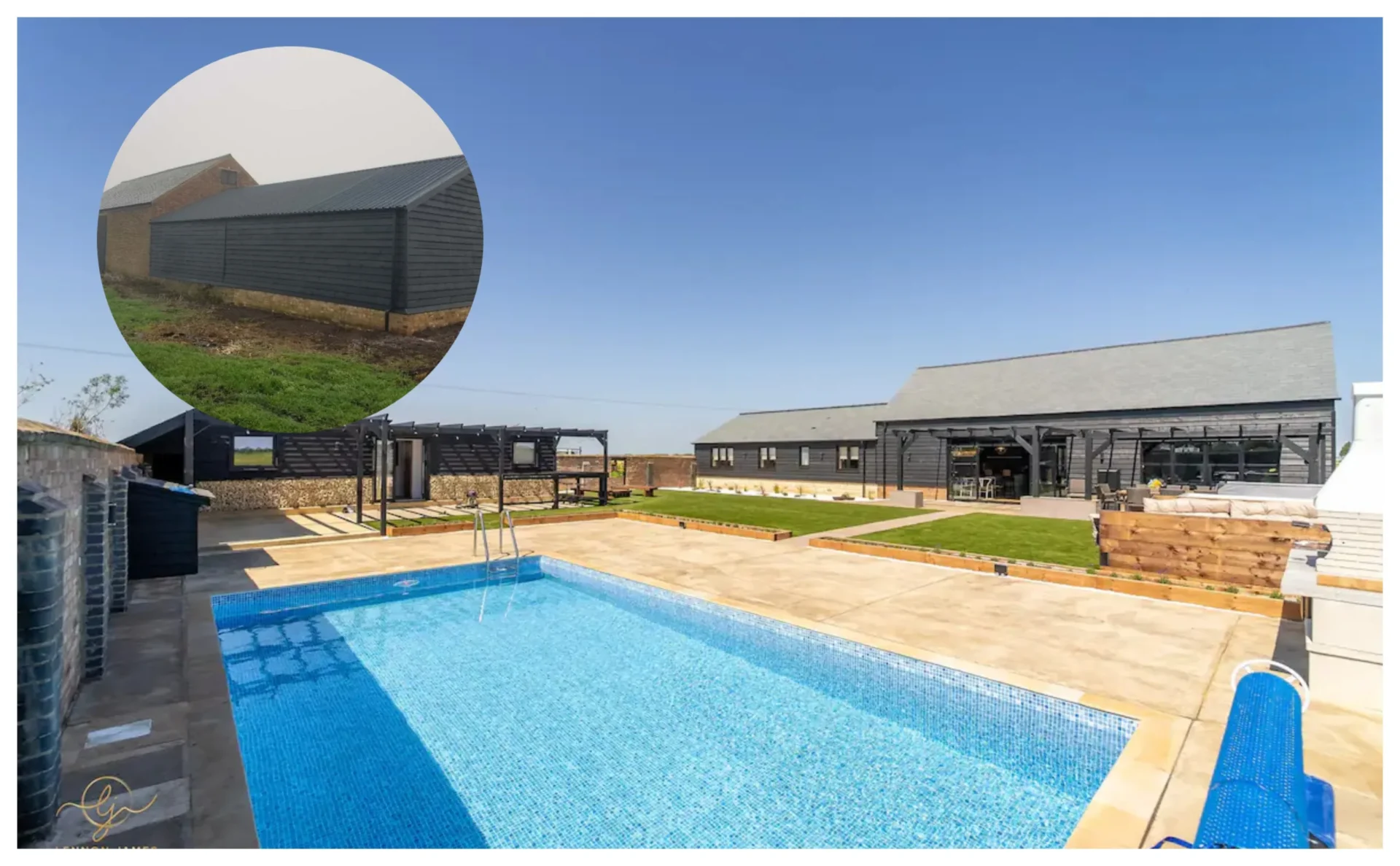
Among the most politically sensitive issues detailed in the report is the Hilton Hotel project, which has become emblematic of the council’s exposure to high‑risk regeneration schemes.
While the report confirms that Cabinet has already decided to instruct administrators to market and sell the unfinished hotel site, it also reveals that the council’s financial exposure has not disappeared.
The capital financing forecast explicitly includes: “£0.2m expected credit loss related adjustment in respect of the Hilton Hotel Loan impairment.”
The report explains that the decision to pursue a sale followed independent advice highlighting the estimated costs for completion, the financial risks for the council, and the specialist expertise that would be required to operate such an asset.
Although the Cabinet decision survived a call‑in, the continued presence of impairment costs underscores the lingering financial consequences of the project as councillors head into an election.
Place and Economy directorate under pressure
Elsewhere, the Place and Economy Directorate is forecasting a £1.9m overspend, placing it in the highest risk category.
Key drivers include:
- £1.3m in unachieved Culture and Leisure savings
- £1.1m shortfall in Civil Penalty income
- £0.8m savings gap at Aragon Direct Services
- £0.5m in additional contract costs linked to National Insurance changes
- Rising costs in waste treatment, property services and building control income losses
While some favourable variances are noted, including additional solar income and grant funding, these are insufficient to offset the scale of the pressures being reported.
Legal costs and corporate pressures add up
The report also highlights growing strain within Legal and Governance, which is forecasting a £0.8m overspend despite being reclassified as low risk overall.
This includes: “£0.6m pressure from external legal fees related to both routine and exceptional legal cases, and reduced income.”
Corporate Services faces its own challenges, including undelivered procurement savings, increased insurance premiums and falling income from cremation services.
Reserves under threat
Perhaps most concerning in the context of long‑term financial sustainability is the impact on the council’s reserves.
Despite a series of emergency measures – including the use of flexible capital receipts and an application for Exceptional Financial Support from government – the report warns that the General Fund could fall to £9m after covering this year’s overspend.
This is a precarious position for a council of Peterborough’s size and further limits its ability to absorb future shocks.
A difficult political backdrop
All of this unfolds against the backdrop of May’s local elections; while officers emphasise that controls remain in place and that efforts continue to stabilise the position, the report offers little comfort that the council has yet turned a corner.