
The bid to create a brand-new Flag of the Fens—once pitched as a unifying symbol for the flatlands of Cambridgeshire, Lincolnshire, Norfolk and Suffolk—has hit what many now fear is a terminal standstill.
The resignation of the project’s architect and loudest champion, former Fenland councillor Elisabeth Sennitt Clough, has left the campaign without leadership, without momentum, and without a clear path forward.
Newly released Freedom of Information correspondence, obtained by CambsNews, and cancelled council meetings show a project that has not merely slowed, but collapsed inward, with little appetite among remaining councillors to revive it.
Prominent local heritage group the Wisbech Society, argues that the region already has a widely recognised flag—and that the council’s proposed competition was unnecessary.
A vision driven by one advocate
At the centre of the stalled movement was Elisabeth Sennitt Clough, poet, councillor, and passionate advocate for fenland culture. She was also chair of the Culture, Arts & Heritage Committee.
She said: “Being born in the Fens myself, I know how important it was historically for each island to have their own identity… I thought that a single flag might be seen to be airbrushing all that individual history.”
She argued that her initiative was backed by the Flag Institute, whose preference, she argued, was that where no historical banner exists, the best route is a public design competition that invites widespread community involvement.
Local opposition: The Wisbech Society speaks out
The Wisbech Society, one of the region’s best-established heritage organisations, became one of the leading voices against the push for a competition. Their argument is anchored in a simple but powerful point: a flag already exists.
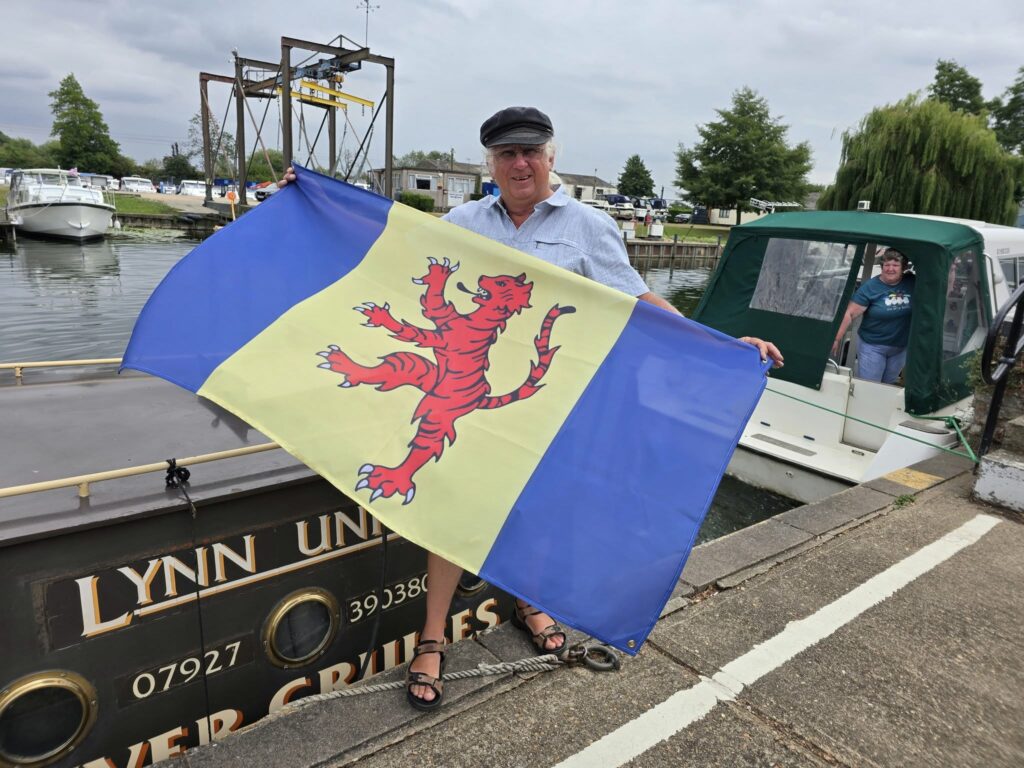
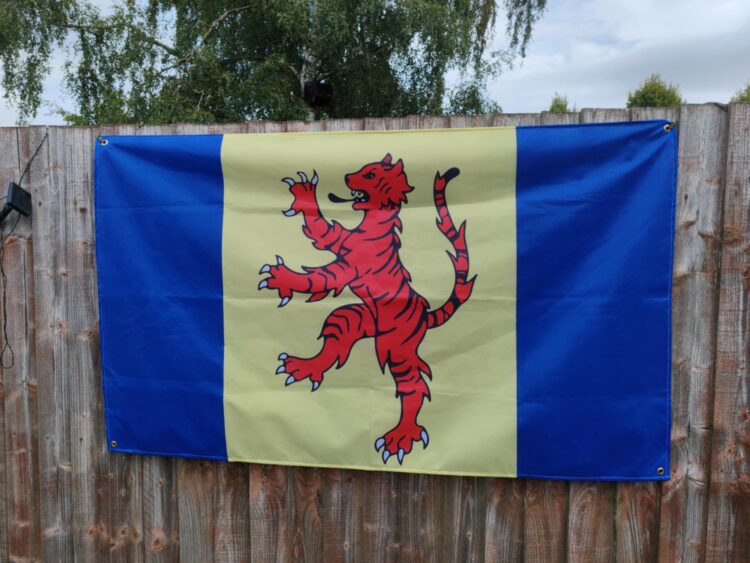
Designed in 2016 by James Bowman, the unofficial Flag of the Fens—with its striking Fen Tiger and agricultural colours—has quietly gained traction over nearly a decade. It flies from homes and businesses, appears on postcards and merchandise, and has received endorsements from parish councils, district authorities, and even MP Steve Barclay.
Wisbech Society trustee Susanah Farmer did not mince words in her message to Fenland District Council: “There is already a Flag of the Fens that has been designed and is in wide circulation… Why would Fenland District Council wish to get a design for a rival flag rather than showing support for this flag?”
To supporters of the existing design, the idea of launching a fresh competition feels not only unnecessary but disrespectful to a grassroots movement that has already achieved something rare: genuine, unprompted public adoption.
For many, Bowman’s design emerged organically, which makes it feel more authentic than any committee-led initiative could.
The resignation that stopped the machine
All of these tensions might have been manageable had Sennitt Clough remained in office. But her resignation from the council drastically altered the landscape.
The effects were immediate:
- The last meeting of the Culture, Arts & Heritage Committee was cancelled.
- The committee is not scheduled to meet again until February 2026.
- Plans for a steering group and public competition have disappeared from the council’s forward plan.
- No councillor has stepped forward as a successor to champion the project.
Without its architect, the initiative has simply collapsed in place.
A debate that revealed deep divisions
The council chamber debate on 19 May 2025 demonstrated just how split elected members already were. While many recognised the cultural value of defining a Fenland symbol, almost none agreed on the method—or the need—for a new flag.

Council leader Chris Boden admitted initial scepticism, though he accepted that public interest made a competition logical. Yet his support was heavily qualified: the process must cost the council virtually nothing and impose minimal strain on officer time.
Others were far less convinced:
- Cllr David Patrick warned that holding a competition when an unofficial flag already enjoys widespread support risked looking performative or futile.
- Cllr Steve Tierney disapproved of the entire concept of creating a flag, though he accepted a competition would at least make the process democratic.
- Cllr Mark Purser, by contrast, spoke passionately in favour, seeing a flag as a vessel of pride and belonging.
- Cllr Gavin Booth delivered the strongest repudiation of all, calling the competition “nonsense” given the existing design’s local legitimacy.
This was not a council ready to gather behind a unified vision.
The disappearing competition framework
Just weeks after the May debate, when the committee met in early June, Sennitt Clough informed colleagues that the Flag Institute had received the proposed competition framework but had not yet responded. She promised an update at the next meeting.
That meeting—scheduled for September—was cancelled without explanation.
Given that the Flag Institute is already considering the existing Bowman design, and with the committee dormant, the likelihood of a new competition moving ahead is vanishingly small.
Where things now stand
The combination of circumstances has led many observers to reach a single conclusion: the existing Flag of the Fens is almost certain to remain the region’s unofficial, and eventually perhaps official, banner.
With merchandise circulating widely, local councils already endorsing it, and the public showing affection for a symbol that rose from within the community rather than being engineered by bureaucracy, its position is arguably stronger now than before the failed competition proposal.
And without a driving hand inside Fenland District Council, there is no mechanism to challenge it.
With Elisabeth Sennitt Clough’s resignation, the initiative to create a new, competition-designed banner has lost both momentum and purpose. The Wisbech Society and other supporters of the existing flag probably believe the matter is settled—and for now, they appear to have the stronger case.
Unless a new champion emerges, the Fens will continue to fly the banner already embraced by its people.