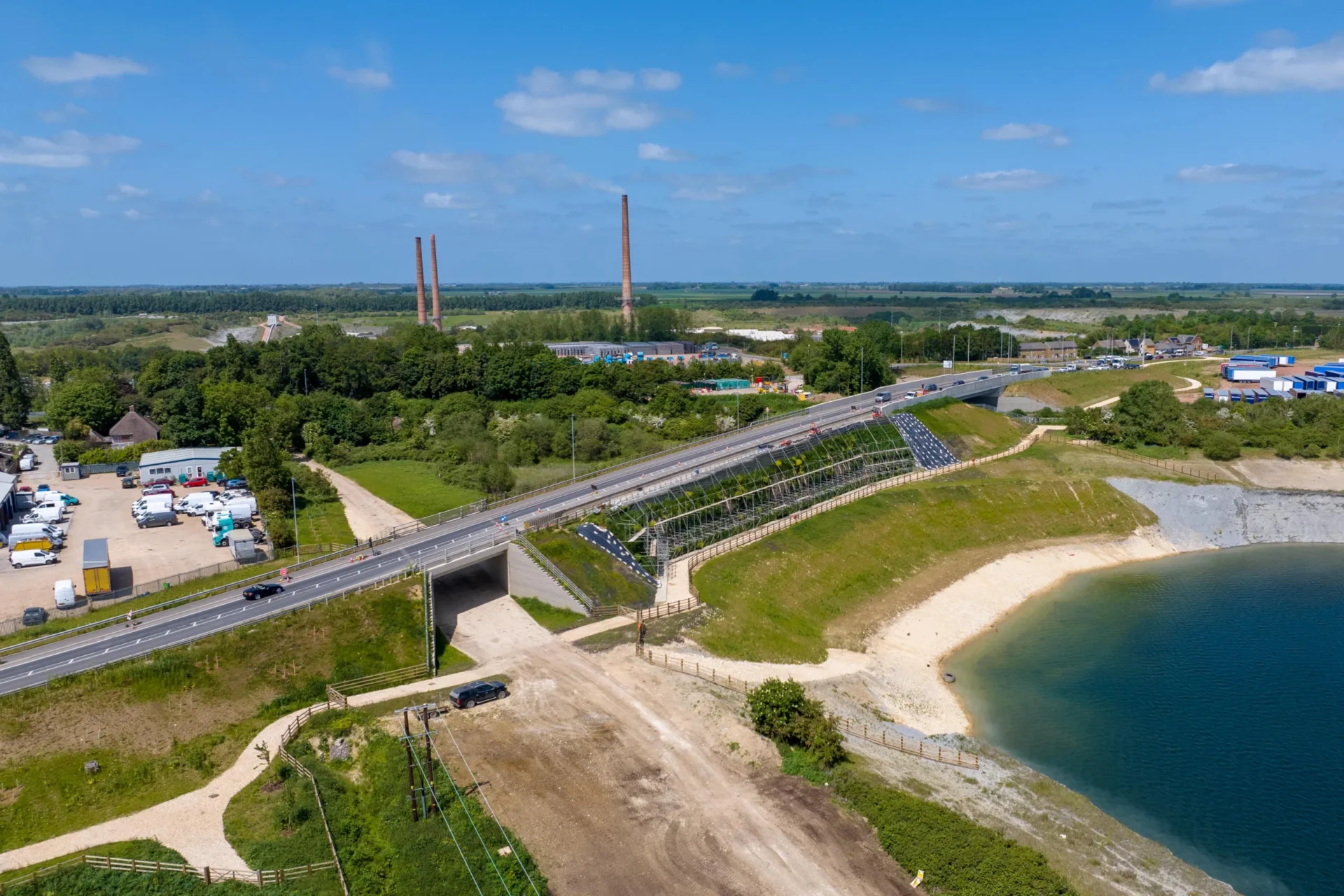

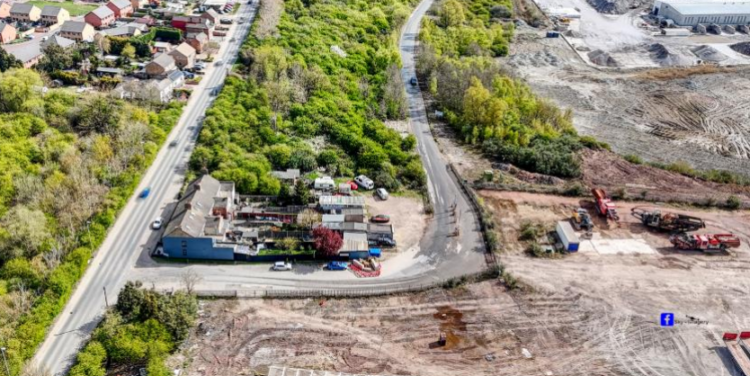
A bitter planning row continues on the edge of Whittlesey — as residents and councillors warn an industrial expansion could bring hundreds more lorries, longer operating hours and an escalating battle over noise, dust and disruption.
The former Saxon Brickworks site, once a familiar part of Whittlesey’s industrial landscape, has become the centre of a storm that many fears could change daily life in nearby streets.
Operators Johnsons Aggregates & Recycling Ltd (JARL), which runs an Incinerator Bottom Ash (IBA) recycling facility at the former brickworks, wants permission to dramatically increase activity on site.
But Whittlesey Town Council has recommended refusal — warning of what it calls a “significant and detrimental impact” on the health and wellbeing of local residents.
A major expansion plan

The planning application to Cambridgeshire County Council (CCC/24/091/VAR) is not a minor adjustment.
It seeks to intensify operations by:
- Increasing the quantity of waste imported
- Allowing more heavy goods vehicle (HGV) movements
- Raising stockpile heights
- Extending operating hours
- Introducing new processing activities
The company says the aim is to boost the site’s capacity to process incinerator bottom ash and construction waste, producing secondary aggregates for reuse.
In its own words: “A successful outcome of the S.73 Application will enable… JARL to improve the Company’s operational flexibility and enable the recycling facility to accommodate IBA material from other Energy from Waste (EfW) plants…”
The numbers causing alarm
At the heart of the dispute is the scale of what is being proposed.
The planning statement confirms the company wants to increase permitted throughput to more than 600,000 tonnes a year.
This would be achieved by raising the annual permitted volume of Incinerator Bottom Ash (IBA) from 250,000 to 460,000 tonnes, and Construction & Demolition (C&D) waste from 50,000 to 154,000 tonnes, for a total of 614,000 tonnes per year
For many residents, those figures represent a sharp escalation in industrial intensity — right next to homes.
Lorry movements set to triple
But it is the traffic impact that has sparked some of the fiercest opposition.
JARL wants a huge increase in daily HGV movements: “The applicant therefore seeks permission… to increase HCV movements to 332 (166 in and 166 out) movements per day.”
That is up from 92 movements currently permitted.
Locals fear the roads around Whittlesey will face relentless heavy vehicle pressure — with noise, emissions and congestion all rising together.
Highways authority issues formal objection
Adding weight to local concerns, Peterborough City Council’s Local Highway Authority has formally objected.
Its response warns: “There remains highway safety and capacity concerns at the A605 / Milk and Water Drove priority junction…”
The authority concludes the junction will exceed safe limits: “The junction will operate above practical capacity (RFC > 0.85).”
And it cautions that even explored solutions could worsen problems elsewhere: “Banning right turning movements… will result in an increase in U-turning traffic…”
The highways authority ultimately warned the proposal would create: “A severe impact in terms of congestion… associated with increased highway safety risk too.”
Noise fears at the heart of the row
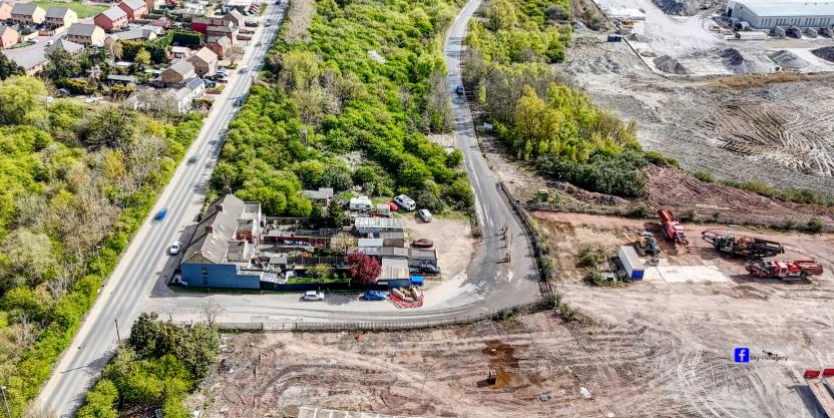
Noise has emerged as one of the most sensitive flashpoints — because the site sits close to residential streets, with some homes less than 200 metres away.
The official Noise Management Plan openly acknowledges the risk: “The operation of the plant… may result in noise emissions… which may have a potential to result in adverse effects at sensitive locations… if not adequately controlled.”
Homes on Peterborough Road, Snoots Road and Priors Road are listed as “sensitive receptors”.
With longer operating hours and increased throughput proposed, residents fear disturbance could extend further into evenings, weekends and outdoor leisure time.
24/7 processing — including Sundays and Holidays
One of the most striking details is the plan for round-the-clock work inside Building 1.

The planning statement confirms: “Processing of IBA 24 hours a day, 7 days a week including Sundays and Bank Holidays…”
Only Christmas Day is excluded.
While the company says this will largely be indoors, the prospect of continuous industrial activity has become a lightning rod for opposition.
Promises of ‘best available techniques’
JARL insists it has developed a detailed strategy to minimise disruption.
The Noise Management Plan states: “The purpose… is to specify the measures… to ensure Best Available Techniques (BAT) are adopted to minimise noise emissions…”
Measures include:
- Keeping operations away from the nearest boundary
- Enclosing noisy machinery inside buildings
- Building physical barriers
- Imposing speed limits on site vehicles
- Strict monitoring
The company says: “Measures implemented to date have reduced noise levels…”
And further mitigation is proposed: “Further mitigation and control measures… would further reduce noise levels…”
Higher walls and stockpiles
The expansion also involves raising stockpile heights — and the surrounding wall.
The planning statement explains: “Increase… the stockpile… to 6.7 metres… requiring… a corresponding increase in the Lego block wall… to a height of 7.2 metres.”
These barriers are intended to provide acoustic screening.
But for many locals, the image of ever-higher industrial walls is emblematic of the development’s scale.
Dust, emissions and odour concerns
Noise is only one part of the picture.
Whittlesey Town Council warns of:
- Excessive dust
- Persistent noise pollution
- Harmful vehicle emissions
- Loss of residential amenity
The council argues the combined effects would be “significant and detrimental”.
The Odour Management Plan acknowledges odour risk: “odour emissions… have the potential to cause impacts at sensitive locations…”
Though it claims: “The material is characterized by distinct earthy/cementitious odour, but usually light and not offensive…”
A community drawing a line
Despite technical assurances, Whittlesey Town Council has recommended refusal.
Its objection states: “The Town Council strongly recommends refusal… due to the significant and detrimental impact it would have on the health and well-being of Whittlesey residents…”
For residents, the issue is not whether controls exist on paper — but whether they will truly protect quality of life in practice.
The planning balance
The company suggests the proposal is sustainable intensification, delivering:
- Waste diversion from landfill
- Secondary aggregates for construction
- Local job growth
The planning statement highlights: “…expected… to lead to the hire of a further 20 new employees…”
And argues: “The proposal will result in an overall reduction in carbon dioxide emissions…”
What happens next?
Possible outcomes include:
- Approval with strict conditions
- Refusal to protect residents
- Further consultation and mitigation
Cambridgeshire County Council is yet to decide when the application will be decided by its planning committee.