
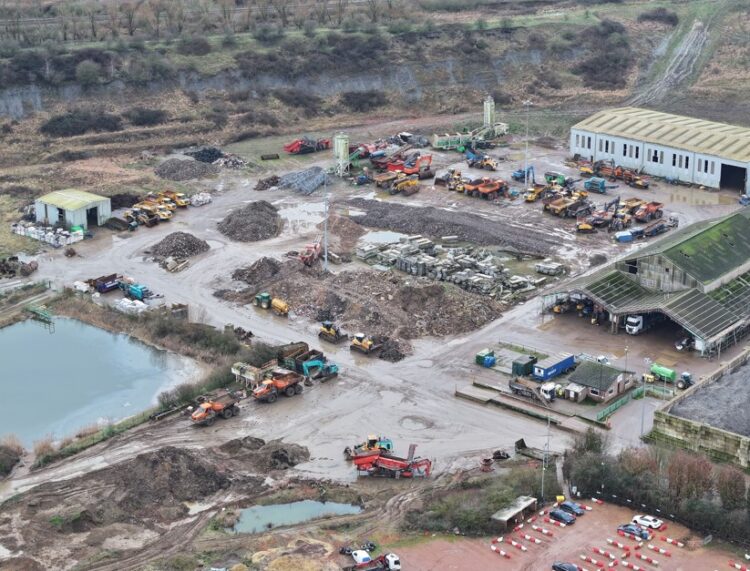
On Wednesday 4 March at 10.00am, Cambridgeshire County Council’s planning committee will consider a substantial expansion of incinerator bottom ash (IBA) operations at Saxon Pit, Whittlesey. Officers recommend approval—but CambsNews believes proceeding would be a grave mistake. Recent developments and ongoing concerns demand that this decision be postponed.
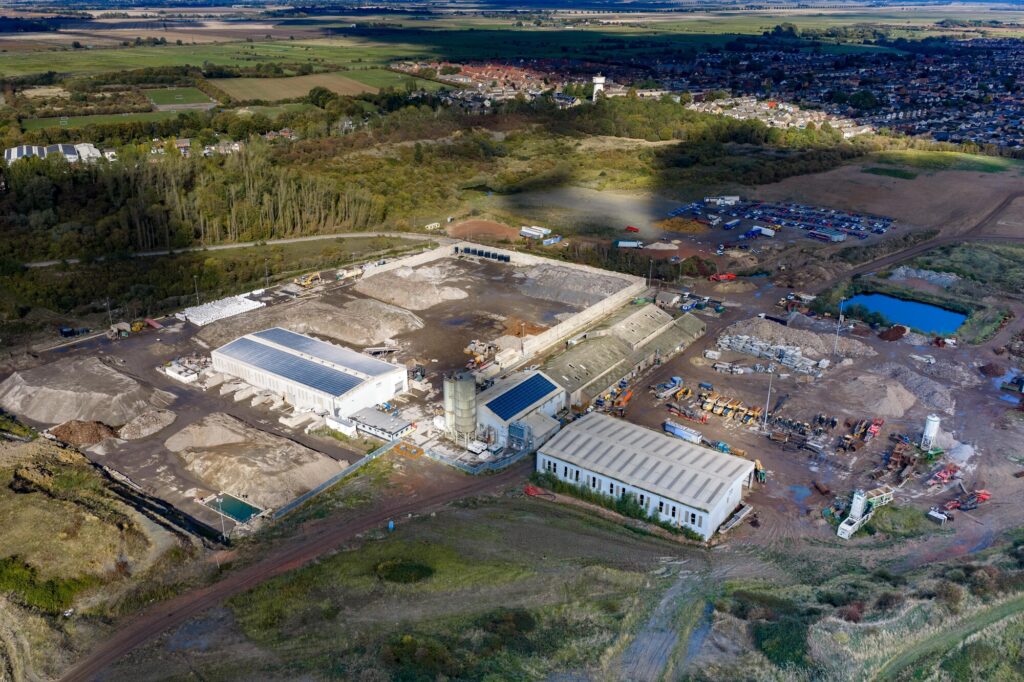
The application is far from a routine adjustment. It proposes nearly doubling IBA throughput, introducing outdoor crushing and screening, raising stockpile heights, and significantly increasing HGV traffic—all within the current footprint. Yet there are no upgrades to the concrete pad or greywater system, the critical infrastructure that contains chemically active, toxic material.
Worse, the proposal conflicts with regulatory limits. The Environment Agency (EA) permits stockpiles up to 4.6 metres, with 1 metre freeboard. The planning application shows stockpiles reaching 6.7 metres—a clear discrepancy with legally binding limits.
Current breaches make expansion risky
Cambridgeshire County Council enforcement has confirmed that IBA is being stored outside approved areas, violating Condition 25. The site’s concrete pad—essential for containment—has been damaged twice in twelve months, and standing water has been observed on operational surfaces. With the pad already compromised, approving near-doubling throughput risks spreading toxic material further.

The greywater system also raises concerns. Water contacting IBA outside containment is recycled for dust suppression without chemical testing. As volumes increase, so does the risk of chemical accumulation, yet the planning application ignores this critical issue.
Traffic chaos already evident
The operator’s own transport assessment reveals that permitted vehicle movements are routinely exceeded—140 per day versus 92 allowed. The current application seeks approval for 332 daily HGV movements. Despite these breaches, the council has taken no enforcement action, further undermining confidence in the site’s management.
Late and unclear environmental data
Shockingly, on 27 February—just two working days before the meeting—the EA withdrew previously released data, claiming earlier results showing heavy metals in King’s Dyke were “preliminary” and “anomalous.” Subsequent modelling has not been published. Members are now asked to approve a major operational expansion without access to complete, verified environmental data.
Even more concerning, the EA has confirmed it has never tested Saxon Pit IBA for PFAS, persistent substances with known long-term health effects. Yet it has asserted there is no PFAS risk, a conclusion CambsNews views as dangerously premature.

Public health and statutory concerns remain
The Director of Public Health recommended refusal in January, citing cumulative health impacts and the loss of resident trust. Peterborough City Council’s Highway Authority sustains its objection over road capacity and safety. The Middle Level Commissioners confirm that discharge consent into King’s Dyke is still unresolved—a critical factor for preventing flooding. None of these issues have been adequately addressed.
An independent peer review of the multi-agency health assessment underscores the gaps: IBA was excluded as a contamination pathway, dust and chemical analyses were incomplete, and agricultural pathways were inconsistently assessed. Late disclosure of EA data further delayed scientific scrutiny.
Residents deserve a voice
The public health drop-in on 4 February drew over 100 residents, signalling community concern. Yet just two weeks later, the planning vote is scheduled with no liaison group formed, no trust-building measures in place, and unresolved evidence questions. CambsNews believes this is unacceptable.
A free 52-seat coach has been arranged for residents to attend Wednesday’s meeting. Members need to see that Whittlesey is watching—and that the people most affected expect their concerns to be taken seriously.
Why the vote must be deferred
This application has been under consideration for 18 months. A short deferral would cost nothing but ensure decisions are based on stable, verified, and transparent evidence. CambsNews calls on councillors to postpone the vote until residents’ safety, health, and environmental concerns are fully addressed, and regulatory compliance is verified.
The stakes are too high for rush decisions. Saxon Pit is not just another planning application—it is a test of public trust, environmental stewardship, and community voice.
CambsNews stands firmly with the residents of Whittlesey: let their concerns be heard, properly considered, and fully resolved before a decision is made.
.