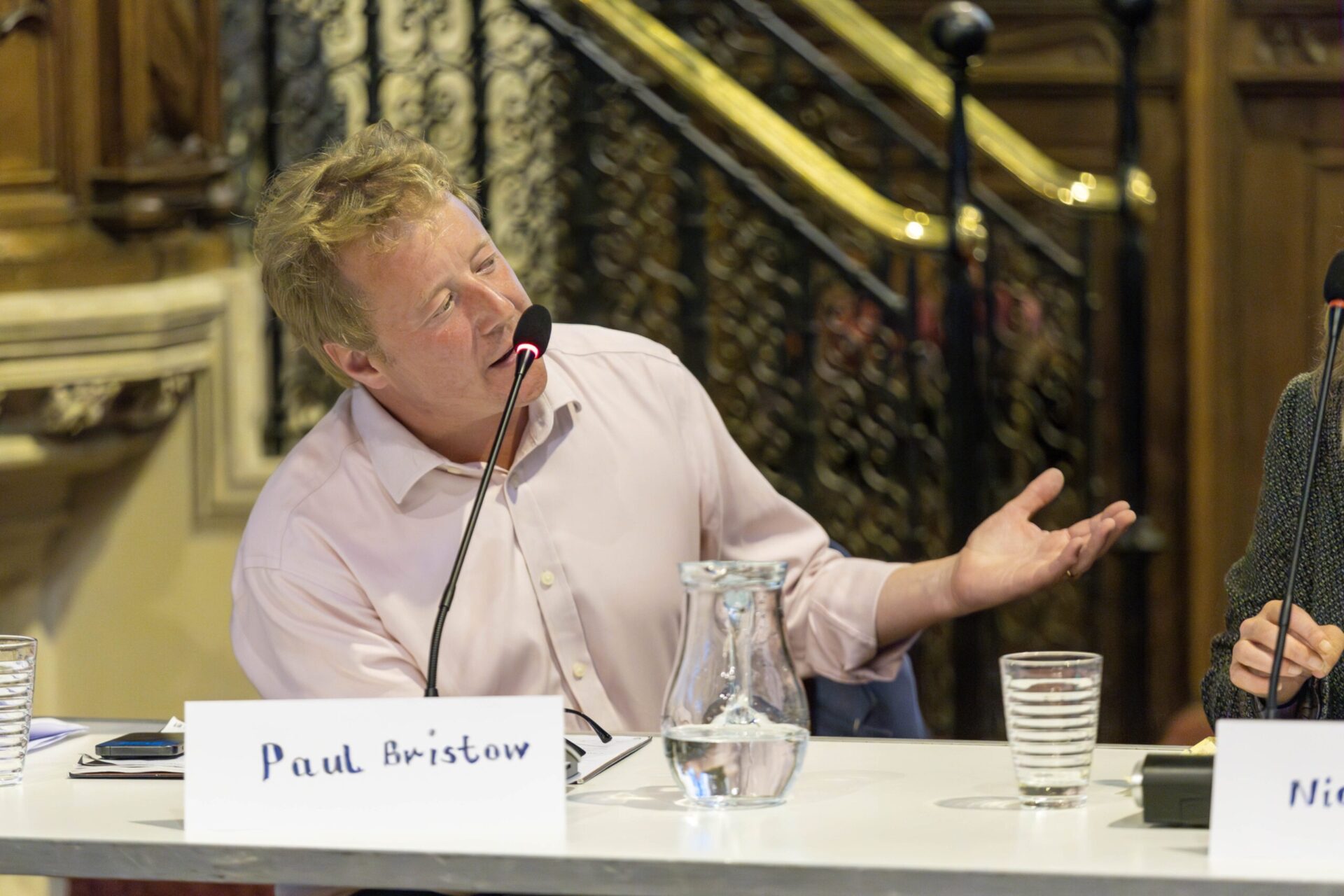

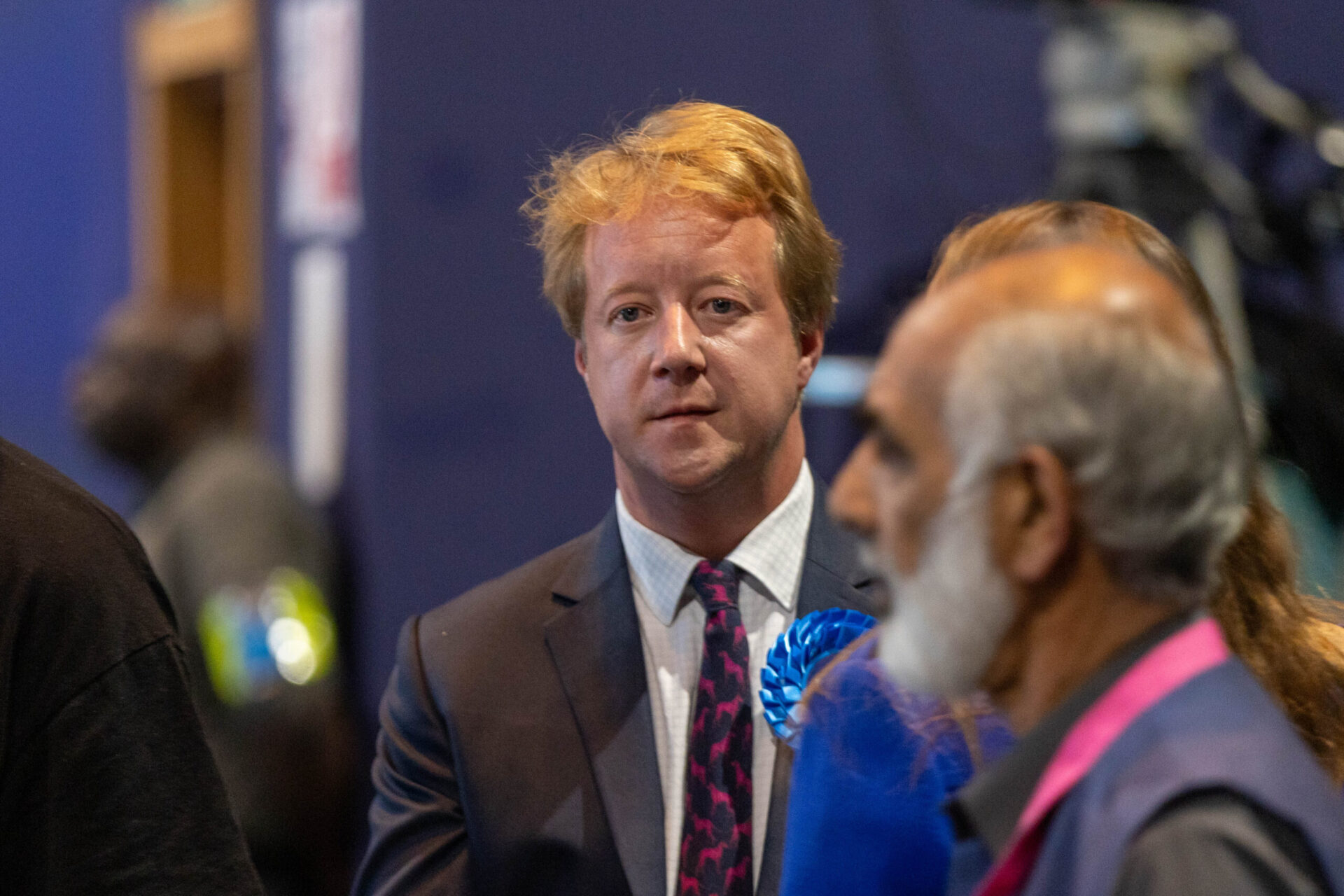
When the Ballot Secrecy Act became law in 2023, it was the culmination of a cross-party effort in Parliament to close what many politicians saw as a troubling gap in Britain’s electoral protections. Few MPs championed the measure more forcefully than former Peterborough MP Paul Bristow.
Although Bristow is no longer a member of the House of Commons — now serving as Mayor of Cambridgeshire and Peterborough — he has again stepped into the national debate after allegations of illegal “family voting” during the February 2026 Gorton and Denton by-election.
Taking to social media in response to reports from election observers, Bristow argued that concerns about the practice should be investigated — not dismissed.
“This is an excellent point,” he wrote in response to a comment by journalist Dan Hodges questioning claims about widespread coercion. “It is insulting to suggest this is purely a Muslim female community issue and that Labour or Reform would have won if ‘family voting’ wasn’t an issue. But according to election observers ‘family voting’ was an issue. And that needs investigating.”
The intervention is consistent with Bristow’s long-standing position: that the secrecy of the ballot — a principle dating back to the 19th century — must be actively protected in modern elections.

What the Ballot Secrecy Act changed
The Ballot Secrecy Act 2023 amended the Representation of the People Act 1983 by creating a new criminal offence for anyone who accompanies a voter into, or stands near, a polling booth with the intention of influencing their vote.
While rules protecting secret ballots have existed since the Ballot Act of 1872, campaigners argued the law had become too vague to deal with modern electoral practices.
The new legislation clarified that such behaviour — often referred to as “family voting” — could lead to prosecution if it was intended to influence or discourage a voter.
The law includes important exceptions. Assistance remains permitted for disabled voters who have declared a companion, for presiding officers helping voters, or for children accompanying a parent.
But outside those circumstances, voters should enter the booth alone.
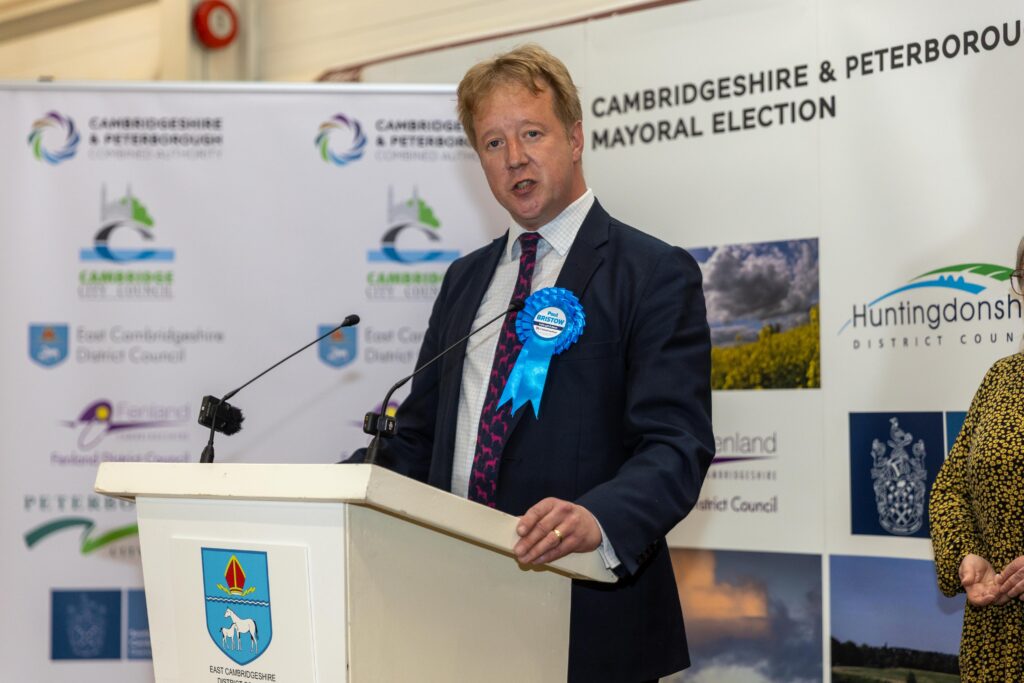
The Act originated as a private member’s bill in the House of Lords introduced by Lord Hayward in 2022. Bristow then sponsored the legislation in the House of Commons, helping steer it through its parliamentary stages with support from multiple parties and the government.
Its purpose, supporters argued, was not to stigmatise particular communities but to protect the fundamental right of individuals to cast a vote privately.
A debate shaped by Peterborough’s experience
Bristow’s interest in electoral integrity did not arise in isolation.
His own constituency of Peterborough had faced scrutiny over electoral malpractice in the past, particularly after the highly contested 2019 parliamentary by-election.
Speaking in the House of Commons during a 2022 debate on the integrity of the voting process, Bristow made clear why he believed the law needed strengthening.
“Few things are more important than exercising our democratic right by voting,” he told MPs. “The integrity of our elections can sometimes be threatened.”
He described two principal threats: voter fraud and forced family voting.
“The Ballot Secrecy Bill seeks to tackle the issue of family voting, which is when two or more people attempt to vote together in a polling booth, affecting, directing or overseeing the votes of another person in an attempt to influence their decision,” he said.
Bristow also argued that the phrase itself could be misleading.
“The term ‘family voting’ sounds like a friendly thing; it sounds uncontroversial, but that is not the case at all,” he told MPs.
“Often it involves malign influence or an attempt to influence someone who perhaps does not have English as a first language or who is inherently vulnerable.”
For Bristow, the central principle was simple: once inside a polling station, voters must be free from pressure.
“Once at the polling station, nobody should be able to influence who a voter votes for or whether they vote at all,” he said. “Nobody should know how a voter has cast their vote.”
Evidence that drove legislative change
Much of the political momentum behind the legislation came from research conducted by election monitoring organisation Democracy Volunteers.
In the same parliamentary debate, Bristow cited data from the group’s 2022 election observations.
Observers monitored 1,723 polling stations across the United Kingdom. According to the report, at least one instance of family voting was seen in around 25% of those stations.
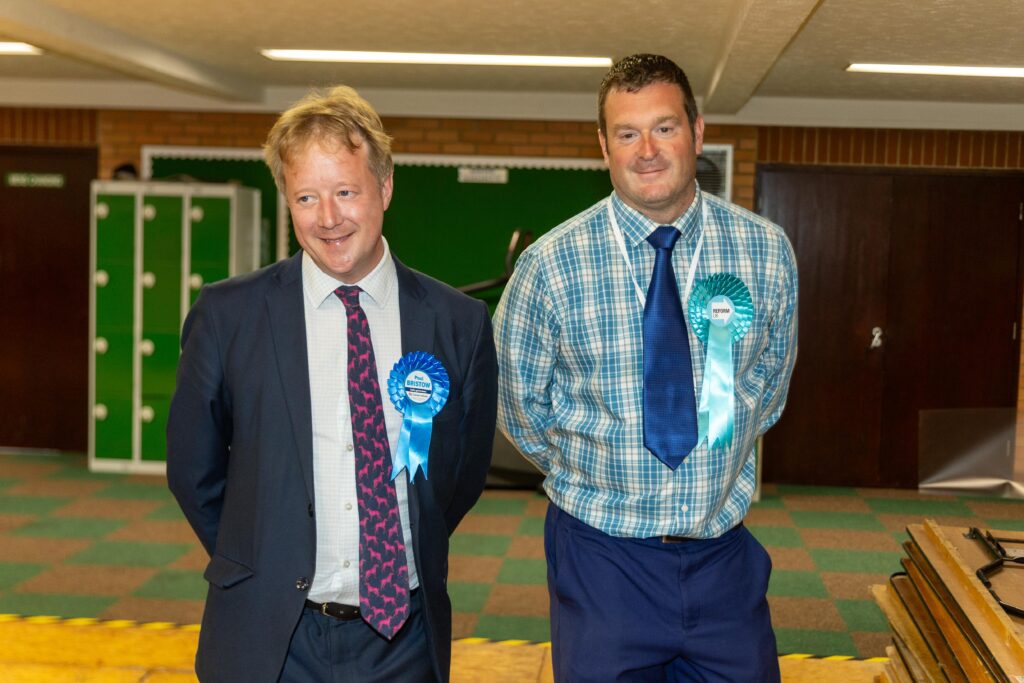
Ross Peers, Soham Friday 02 May 2025. Picture by Terry Harris.
“It is important to note that I am not talking about 25% of all ballots,” Bristow clarified at the time, “but in 25% of the polling stations at least one example of family voting was witnessed.”
He emphasised that the issue was not confined to any particular region or demographic group.
“The problem is not exclusive to any one area, and affects all parts of the United Kingdom,” he said.
Statistics from the report showed incidents recorded in England, Scotland, Wales and Northern Ireland.
Perhaps most striking were findings suggesting that women were disproportionately affected.
“In more than 70% of the cases observed, the voters were women,” Bristow told MPs. “On equality grounds alone, we need to stamp this practice out.”
The Peterborough by-election that sharpened concern
Bristow also referenced Democracy Volunteers’ observations during the 2019 parliamentary by-election in Peterborough — an election he contested himself.
In that contest, observers reported witnessing family voting in 48% of polling stations they attended.
“That means that at almost half of all polling stations in Peterborough, family voting occurred,” he said in Parliament. “That is appalling.”
“The behaviour of those people, who clearly have no respect for the secrecy of the ballot, is wholly inappropriate.”
For Bristow, such experiences demonstrated the need for clearer legal powers for presiding officers and police.
He argued that a “grey area” in the law had often left election officials uncertain about how to intervene.
“Activists do not know what they should be encouraging or what the law looks like, and nor do the police,” he said.

“This is a grey area, and perhaps the lack of clarity on what power the police have is one reason why family voting is so widespread.”
The Ballot Secrecy Act was designed to remove that ambiguity.
Government backing and cross-party support
The legislation gained significant backing from ministers as it moved through Parliament.
Responding to Bristow in the 2022 Commons debate, then Local Government minister Lee Rowley confirmed the government’s support.
“The Government believe that the integrity of our electoral system is fundamental to the health and strength of our democracy,” Rowley said.
Under the new law, he explained, an offence occurs if someone accompanies a voter into a polling booth or positions themselves nearby with the intention of influencing their vote.
The aim, he said, was to ensure presiding officers had “the confidence to challenge inappropriate behaviour wherever it occurs.”
The legislation passed with relatively little controversy compared with other electoral reforms, reflecting the broad consensus that secrecy of the ballot is a core democratic principle.
Gorton and Denton controversy reignites debate
Three years after the law came into force, allegations emerging from the Gorton and Denton by-election have brought the issue back into the spotlight.
Observers from Democracy Volunteers reported witnessing dozens of apparent cases of family voting across polling stations.
Those findings were disputed by local authorities.
A spokesperson for the Acting Returning Officer for Manchester City Council said polling staff were trained to identify undue influence and insisted no such problems had been reported during voting.
“If Democracy Volunteers were so concerned about alleged issues they could and should have raised them with us during polling hours so that immediate action could be taken,” the spokesperson said.
Police had a presence at polling stations, the council added, and a central election hub had responded rapidly to any reports during the day.
“It is extremely disappointing that Democracy Volunteers have waited until after polls have closed to make such claims.”
Bristow reacted sharply to that statement online.
“This is classic fingers in ears,” he wrote. “Enforce the law. The law was changed for a reason.”
A debate about enforcement, not legislation
Bristow also amplified comments from a social media user who argued the practice should no longer be described as “family voting” at all.
The term, they suggested, downplays the seriousness of the offence.
“The media should not use the term ‘family voting’ — not least because this practice is illegal,” the comment read.
“So it’s a criminal offence and is properly called an electoral offence or electoral fraud.”
The post added that the problem was not new and had appeared in many communities over time.
“It doesn’t need more legislation or to be outlawed or an inquiry,” the comment said. “It’s already illegal. It needs enforcement.”
Bristow’s decision to share the post underlined his long-held view that the legal framework now exists — and must simply be applied.
Balancing enforcement and fairness
The debate surrounding the Gorton and Denton by-election has also highlighted a delicate political balance.
Some commentators have warned against framing the issue in a way that targets particular ethnic or religious groups.
Dan Hodges argued that claims about widespread coercion of Muslim women risked exaggeration.
“Half the Muslim women who were there weren’t even with their husbands,” he wrote after observing polling stations. “The idea that if there was it was on a scale that materially influenced the outcome is simply absurd.”
Bristow’s response acknowledged that concern while still supporting investigation.
“It is insulting to suggest this is purely a Muslim female community issue,” he said.
But the existence of credible observer reports, he argued, still required scrutiny.
A legacy tied to democratic safeguards
Bristow’s time as MP for Peterborough ended before the Ballot Secrecy Act fully entered public debate during elections, but the law remains one of the clearest legislative legacies associated with his parliamentary career.
In his 2022 Commons speech he emphasised that the principle at stake was older than modern party politics.
“Secret voting was introduced by the Ballot Act 1872,” he reminded MPs.
“The fact that it is still a problem in 2022 is wholly wrong; 150 years later, that is unacceptable.”
Now serving as a regional mayor rather than a Westminster MP, Bristow continues to position himself as an advocate for electoral integrity.
His intervention following the Gorton and Denton by-election suggests that the debate he helped spark in Parliament is far from over.
As Britain approaches future election cycles, the question may not be whether the law exists — but whether authorities are prepared to enforce it.