
Fenland District Council has partially upheld a Stage Two complaint submitted by former councillor Elisabeth Sennitt Clough over the £18.67 million redevelopment of Whittlesey’s Manor Leisure Centre, formally acknowledging weaknesses in its equality processes and apologising for delays in the handling of her complaint.
The response, issued by Corporate Director Peter Catchpole, is the final stage of the council’s internal complaints procedure and follows months of scrutiny over consultation, governance, changing room design, safeguarding concerns and whether statutory duties were properly considered from the outset.
Significantly, the wording of the response recognises several of the concerns consistently raised by Sennitt Clough.
Council upholds equality complaint
A key issue in the complaint was whether Fenland Council had complied with its Public Sector Equality Duty (PSED) during the planning and design of the new facility.

Catchpole said the council had intended throughout to create a more modern and inclusive building but admitted this had not been made sufficiently clear in formal project papers.
He wrote: “You are correct that the council should have been more explicit about this and that is a weakness of the process in this case.”
He went further, stating: “Where I do believe the council has failed in this regard is to have written down an ‘intent’ as part of the original documentation presented to Cabinet.”
The council therefore formally upheld this element of the complaint.
That conclusion closely reflects Sennitt Clough’s long-standing argument that equality obligations should be embedded and evidenced at the beginning of major public projects, rather than left to later stages.
Equality impact assessment to go before Cabinet
Another major point raised by Sennitt Clough was the need for councillors to receive a completed Equality Impact Assessment before making any final decision on the scheme.
The council has now confirmed that this will happen before the planned June 2026 cabinet meeting.
Catchpole wrote: “Yes – that will be the case in order that the decision making body has access to evidence demonstrating that the design is compliant.”
That statement amounts to a clear concession that formal equality evidence must be available before members determine whether to proceed.
The cabinet report will also include supporting population data used to inform the assessment.
Complaint delays prompt official apology
The council also apologised for the way the complaint itself had been handled.
Catchpole acknowledged the Stage One response had been late, telling Sennitt Clough: “I am sorry that this was the case.”
He added: “That sort of failure is understandably frustrating for customers and may also diminish the value of the process in our customer’s eyes.”
The response also said internal discussions had since taken place to ensure named officers respond directly to complainants in future, in an attempt to prevent repeat failings.
For Sennitt Clough, who had criticised the handling of the process and the need to escalate matters, the apology is likely to be seen as a meaningful acknowledgement.

Changing room design influenced by complaint
One of the most publicly debated aspects of the redevelopment has been the layout of pool changing facilities, with arguments over privacy, safeguarding and mixed-use arrangements.
Fenland Council said consultation responses had informed the latest design and admitted mitigation measures had been introduced where concerns were raised.

Catchpole said the result was now “a hybrid facility design that offers both private cubicles as well as a changing room for each gender.”
He also acknowledged Sennitt Clough’s direct input, writing that “your feedback… has directly influenced the design.”
The council specifically referenced improved sightlines between poolside and circulation areas to increase passive surveillance.
That is a notable section of the response, indicating that concerns raised through the complaints process have already shaped the evolving scheme.
No formal options appraisal
Sennitt Clough had also sought clarification on whether formal option appraisals existed comparing alternative layouts.
The council confirmed that no full appraisal was produced for each design variation, arguing the iterative nature of the project made that impractical.
Catchpole said producing appraisals for every design change would have been “exceptionally time consuming and therefore not practicable.”
Instead, officers say they have worked around fixed constraints such as pool tanks, steel framework, plant rooms and spectator seating while refining the wider layout.
Wider governance questions remain
Prior to the Stage Two outcome, Sennitt Clough had raised broader concerns about whether officers had progressed key design decisions before meaningful public consultation or visible elected member oversight.
Those concerns fed into an already heated public debate, with Whittlesey Town Council recently deferring endorsement of the planning application pending further information.
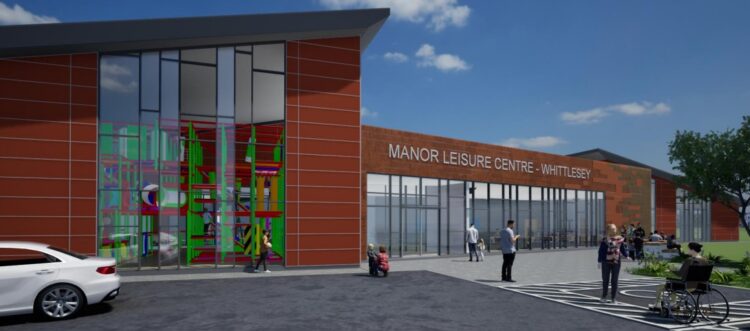
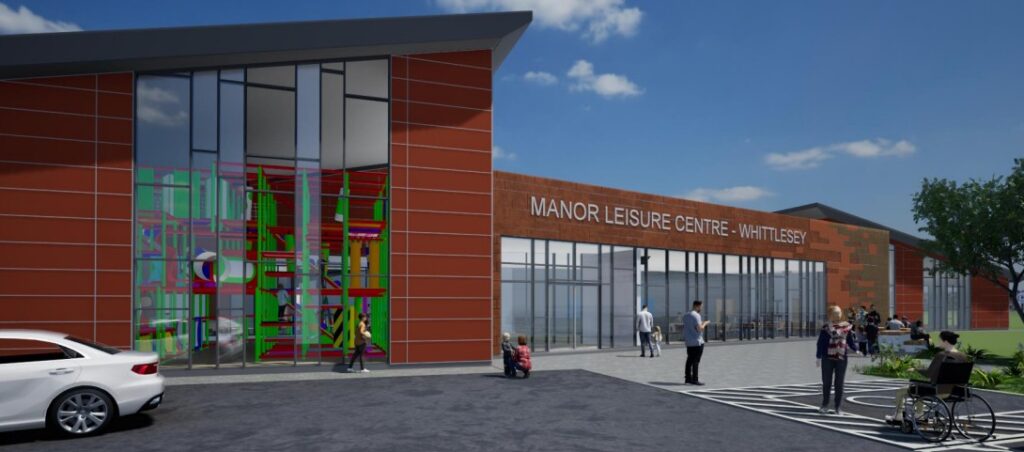
The Manor Leisure Centre project remains one of Fenland’s largest capital investments, with plans including upgraded swimming pools, gym expansion, studios, event space, padel courts, improved accessibility and new community facilities.
Ombudsman route now open
The council says the complaint process is now complete and Sennitt Clough may refer the matter to the Local Government and Social Care Ombudsman if she remains dissatisfied.
While Fenland Council defended the overall ambition of the redevelopment, the Stage Two findings contain clear acknowledgements that some of Sennitt Clough’s concerns were justified.
The council accepted it should have been more explicit on equality duties, confirmed an Equality Impact Assessment will precede the June decision, apologised for delays, and recognised that her feedback helped influence the design itself.
As the final decision approaches, cabinet members now face increasing pressure to demonstrate that governance, consultation and legal compliance are fully in place before committing to one of Fenland’s most significant public spending projects.