
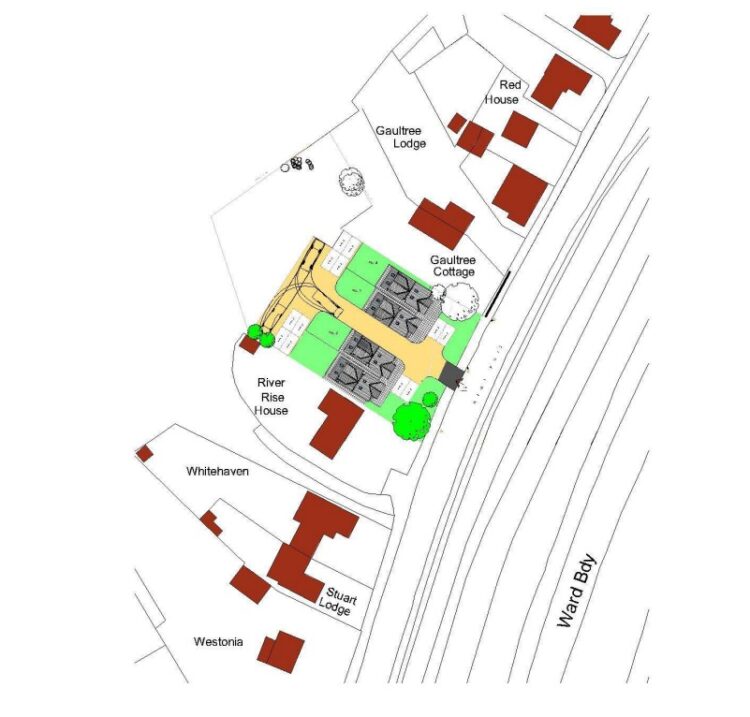
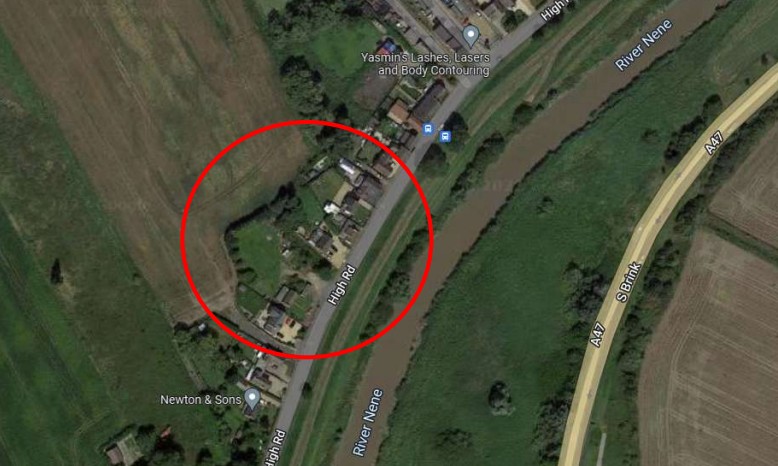
A proposed development of four homes in Guyhirn has been recommended for refusal to the planning committee of Fenland District Council on April 1 after a planning officer raised stark concerns over room sizes that fall well below national standards, describing the resulting homes as fundamentally substandard.
The application for four houses at Gaultree Farm, High Road, has been submitted by David Burgess of Fern Homes Ltd, of Gull Road, Guyhirn. He also owns a subsidiary company Fern Lettings Ltd.
The proposals were assessed as acceptable in principle. However, the officer’s detailed review found the scheme “falls significantly short in terms of internal space standards and overall residential amenity,” ultimately concluding it would deliver poor living conditions for future occupants.
At the centre of the decision is what the officer clearly viewed as a critical and surprising mismatch between overall floorspace and the usability of that space.
While each house technically exceeds the minimum total size required under the Government’s Technical Housing Standards, the report stresses that “compliance cannot be judged solely on total floor area; the distribution and usability of that space is equally critical.”

That distinction proved decisive.
Bedrooms “well below” required size
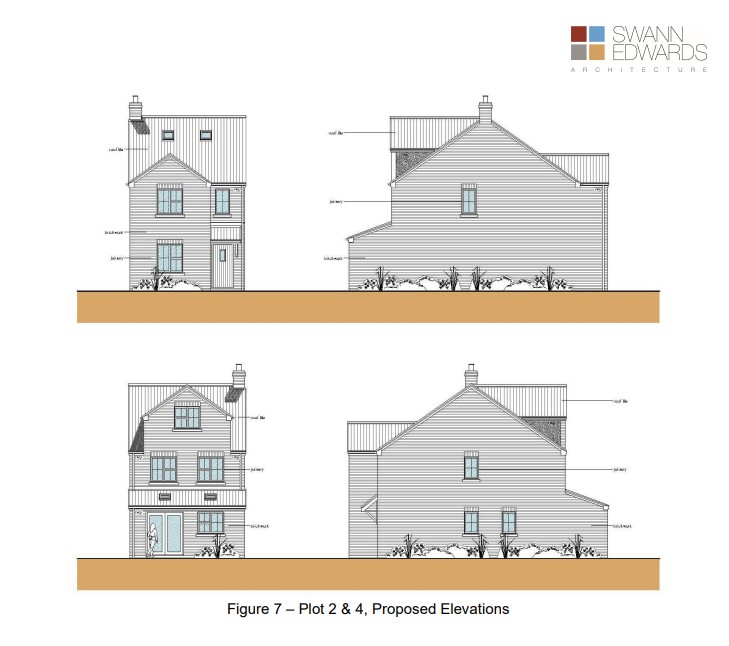
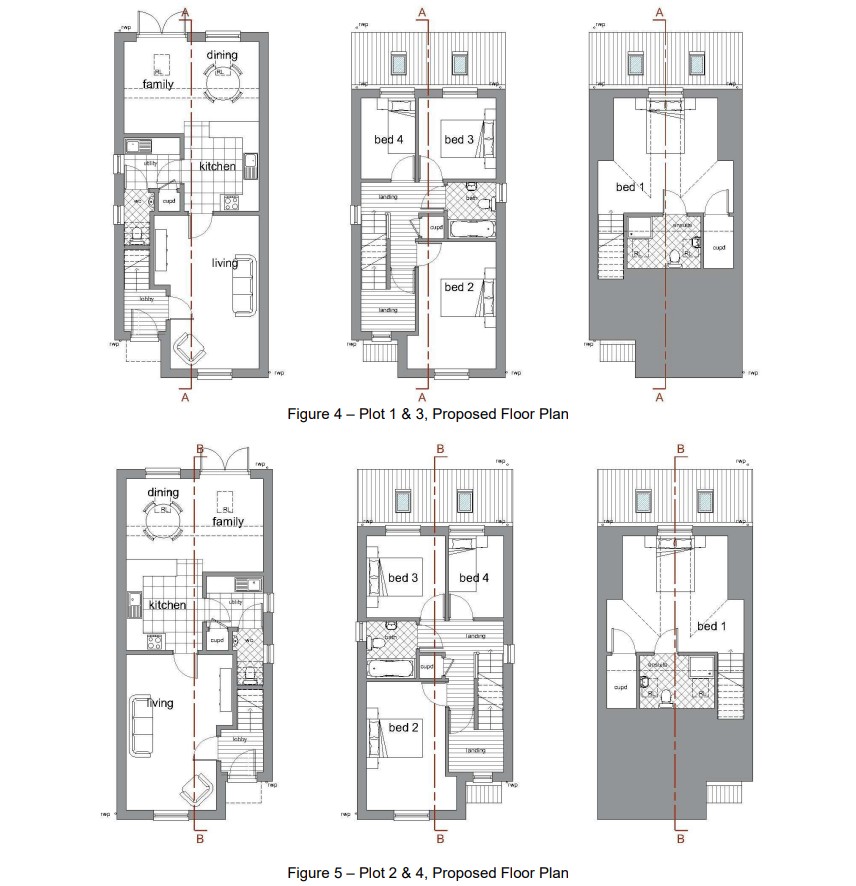
Each property is designed as a three-storey, four-bedroom home intended to house up to seven people. Under national standards, such homes must meet strict minimum bedroom sizes.
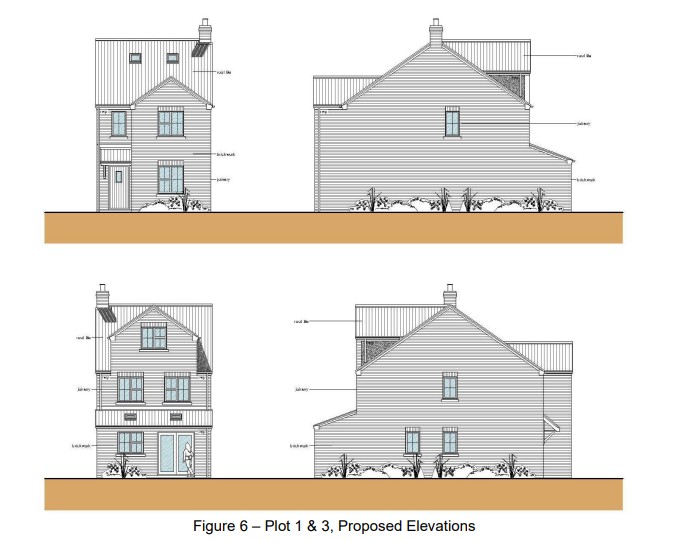
But scrutiny of the plans revealed two of the four bedrooms in every dwelling fail those benchmarks.
The third double bedroom measures just 7.6 square metres—far short of the required 11.5 square metres. Meanwhile, the single bedroom is even more constrained at 5.45 square metres with a width of 1.93 metres, significantly below the minimum standards of 7.5 square metres and 2.15 metres.
The officer leaves little room for interpretation, concluding these are not minor discrepancies but serious design failures that “would result in a cramped living arrangement for future occupants.”
This assessment underscores a key point in the report: the issue is not technical non-compliance alone, but the real-world impact on how people would live in these spaces.
Quality of life concerns take centre stage
The report goes further, highlighting how undersized rooms directly affect wellbeing. Limited space restricts furniture layouts, reduces storage, and compromises day-to-day usability—particularly for larger households.
In blunt terms, the officer suggests the scheme prioritises bedroom numbers over livability, conflicting with planning policies aimed at promoting healthy communities.
This approach is judged to be contrary to Policies LP2 and LP16 of the Fenland Local Plan, which place strong emphasis on high-quality living environments.
Garden space also falls short
Concerns extend beyond the interiors. The development also fails to meet requirements for private outdoor space, with none of the plots achieving the policy requirement that at least one-third of the site be set aside as amenity space.
Instead, garden provision ranges between just 26% and 29%.
Given the size and occupancy of the homes, the officer considers this shortfall particularly harmful. The report adds that the limited outdoor areas would be further compromised by parking arrangements at both the front and rear of the properties, reducing privacy and detracting from the overall living environment.
Positives outweighed by “substantial harm”
Not everything in the proposal was criticised. The officer acknowledges that the design and appearance of the houses are broadly acceptable, and that highways and ecological issues could be addressed through planning conditions.
However, these benefits are given only moderate weight.
In contrast, the failures relating to room sizes and amenity are described as causing “substantial harm,” with the officer explicitly stating the scheme would result in “sub-standard accommodation both internally and externally.”
Crucially, these are not issues that can be fixed later. The report makes clear that the problems are inherent to the design itself, and despite opportunities to revise the plans, no changes were made.
Clear recommendation for refusal
Bringing the assessment together, the officer concludes that approving the development would undermine established planning policies and set an undesirable precedent.
While additional housing is generally supported, the report finds that in this case the harm caused by poor living conditions “decisively outweighs” any benefits.
The recommendation is therefore unequivocal: refuse planning permission on the grounds that the development would create a cramped, low-quality residential environment detrimental to future occupants.
A report to the committee notes that the application “received seven letters of support, all from addresses within Guyhirn. One letter received was from the host property, Gaultree Farm. One letter received included no reasons for support”.
Wisbech St Mary Parish Council has told Fenland that their members support the application as they “felt this proposal was much more suitable and noted better parking and design”. A bid to build seven homes on the site was refused in 2024.