
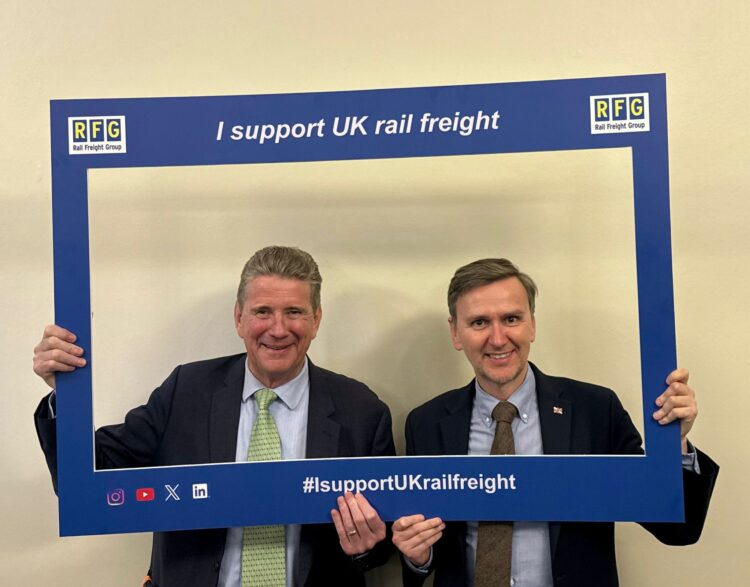
Peterborough MP Andrew Pakes has thrown his weight behind a major new initiative aimed at increasing rail freight capacity across the UK, highlighting the role of sustainable transport in reducing HGV traffic on local roads.
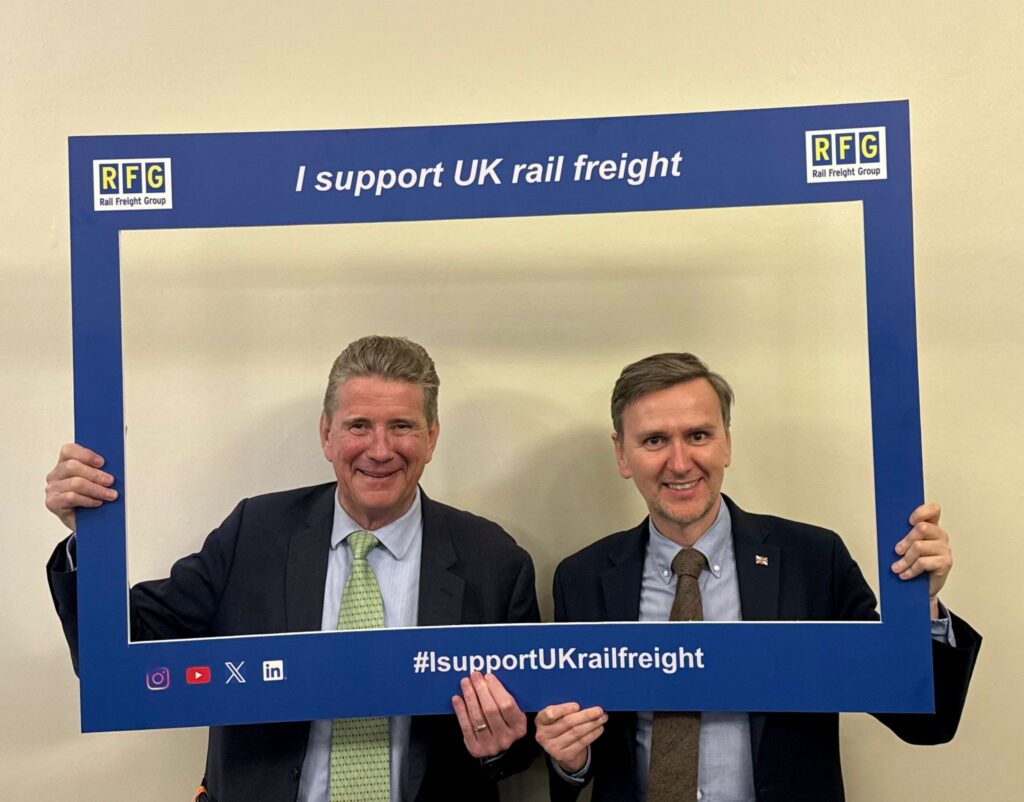
Speaking at the launch of the Freight Forward report by the Rail Freight Group in Parliament last week, Pakes stressed the economic, environmental, and logistical benefits of moving more goods by rail.
“With Peterborough being the home of local employer GB Railfreight, it was great to help launch the new report from the Rail Freight Group and champion new ideas to increase the use of the UK’s railways and relieve the pressure from HGVs on our local roads,” Pakes said.
“Without rail freight, we would have 7 million more lorry movements on the UK’s roads. With road damage, congestion and emissions being a local challenge, getting more goods and materials onto the railway is essential to grow the economy in an environmentally sustainable manner. I’m keen to play my part in making this happen.”
Freight Forward: A vision for the future

The Freight Forward report outlines how the UK’s rail freight sector has evolved over 200 years and the role it can play in delivering the next generation of housing, energy infrastructure, transport networks, and large-scale civil projects.
Rail currently moves a quarter of all containerised goods from UK ports, generating £2.45 billion in economic benefits and reducing lorry journeys by more than 1.6 billion kilometres — roughly equivalent to 2,100 trips to the moon and back.
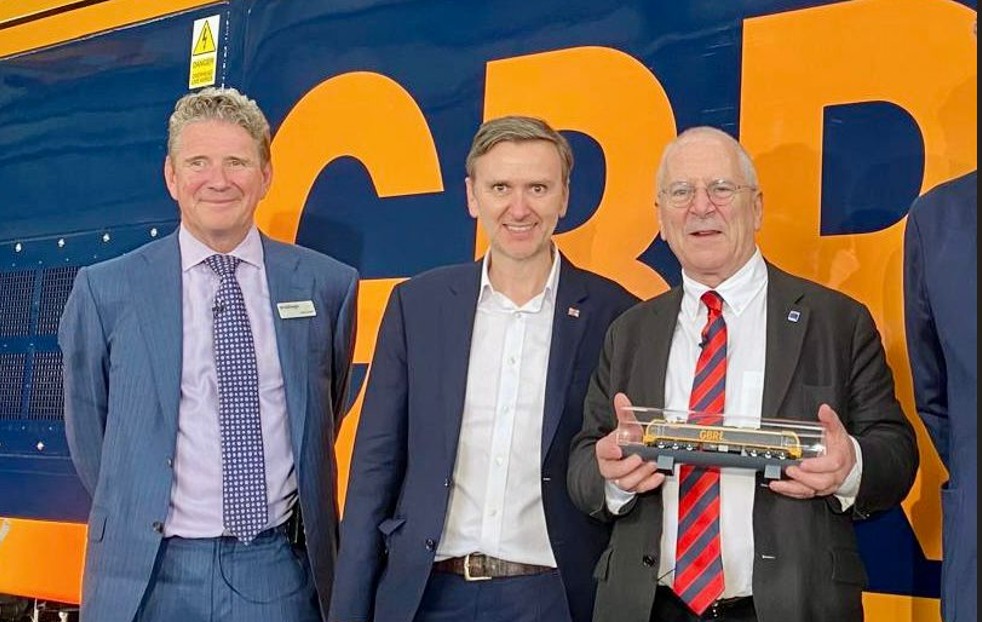
John Smith OBE, CEO of GB Railfreight, praised the report and the launch event: “We are very grateful to Andrew for helping us launch Freight Forward in Parliament alongside the Rail Minister, a cross-party group of MPs and Peers and senior members of the rail industry. Together, we are determined to grow the railway for freight, to ensure it continues to build, feed and power Britain.”
The report stresses that rail freight is central to the government’s stated target of 75% growth in the sector by 2050. Moving more materials by rail can support housebuilding, energy projects, and infrastructure initiatives while significantly reducing environmental impact. Rail freight emits 76% less CO₂ per tonne moved than HGVs, and each train removes an average of 76 lorries from the roads.
Peterborough: A strategic freight hub
While Freight Forward does not explicitly use Peterborough as a case study, the city is a critical part of national freight routes. Situated on the East Coast Main Line and close to freight corridors linking the Port of Felixstowe to the Midlands and North, Peterborough is a natural node for intermodal freight movements.
Recent infrastructure projects such as the A14 Cambridge–Huntingdon upgrade relied heavily on rail freight to move aggregates, cutting hundreds of daily lorry trips and reducing congestion.
Future projects in the Cambridgeshire Fens, including reservoirs and civil works, will similarly benefit from freight-enabled construction logistics.
The report says: “The nation is quadrupling investment in water infrastructure, addressing aging water networks and building nine new reservoirs over the next ten years — and rail freight is ready to support their delivery. Thames Water’s tender for the new White Horse Reservoir, for instance, includes a rail siding for the more efficient and sustainable movement of earthworks and construction materials.
“Similar strategies could be rolled out in new reservoirs across the country, from Lincolnshire and the Cambridgeshire Fens, to Havant Thicket and Cheddar.
“In the Fens alone, removing earth via nearby railheads will negate the need for up to 400 HGVs per day.”
The East of England is perfectly placed to integrate rail freight into regional growth plans, the report suggests. Failure to safeguard rail freight access risks locking in road dependency and higher carbon costs.
GB Railfreight: innovation in Peterborough
Peterborough is home to GB Railfreight, one of the UK’s leading rail freight operators. The company has made significant investments in sustainability and technology in recent years.
In July 2025, GB Railfreight unveiled its £150 million Class 99 locomotives, capable of running on electricity and renewable fuels, halving carbon emissions while supporting critical supply chains.
“The Class 99 locomotives set a new benchmark for performance and sustainability in UK rail freight,” said CEO John Smith.
Earlier this year, GB Railfreight partnered with Wabtec to introduce KinetiX, a laser-guided maintenance system, at its Peterborough hub. The system enables high-speed inspections, proactive maintenance, and improved fleet resilience — ensuring goods are delivered reliably and safely across the network.
“These investments are vital,” said Liam Day, Director of Assets at GB Railfreight. “They allow us to manage our fleet efficiently, reduce faults, and set a new standard for wagon maintenance in the UK freight sector.”
The local benefits: fewer trucks, safer roads
One of the central messages of Freight Forward is the local impact of rail freight. By shifting goods off the road, cities like Peterborough can reduce congestion, lower road maintenance costs, and improve safety for local communities.
The report also highlights that freight trains often operate outside peak passenger hours, maximising network efficiency without disrupting daily travel.
This mix of environmental and social benefits makes rail freight a strategic tool for sustainable urban growth.
Rail Freight: a national resilience tool
Beyond environmental benefits, Freight Forward emphasises the role of rail freight in national resilience. Rail networks can maintain supply chains during crises, from pandemics to fuel shortages and defence deployments.
Peterborough’s connectivity ensures it remains part of a flexible national logistics backbone, linking ports, industrial hubs, and distribution centres.
“Protecting and enhancing rail freight capacity is essential for both economic growth and national security,” the report states. “Collaboration between operators, planners, and local authorities ensures efficiency, resilience, and low-carbon delivery.”
Looking ahead: Freight Forward in action
Peterborough’s strategic position, GB Railfreight’s innovation, and government support combine to make the city a focal point for sustainable logistics. The launch of Freight Forward signals a renewed commitment to rail freight as a core component of the UK’s infrastructure strategy.