
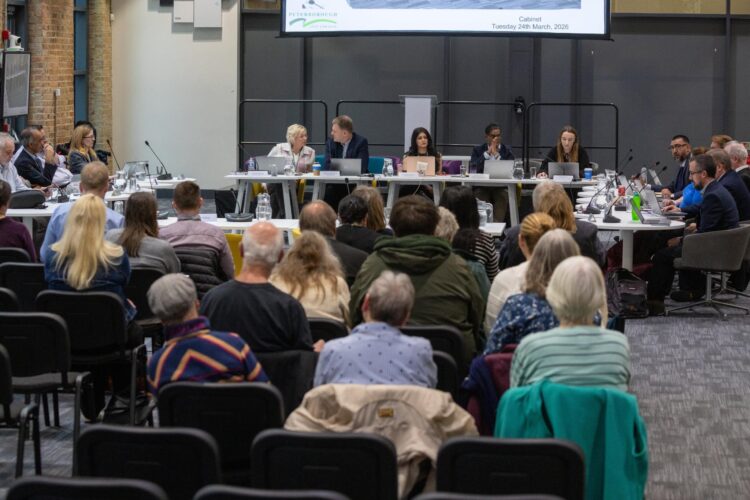
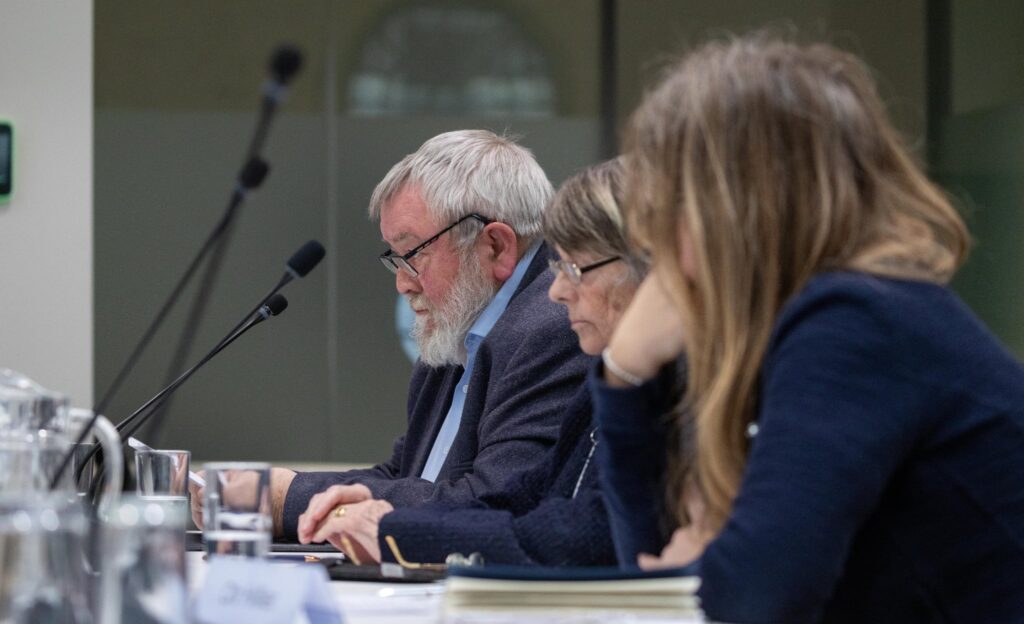
A long-running dispute over public access to Werrington Fields, Peterborough, spilled into a packed and often emotional cabinet session, as councillors heard warnings about legal costs, challenged the process behind earlier negotiations, and faced residents who say a cherished open space is being reduced to a narrow perimeter of narrow walkways.
And, as CambsNews has previously reported, questions continue over Peterborough City Council’s handling of contracts for fencing works at Werrington Sports Field, after documents reveal discrepancies between purchase orders and invoices that cannot be reconciled.
Garfield Builders Ltd, the contractor appointed for the project, issued invoices and received purchase orders whose descriptions, values and purposes do not match. The inconsistencies continue to raise concerns about the council’s procurement oversight.
At the heart of the issue is a £73,236.28 purchase order authorising major installation works. Despite the scale of this contract, no corresponding invoice appears in the documentation reviewed. It remains unclear whether the work was billed, paid for, or simply not accounted for in the records publicly available.
A second purchase order, for £12,682.35, clearly states it covers additional installation works. However, the contractor’s invoice for the same amount describes the job as “supply only of fencing and gates”. The wording directly contradicts the approved order, casting doubt on whether correct controls were followed or whether the council was billed for the wrong type of work.

Further adding to the confusion, a much larger invoice from Garfield Builders demands £44,866.73 for materials, described again as “supply only of fencing and gates”. Yet none of the purchase orders reviewed authorise material supply of any kind. This suggests that nearly £45,000 of spending may have been incurred without any purchase order, in breach of standard procurement rules.

Both invoices issued by the contractor use identical wording despite relating to different values and—apparently—different types of work.
Together, the irregularities show:
- A major £73k order with no invoice
- A £12k invoice whose description contradicts its purchase order
- A £45k invoice with no corresponding purchase order at all
- Repeated invoice descriptions that obscure the true nature of the work
The discrepancies leave fundamental questions unanswered about whether public money was authorised, invoiced and paid correctly, and whether appropriate procurement controls were followed.
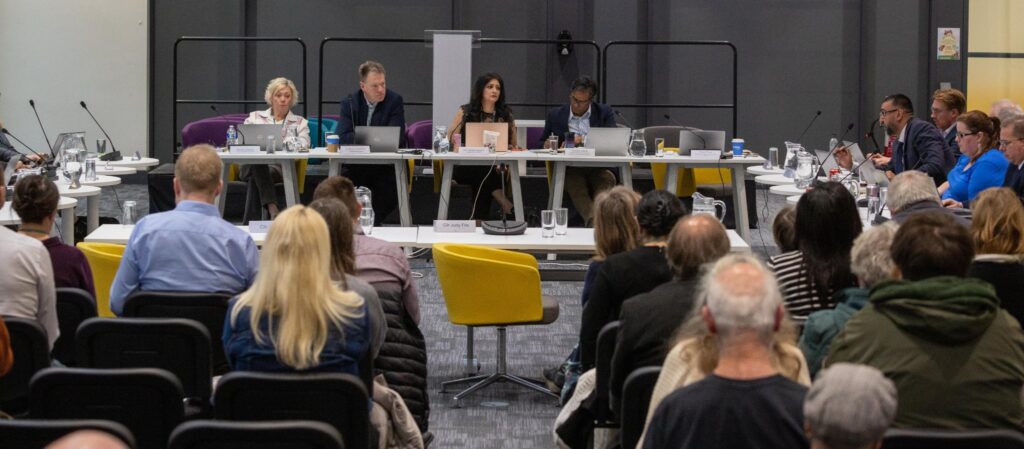
Questions about the fencing procurement formed part of the Cabinet meeting of Peterborough City Council this week as well as the core issue of whether a field used informally by residents for decades should be fenced for school use.
The meeting also explored extensively the Ken Stimpson academisation judicial review threat and the fear of massive legal costs if the city council were to lose the argument and be faced with potential costs running into a six figure sum.
Background: how Werrington Fields reached a legal flashpoint
Behind the immediate arguments sits a complicated history: school safeguarding concerns, shifting proposals over how much land would be fenced, and a judicial review claim that cabinet members said had created a financial and legal cliff-edge.

Speakers referred to years of negotiations and to constraints linked to academisation and national decision-making, including a Section 77 process mentioned by the chair explaining why earlier ‘firm decisions’ could not be made.
Several councillors stressed that the dispute has run through multiple administrations and has become entwined with questions of process and trust.
In the chamber, residents and ward councillors argued that key choices were made behind closed doors or without clear records; cabinet members, for their part, repeatedly pointed to the judicial review as a catalyst that now forced the council to choose between settlement and an expensive court fight.
Public questions: promises, process and the fence
The first exchanges set the tone. Public speaker Ed Murphy asked whether there had been a “promise made on the transfer of the field to the school” around the time fencing was bought, and by whom. The council leader, Cllr Shabina Assad Qayyum,, chairing the meeting, rejected the claim in emphatic terms.
“I would like to categorically state that no promises were made between the council and the academy. Okay. Okay, I am going to repeat that no promises were made between the council and the academy.”
The leader acknowledged the strength of feeling on all sides and said a ‘range of options’ had been discussed over several years but linked earlier uncertainty to wider legal steps in the academisation process.

Murphy returned to transparency, telling councillors the community still did not know “who did what with the fence and the promise” and urging cabinet to pause the process for months. The leader rejected the delay and framed the moment as a decision point after years of stalemate.
“All I can say to you is that this matter has gone on for seven years.”
As to who bought the fence and why it was purchased when no community agreement was in place, the chair’s answer was that the purchase followed a planning application and was consistent with specifications set out at that time.

Murphy then raised reports circulating in the media about other investigations; the chair said those did not relate to the matter being decided by cabinet.
When Murphy asked whether the fencing had been used elsewhere, the chair said the legal officer had confirmed it was still in storage.
“I have just been informed by the legal officer that the fence has not been used for anything else. It is in storage.”
A second set of questions, read out by Jan Forster on behalf of another resident, turned to impartiality and access. Referring to an FOI request and an email offering support to a senior cabinet member, the question asked whether cabinet was confident it had maintained impartiality and provided equal access to all parties.
The response given to the meeting placed emphasis on established rules for decision-makers, arguing that listening to representations does not remove impartiality itself so long as members keep an open mind.
“Cabinet members can lawfully listen to community views. They can attend meetings. They can express initial opinions as long as they maintain an open mind and do not predetermine an issue that comes before them in their executive decision-making capacity”.
That exchange also underlined how much of the controversy now turns on access.
Residents repeatedly contrasted informal, free use with a proposed regime of booking and charges.
Forster read concerns that community access would become “solely pre-booked and charged” for formal sports matches. She asked how residents who are not sports-team members would be given access in periods such as school holidays.
A pivotal clarification followed. Asked whether the community use agreement would be finalised now or later, the answer was that it would come after the lease, meaning residents would not know the final terms at the point where the main legal transfer was settled.
“The community use agreement, I’ve been told, will be finalized after the lease arrangement.”
For campaigners, that sequencing is critical: they argue that once the lease is done and the fence is erected, the community’s leverage over terms of access — pricing, booking rules and the scope of informal use — may diminish.
Costs and specifications: how a stored fence could be reused
Malcolm Rash then questioned the council’s description of the fence as ‘already owned’ and asked how materials bought for a smaller, higher fenced area could be reused for a larger perimeter. He contrasted a 2.4-metre fence around “two and a half football pitches” with proposals for a 2-metre fence around “seven or eight football pitches”.
The chair’s answer was technical: the original fencing, councillors were told, had been reduced in height and adapted to meet the newer specification.
“it was agreed to reduce the fence height to 2 m, and the most cost-effective way was to arrange for the fabricators to cut down the original fencing”
Rash also challenged the figures. He said residents had previously heard much higher costs for fencing and asked how additional materials could now be bought for £10,000, and what provision existed for installation.
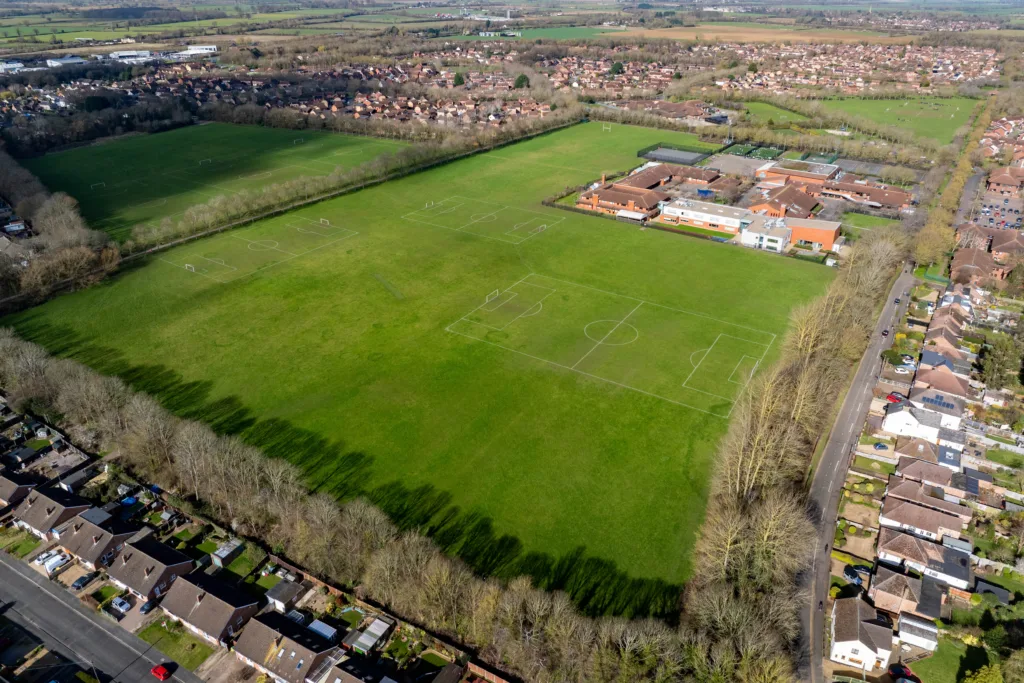
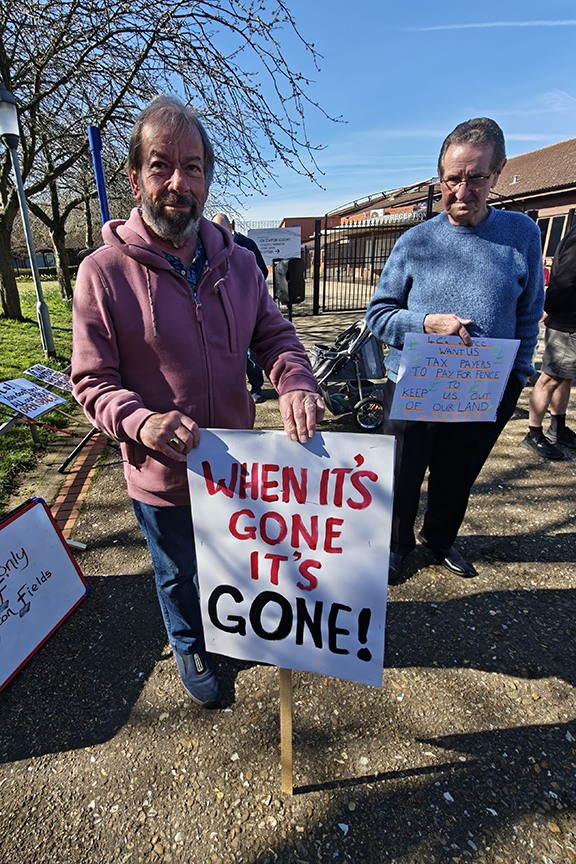
Picture: Terry Harris
The chair again stressed that the number given was an indicative figure and that final totals would follow once the next steps were taken.
“approximately 200 m of additional fencing is now required of which has been quoted in the region of £10,000.”
Equalities and access: ‘corridors’, ‘Burgess Boulevard’ and the pizza metaphor
Forster’s own question challenged the equalities assessment referenced in the cabinet papers.
She asked how the retained land — described as a strip between a fence and hedging — could count as meaningful open space, and whether it could have ‘a positive effect on health and well-being’ for regular users.
The response argued the assessment considered the overall availability of land for recreation, combining the retained strip with future booked access under a community use agreement.
“the retained land is available for unrestricted public access”
To convey the scale of what would remain open, the chair used a local comparison.
“10 m is the equivalent of the width of Burgess Boulevard”
But Forster argued that, even with booked access, the benefits would be concentrated among sports clubs — a small fraction of residents — while the vast majority would lose the open, informal space they had used for decades.
She warned that narrow, fenced corridors with limited access points could create antisocial behaviour risks, and said the retained land included areas prone to waterlogging.
She also offered the meeting a striking metaphor, saying residents had compared the arrangement to a one-sided pizza-sharing deal.
“It’s been described as four C’s offering to share a large pizza with the community and eating all the middle bits themselves and leaving only the slightly burnt crusts that they don’t want.”
The chair responded that the decision in front of cabinet was about the recommendations on fencing and lease arrangements.
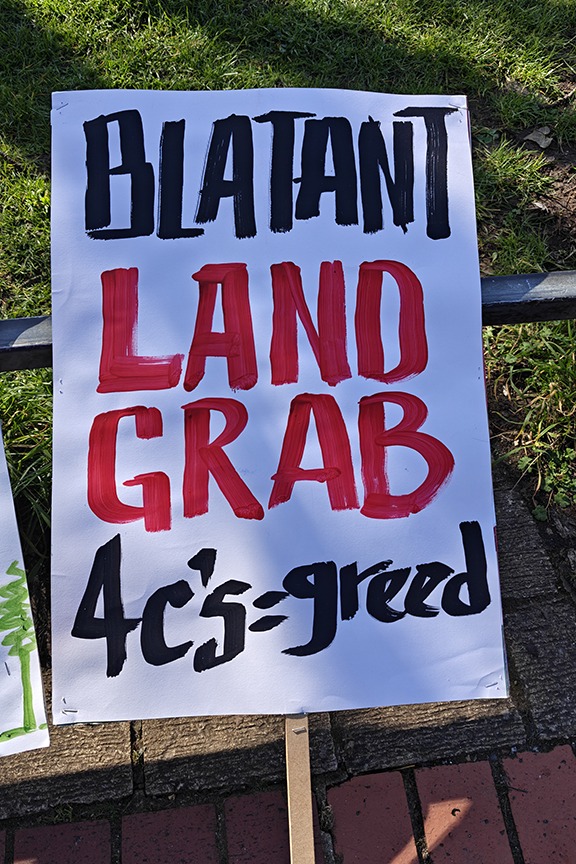
However, the chair suggested that the shape and usability of what remains available for public use could be revisited later, after cabinet had decided.
Cabinet brings forward the judicial review item
After public questions, the chair brought forward the agenda item on the Ken Stimpson academisation judicial review so members of the public would not have to wait through the rest of the meeting. Cabinet agreed and turned to the report.
Councillor Katie Cole, cabinet member for Children’s Services, explained that it was an attempt to ‘reach a resolution’ after years of deadlock.
£73,000 school fencing bought by Peterborough City Council still in storage after 5 years
She said the recommendations offered more of a compromise than previously, with retained perimeter space on multiple boundaries and a new community use agreement to govern access outside school hours.
Cole stressed the council’s duty both as landowner and education authority, saying children needed access to outdoor space and that the dispute had prevented pupils from using the fields.
Ward councillors ‘excluded from the process’ and calls to defer
Ward councillors then addressed cabinet. Councillor John Fox said Werrington ward councillors had consistently supported an earlier compromise reached through consultation and had opposed a later proposal to fence the entire field.
He said he and another ward councillor were approached for views but were then not consulted further. In his account, ward councillors were later ‘excluded from the process’ and were not kept informed of key developments.
Fox asked who had been involved in negotiations, whether records or minutes were maintained, and what agreements had been reached. He argued that the matter should be deferred for debate at full council and suggested that residents perceived the decision was being progressed at pace ahead of May elections.
In response, the chair said some points would be followed up in writing and invited the legal officer to answer whether ward councillors could block the decision. The legal officer said the council was under a legal duty to transfer the land following academisation.
“The council has a legal obligation to transfer the land to the school following academisation in 2023.”
When Fox pressed for a direct answer on whether ward councillors could stop the decision, the legal officer replied:
“in short, the answer is no”
Councillor Sarah Hillier followed with a broader challenge, describing a weekend protest of hundreds of residents and questioning why the council should fund fencing or legal costs, and why out-of-hours access would depend on booking and charges.
She argued that if the issue was truly about children’s wellbeing, negotiators should have sought free access for local children outside school time.
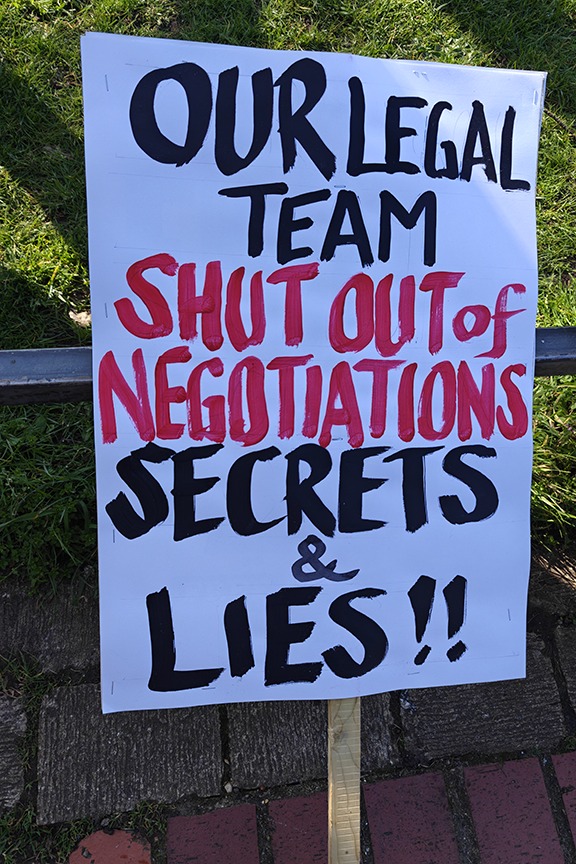
She urged cabinet to pause and ‘sort out’ the disposal notice and community use agreement before signing anything off.
Councillor Judy Fox, speaking in a civic role as mayor, asked if she could use discretionary powers to defer cabinet’s decision to full council. The chair said she could not, describing the decision as an executive function.
Judy Fox then raised detailed questions about parking, grass cutting costs, the fate of earlier fencing and why separate leases for buildings were being progressed on a different timetable.
Cole said she would ask an officer to obtain written clarification from the school on matters including the sports centre, the mugger and astroturf facilities so ward councillors and campaigners would receive consistent information.
Cabinet debate: reluctant support and the cost of court
With ward councillors’ comments heard, cabinet members began their own debate.
Councillor Christian Hogg said he had been challenged by the legal officer to ensure he was not approaching the matter with a predetermined view.
He criticised what he saw as the academy trust’s limited compromise and said the council was ‘up against the wall’ because of the strength of the legal claim.
Hogg rejected calls for further delay, saying the argument had already lasted years and that postponing again would repeat the pattern of prior administrations. He said the school had gone years without using the field and argued that the legal stakes were now too high to ignore.
“it’s going to cost a significant six figure sum”
He said the risk of losing could force the council to find large sums from local services, and he warned that litigation could also affect education budgets. He concluded with a public apology to campaigners but said he saw no way out.
“it is really with a heavy heart, but I really can’t see any way out of this.”
Other cabinet members echoed the theme of reluctant agreement.
Councillor Zameer Ali said he understood residents’ concerns but believed the legal advice left the council cornered. Councillor Mohammed Jamil said the dispute should have been resolved years earlier and argued that once lawyers became involved ‘nobody wins’, leaving councillors to weigh probabilities and costs.
Councillor Mohammed Farooq said he would have preferred to postpone the decision for months but ultimately concluded that the financial risks of judicial review meant the council should accept the recommendations.
Leader’s closing statement: apology, duty of care, and ‘back for the children’
In summing up, the chair Cllr Shabina Qayyum thanked residents, campaigners and ward councillors and offered a ‘wholehearted apology’ in an executive capacity for what were described as mistakes by previous administrations that did not provide ward members with adequate transparency.
The chair rejected claims that the decision was being rushed for electoral advantage, arguing that the likely unpopularity made that implausible.
She considered the decision as a duty-of-care choice for the council, stressing children’s need for outdoor recreation space while also acknowledging residents’ attachment to the field. The chair said the community use agreement would be the mechanism to bring all parties ‘around the table’ after the decision.
Cabinet then approved the recommendations in the agenda pack.
For residents, however, the deepest grievance was that the most consequential details — especially pricing and access rules in the community use agreement — were being deferred until after the main legal transfer.
Even those cabinet members backing the recommendations conceded the settlement was unlikely to satisfy everyone.
What happens next
The cabinet’s decision closes one chapter of a dispute, but it does not settle the question repeatedly raised in the chamber: what ‘community access’ will mean in practice.
And, of course, what price is a fence?