
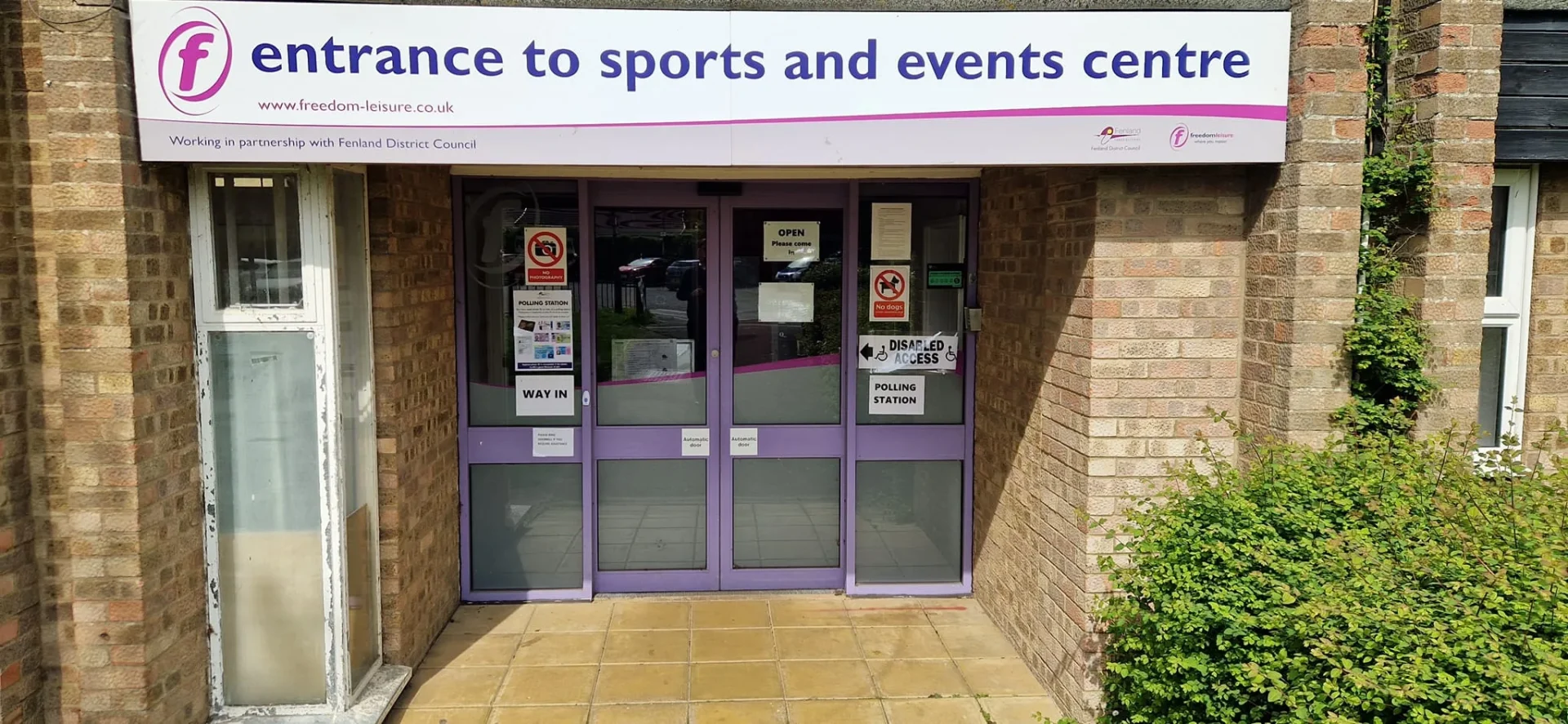
Fenland’s biggest-ever capital project is gathering pace, with the £18.67 million redevelopment of Manor Leisure Centre in Whittlesey now reaching a crucial point.
To be funded largely through council borrowing, with Fenland District Council also seeking a £2 million grant from Sport England and additional support from the Cambridgeshire and Peterborough Combined Authority, the ambitious scheme would replace an ageing leisure site with what planners describe as a modern, inclusive, financially sustainable community hub.
Council reports acknowledge the scale of the investment, noting: “A redeveloped Manor Leisure Centre will come at a significant cost to the council in terms of construction costs and borrowing costs, currently estimated at £18.67 million.”
Based on current rates, the report adds: “For every £1m borrowed, it is estimated that it will cost the Council £82.91k for each year that it is borrowed.”
The next stage will come when the latest project reports are discussed by Fenland Council Cabinet on February 23rd, as the authority continues work through the detailed design phase.

Outdated buildings, rising costs, and the end of the ‘standstill’ option
The story of Manor Leisure Centre begins with a stark reality: the existing complex is simply worn out. Built in pieces over decades — including a 1974 sports hall, an outdoor lido covered in the 1980s, and a patchwork of extensions — the centre is now described as inefficient, outdated, and no longer fit for purpose.
A recent conditions survey showed that even keeping the current buildings operating would cost around £4.5 million, and that would only deliver another decade of limited service.
Council documents state bluntly: “The existing Manor Leisure buildings have reached the end of their useful lives… now likely to be around £4.5m due to inflation, to allow the existing buildings to ‘stand still’.”
That option was rejected. As the Cabinet report notes: “The building has served its purpose but is beyond its useful life and does not represent the sort of leisure facility that people would expect.”
Managing two main buildings separated by 30 metres has also driven inefficiency. The report highlights that the current arrangement “lacks customer focus and increases operational and maintenance costs.”
Rather than spending millions just to delay closure, the council chose to pursue a full redevelopment with a long-term lifespan.
A leisure centre — and much more besides
The new Manor Leisure Centre is planned as a “fit-for-purpose” hub for health, wellbeing and community life.
The Cabinet report describes it as “an opportunity to blend the boundaries between a built leisure centre and outdoor activities.”
It adds: “The new facility will invite users who walk and play at the field to also use the facility.”
The proposed development includes:
- A modern entrance with café and social space
- A refurbished 25m six-lane pool plus learner pool
- A larger gym and two fitness studios
- Flexible events space with a commercial kitchen
- A dedicated community room
- Three covered padel courts — a first for Fenland
- A new skate park and rifle range
- Improved accessibility and changing provision
- Landscaping and better links to outdoor facilities
Council planners argue that the traditional model of a sports-only leisure centre is no longer viable.
As the report states: “Building a leisure centre just for sport is no longer a financially viable proposal. The facility must offer more.”
That “more” includes community youth activities, rehabilitation programmes, older adult fitness sessions, and even opportunities for health professionals to work closer to residents.
The report notes this could support NHS priorities, adding: “Integrating the facility into wider community life is essential to the ongoing financial viability of the facility.”
Design progress: RIBA stage 3 complete
The redevelopment has now reached the end of Royal Institute of British Architects (RIBA) Stage 3, meaning the design is developed and planning submission is underway.
Alliance Leisure was appointed to guide the scheme through all pre-construction phases, supported by architects, engineers, pool specialists and construction partners.
Stage 4 — detailed design — is now underway and due to be completed in May 2026, providing full cost certainty.
A Cabinet decision on whether to proceed to construction is scheduled for June 2026, with works expected to begin in August and completion targeted for December 2027.
However, council documents note that refinement is ongoing: “Already further minor adjustments are required… throughout the RIBA Stage 4 detailed design phase.”
Community feedback: 581 responses shape the plan
In September 2025, an online survey drew 581 responses, supported by focus groups and meetings with clubs and user groups.
The message from residents was clear: Manor Leisure Centre feels outdated and poor value compared with alternatives.

The engagement report states: “Public feedback reveals a strong desire for significant modernisation, as the existing facility is widely viewed as outdated, cramped, and poor value for money compared to alternatives.”
Barriers to use were also identified: “Usage is constrained primarily by poor facilities (28%) and high membership costs relative to quality (22%).”
Around half of respondents said they would use the centre more if it were refurbished and more affordable.
Residents’ top priorities included:
- A café/social space (27%)
- A larger modern gym (20%)
- Improved swimming facilities (18%)
- Better changing rooms, pool temperature and availability
The engagement report confirms: “The top suggestions for the redevelopment include introducing a café/social space (27%) and providing a larger, modernised gym (20%).”
Accessibility and inclusion strongly emphasised
The report highlights: “Other key demands involve better support for disabled people and those with accessibility needs (12%) is also strongly recommended.”
Stakeholders also pushed for specific improvements such as wheelchair access and pool pods.
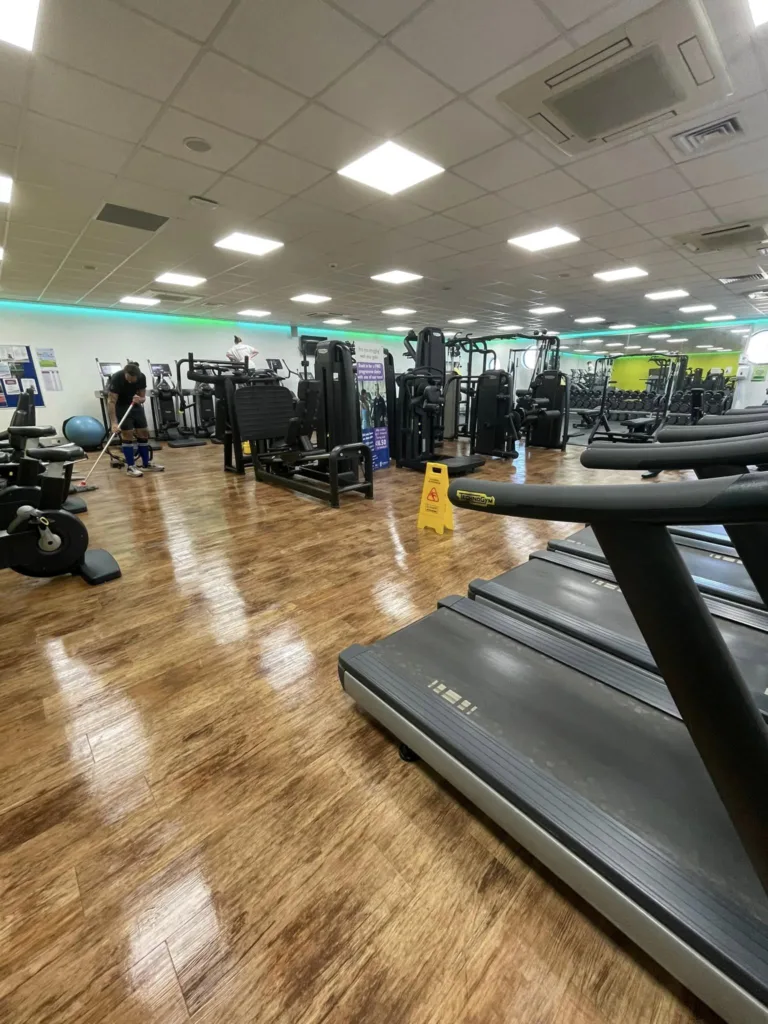
As the report notes: “Stakeholders advocated for improved accessibility, including wheelchair access and pool pods.”
Sport England has recommended significant enhancements to changing provision and disabled access — adding cost but also strengthening the case for grant support.
Council papers explain: “Whilst at a significant cost, this cost is anticipated to be a negative net cost if a grant from Sport England is forthcoming.”
Specialist facilities: rifle club and courts protected
Local clubs have also influenced the design, particularly the Rifle Club and outdoor sports groups.
The engagement report stresses: “There is a strong desire to preserve and enhance the Rifle Club (18.6% of open text priorities).”
It also notes: “Resurfacing of Netball and Tennis Courts (13.7%) is important to support local clubs.”
Clubs have raised practical needs such as power supply, security, and competition-ready swimming features.
The financial picture: borrowing, grants, and revenue uplift
The total redevelopment cost is currently estimated at £18.67 million, including a council-held contingency of £846,550.
Construction costs account for £17.676 million, reflecting expanded accessibility provision, the inclusion of the skate park, and inflation.
Key elements include:
- Main construction: £14.37m
- Padel courts: £489,700
- Skate park: £247,000
- Demolition: £500,000
- Specialist equipment: £481,273
Fenland District Council is seeking a £2 million Sport England grant, which would reduce net costs to £16.67 million.
The financial model anticipates increased revenue through higher usage and new income streams such as café trade, soft play and padel courts.
The anticipated management fee uplift from Freedom Leisure is £345,000 per year, with padel income expected to fund further borrowing capacity.
Programme timeline: completion by 2028
The outline roadmap includes:
- Spring 2026: Planning determination
- May 2026: Detailed design complete
- June 2026: Cabinet decision on construction
- August 2026: Pool closure and start of works
- January 2027: Skate park and padel courts complete
- December 2027: New centre opens
- 2028: Old sports hall demolished and car park built
The skate park has been included within the main contract for safety reasons, avoiding multiple contractors on site.
A landmark investment for Fenland
Manor Leisure Centre’s redevelopment is Fenland District Council’s largest capital investment, aimed at delivering a modern, inclusive hub for generations.
If approved through its next stages, the new Manor Leisure Centre could become a model for how leisure, health, wellbeing and community cohesion can come together in the heart of Whittlesey.