
A report going before all 43 members of Fenland District Council on May 18 has clearly been written well ahead of the full council meeting as it boldly admits demolition of the former Barclays Bank site in Broad Street March “is due for completion April 2026”.
The complacency won’t be lost on March residents who have steered goggle eyed at the only partially demolished building with the peripheral delay to re-opening newly built public toilets nearby.
The report has been circulated in the names of Cllr Chris Seaton, the portfolio holder for Cllr Chris Seaton, Portfolio Holder for Funfairs, Inspire! Projects, Markets & Wisbech High Street Projects and lead member of the March Future High Streets steering group, and Cllr Jan French, Deputy Leader and Portfolio Holder for Anglia Revenues Partnership, Car Parks, Parking Decriminalisation & Parks & Open Spaces
“The March Future High Street Fund (FHSF) project is now in the final phase of delivery with the demolition of the old Barclays Bank building,” they have told members “This is due for completion April 2026 following delay to start on site and unforeseen party wall complexity in the demolition phase”.
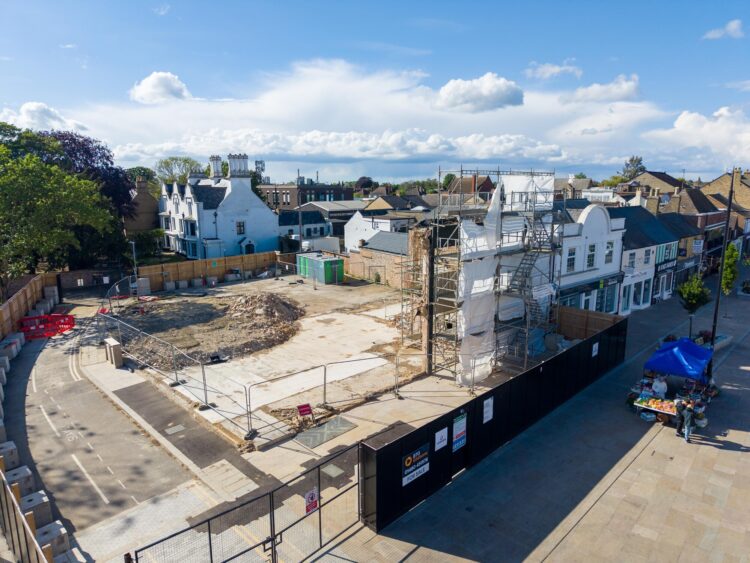
Issues around the “unforeseen party wall” were clearly visible yesterday (May 14th) when CambsNews visited the town.

What residents can now see in plain sight is the physical manifestation of a regeneration gamble that has unravelled in public view.
Fenland District Council promised transformation, but it remains incomplete as contractors battle engineering complications long after demolition was supposed to have been straightforward.
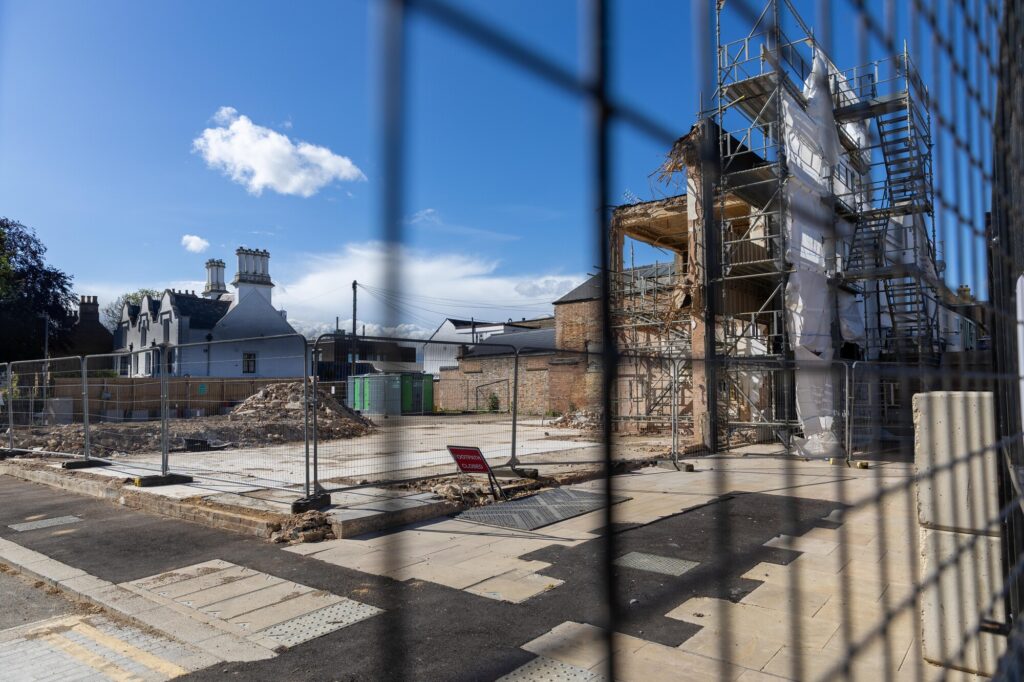
The “hidden wall” crisis is turning what was sold politically as a flagship regeneration project into a farce.
And hanging over the entire saga is one unavoidable figure: £1.12 million. That is how much public money has already been spent buying and demolishing the former Barclays Bank building — only for the site to become bogged down in delays, structural complications and mounting criticism.
The trouble began when contractors discovered that an adjoining wall connected to neighbouring premises was not what initial assumptions suggested.
What emerged during demolition was an older structure predating the Barclays building itself — a wall believed to contain lime mortar construction, far weaker and more fragile than modern masonry.
Suddenly, demolition stopped.
Heavy machinery fell silent while engineers and surveyors assessed how to prevent damage or collapse to neighbouring property, including the adjoining Sharman Quinney premises.
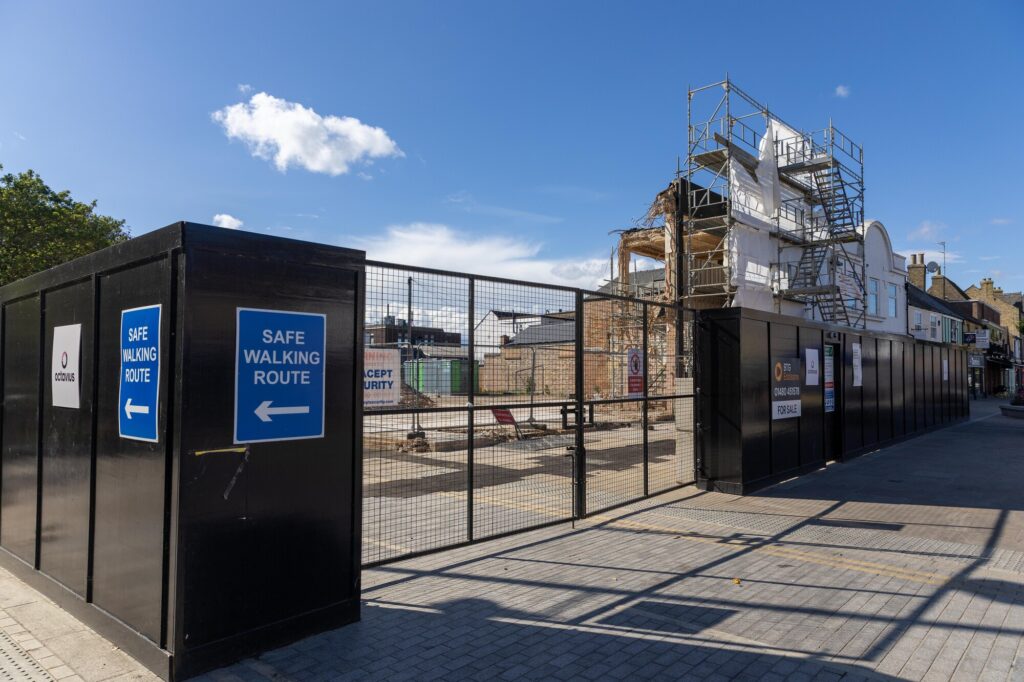
For residents walking past daily, it looked astonishing that such a fundamental structural issue had apparently not been identified before demolition even started.
One local developer described the situation bluntly.
“I can’t understand how they did not realise there would be a problem,” he said previously.
“I assume they undertook all the necessary surveys, so I would have thought it would have been picked up then.”
Instead, the council found itself confronting exactly the sort of unforeseen complication major demolition projects are supposed to identify and manage long before excavators move in.
The result is that Broad Street remains dominated not by regeneration, but by disruption.
Pedestrian routes remain constrained. Newly built public toilets nearby have faced reopening complications. Contractors continue operating around exposed structures and temporary safety works.
And all the while residents are left asking a bigger question: was any of this actually necessary?
The controversy stretches far beyond engineering headaches.
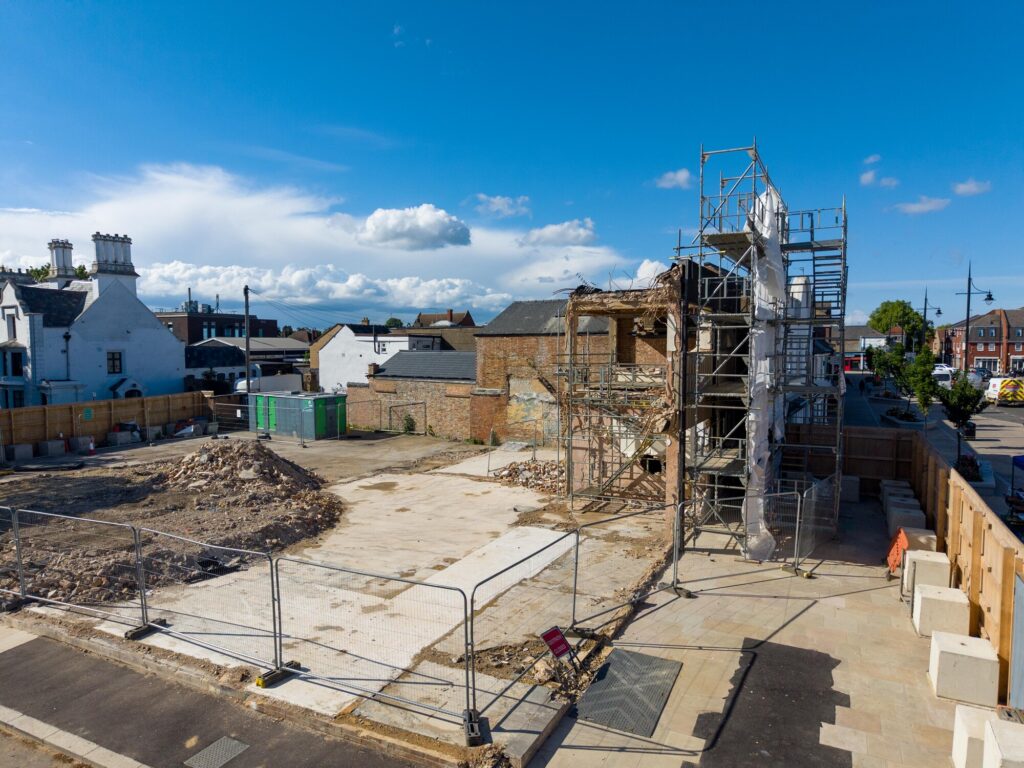
The former Barclays building was purchased by Fenland District Council for £750,000 using Future High Streets Fund money. Demolition added another £371,880.08.
Total spend: £1,121,880.08.
Yet despite that outlay, the cleared site was subsequently marketed for offers over £295,000 — a figure that immediately triggered public anger once disclosed through Freedom of Information requests.

Critics accused the council of destroying a viable town centre building only to crystallise a massive financial loss.
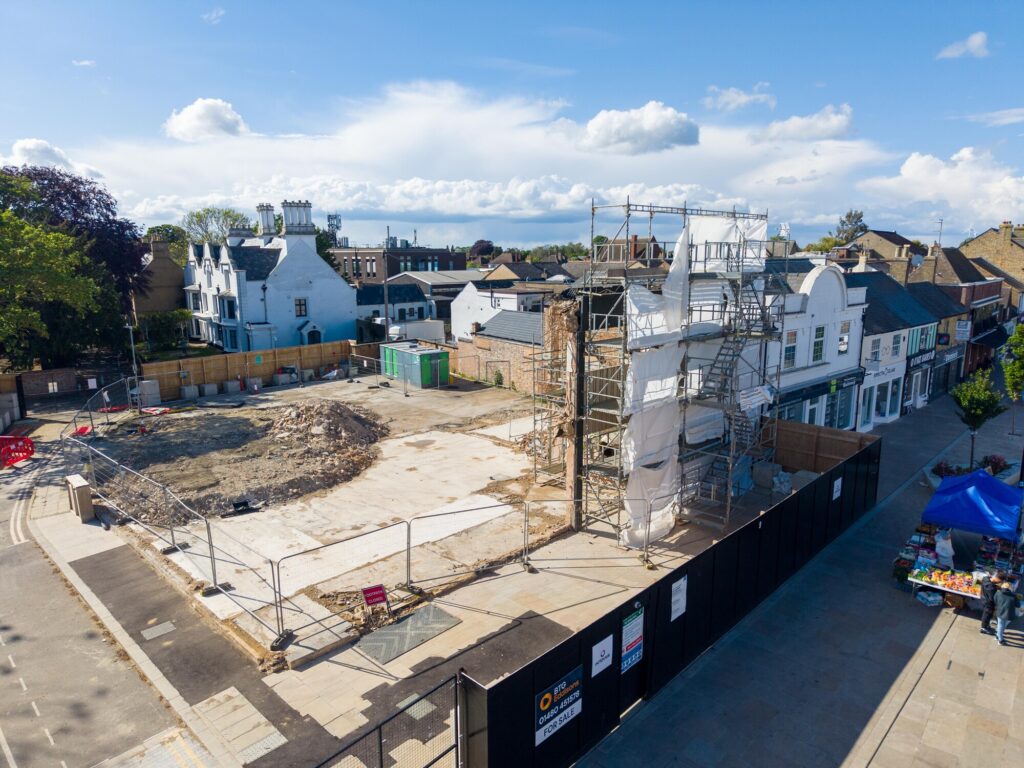
What intensified the backlash further was the revelation that senior planning and conservation officers had explicitly advised against demolition in the first place.
Their warnings were stark.
They said the building was not structurally unsound. They warned reuse options had not been properly explored. They cautioned demolition risked leaving a “missing tooth” in the conservation area for years.
Those warnings were unanimously ignored by councillors.
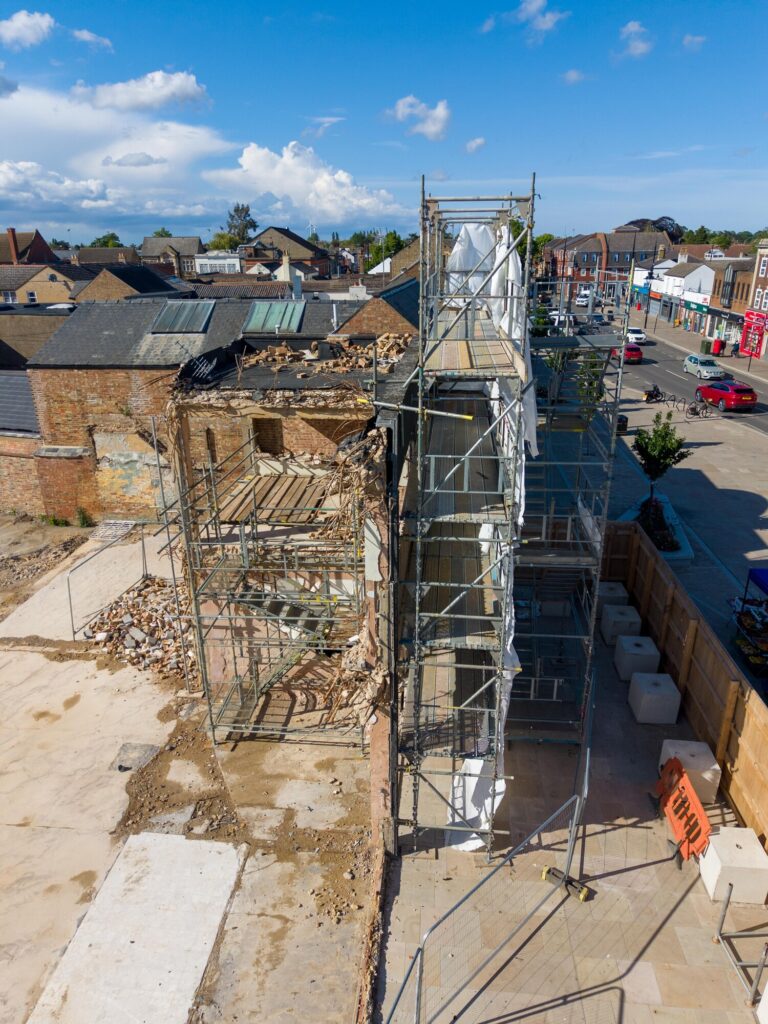
Instead, members backed demolition on the basis the building was unpopular, outdated and an “eyesore”.
Today, residents are left at a partially demolished site still wrapped in uncertainty.
The political messaging from Fenland has meanwhile become increasingly difficult to reconcile with reality on the ground.
In March 2026, the council issued a triumphant press release announcing the site had moved to the “next stage of regeneration” following agreement to proceed with a preferred bidder.
Officials said the disposal marked a “key milestone” for March.
The statement insisted demolition works to the remaining adjoining wall were “due to be completed shortly”.
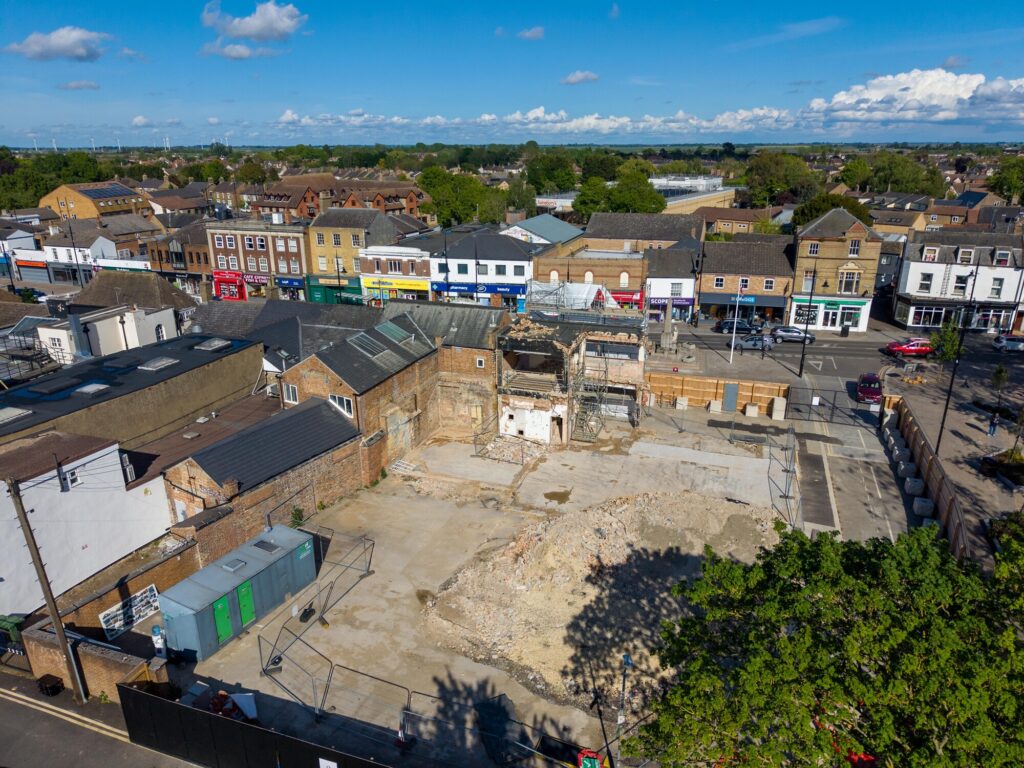
Yet weeks later, the problems remain visibly unresolved.
Contractors are still grappling with the exact party wall complications that delayed the project in the first place.
Steel reinforcement, exposed brickwork and painstaking dismantling work continue behind fencing in full public view.
Fenland District Council insists the scheme should not be judged as a commercial investment. Officials argue regeneration is about long-term economic and social improvement rather than direct financial return.
They point to wider improvements delivered through the Future High Streets Fund programme across March town centre.
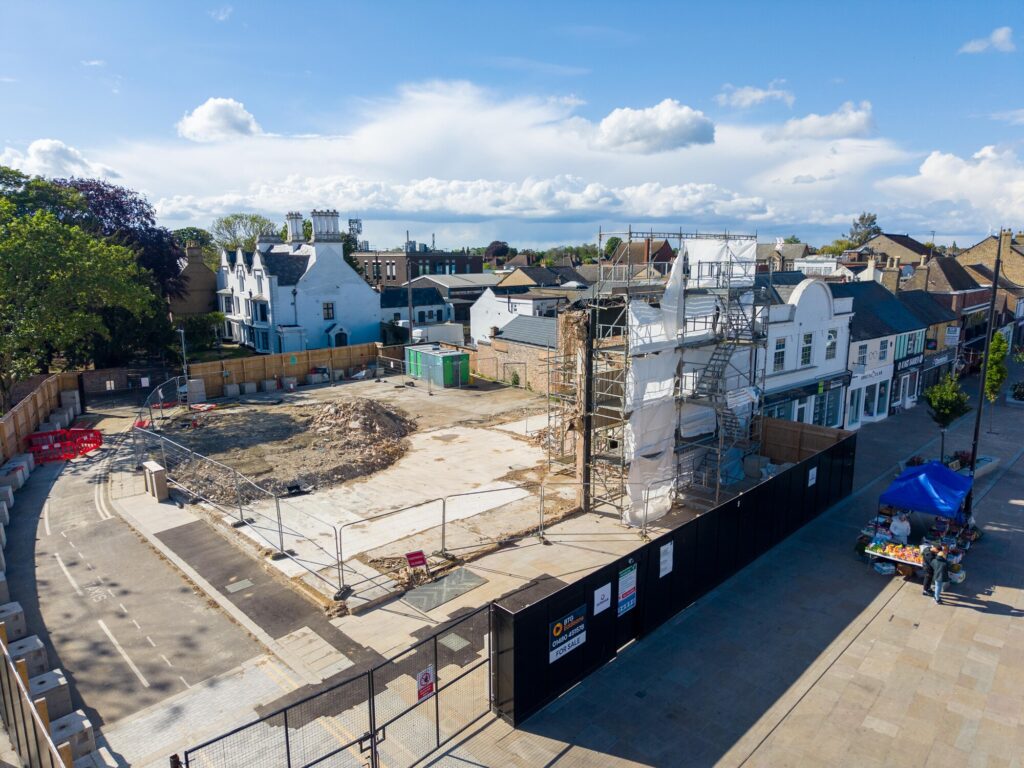
But perhaps the most politically damaging aspect is that the gamble officers warned about has already materialised.
There is still no approved redevelopment scheme.
No named developer has publicly emerged.
No construction timetable exists.
And no certainty remains about what will eventually rise from the site.
Instead, the most prominent image associated with the project today is not glossy regeneration artwork — but contractors wrestling with an exposed wall nobody apparently anticipated.
For now, Broad Street’s most talked-about landmark is no longer a bank.
It is a demolition site that still cannot quite be demolished.