

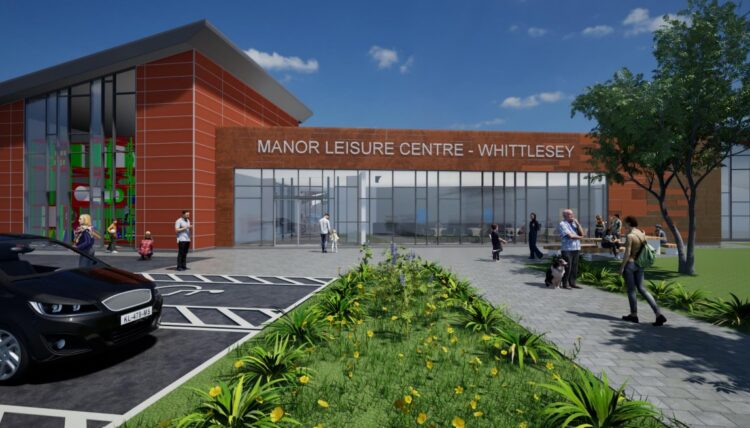
A former Whittlesey councillor has launched a detailed and escalating challenge to Fenland District Council over its handling of the £18.67 million Manor Leisure Centre redevelopment in Whittlesey—raising concerns about equality law, consultation integrity and decision-making transparency at a critical stage of the project.
Elisabeth Sennitt Clough’s complaint, now formally escalated to Stage 2 of the council’s process, sets out a wide-ranging critique that goes far beyond design preferences, questioning whether the authority has complied with its statutory duties and whether key decisions are being taken on a sound evidential basis.
“This goes to the heart of governance and decision-making,” she said. “Equality considerations should inform the evolution of proposals, not follow them.”
Equality duty and decision-making under scrutiny
At the centre of Sennitt Clough’s complaint is the council’s admitted failure to complete an Equality Impact Assessment (EIA) before key decisions were taken earlier this year.

The Stage 1 response confirmed that no EIA had been undertaken ahead of the February Cabinet report, with the council arguing that the design remained “fluid” and that an assessment would follow in April.
Sennitt Clough disputes that approach.
“The explanation given—that the design was not complete—does not address the council’s duty,” she wrote. “Equality considerations should inform the evolution of proposals, not follow them.”
She has also questioned whether councillors were explicitly told that no EIA had been carried out when they were asked to note progress on the scheme.
“It remains unclear whether Cabinet will be asked to determine whether to proceed with construction without a completed equality analysis available,” she said. “Given the significance of the decision, this is insufficiently certain.”
Her complaint further raises concerns about how equality information will be shared with decision-makers, noting that the council indicated EIAs are not typically included in Cabinet reports.
“This raises concern that the full decision-making body may not be provided with the equality analysis necessary,” she said.
She has also pressed for clarity on whether impacts on women—as a protected characteristic under the Equality Act 2010—will be explicitly analysed, particularly given the relevance to changing facilities and issues of “privacy, dignity and safety.”
Consultation and design process challenged
Sennitt Clough’s complaint also questions the integrity of the public consultation process.
In a key admission, the council confirmed that consultation responses were not “weighted” in determining the preferred design and that no alternative changing room layouts were formally modelled.
For Sennitt Clough, that undermines confidence in the process.
“This raises truly serious questions as to the purpose and integrity of the consultation process,” she said.
“No formal, documented option appraisal comparing alternative approaches has been identified… for a decision of this nature, a transparent and evidenced comparison would reasonably be expected.”
She has also highlighted that female user feedback was not separately analysed during the October 2025 consultation—something the council has said will now be reviewed.
The lack of early analysis, she argues, further weakens the evidential basis for the current design.
Sport England clarification sparks further questions
Another central strand of the complaint concerns the role of Sport England.
Sennitt Clough alleges that during consultation, residents were given the impression that a “changing village” layout was required to secure external funding.
However, the council has since clarified this is not the case.
“Sport England’s design guidance offers models for both male and female and cubicle changing facilities… they do not insist on any specific approach,” an officer stated in the Stage 1 response.
That clarification has prompted further questions about how information was presented.
“If consultees were left with the impression that a changing village was a precondition of funding,” Sennitt Clough said, “that may have influenced the framing of responses.”
She has also asked the council to explain why official reports used terms such as “stipulations” and “required,” which she argues could reasonably be interpreted as prescriptive.
Changing facilities and safeguarding debate
The design of changing facilities remains one of the most contentious elements of the scheme.
The council is proposing a mixed model combining individual cubicles with single-sex group changing areas, arguing that it provides flexibility and improves safeguarding.
“The cubicle changing approach has been used throughout many facilities… to address this sort of concern,” the council said, referencing situations such as children attending with parents of the opposite sex.
It also pointed to design changes made following feedback.
“Your feedback was valued to the extent that the design… has been altered,” an officer told Sennitt Clough, citing improved visibility between the pool and changing areas.

However, Sennitt Clough has questioned whether this approach reflects user preferences, pointing to survey evidence suggesting strong support for traditional male and female changing rooms.
Complaints process itself under criticism
The handling of the complaint has become an issue in its own right.
Sennitt Clough initially submitted her complaint in February but did not receive a response within the council’s published timeframe.
“There is a lot going on but that is no excuse,” the council officer acknowledged. “I should have been in touch earlier.”
Sennitt Clough argues that this failure should have triggered automatic escalation.
“Failure to acknowledge a complaint within the council’s own stated timeframe constitutes non-compliance,” she said.

The matter has now been escalated to Stage 2, with a senior officer due to respond by late April.
A flagship £18.67 million redevelopment
The dispute comes against the backdrop of Fenland District Council’s most ambitious capital project to date.
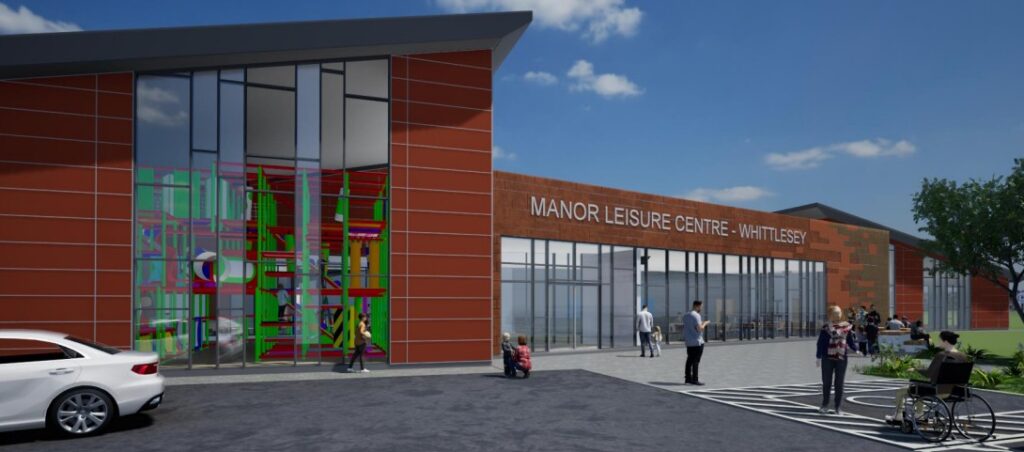
The £18.67 million redevelopment of Manor Leisure Centre is intended to replace an ageing, inefficient complex with a modern, multi-purpose community hub.
The scheme is expected to be funded largely through council borrowing, alongside a proposed £2 million grant from Sport England and support from regional partners.
Council documents highlight the financial implications.
“A redeveloped Manor Leisure Centre will come at a significant cost,” one report states, adding that every £1 million borrowed will cost around £82,910 per year.
An ageing facility no longer fit for purpose
The case for redevelopment is rooted in the condition of the existing site.
Developed in phases since the 1970s, the current leisure centre is described as outdated and inefficient, with separate buildings creating operational challenges.
Even maintaining the facility in its current form would cost around £4.5 million and deliver only a limited extension to its lifespan.
“The building has served its purpose but is beyond its useful life,” the council concluded.
Rather than invest in a short-term fix, the authority has opted for full redevelopment.
What the new centre will deliver
The proposed scheme aims to transform the site into a broader health and wellbeing hub.
Plans include:
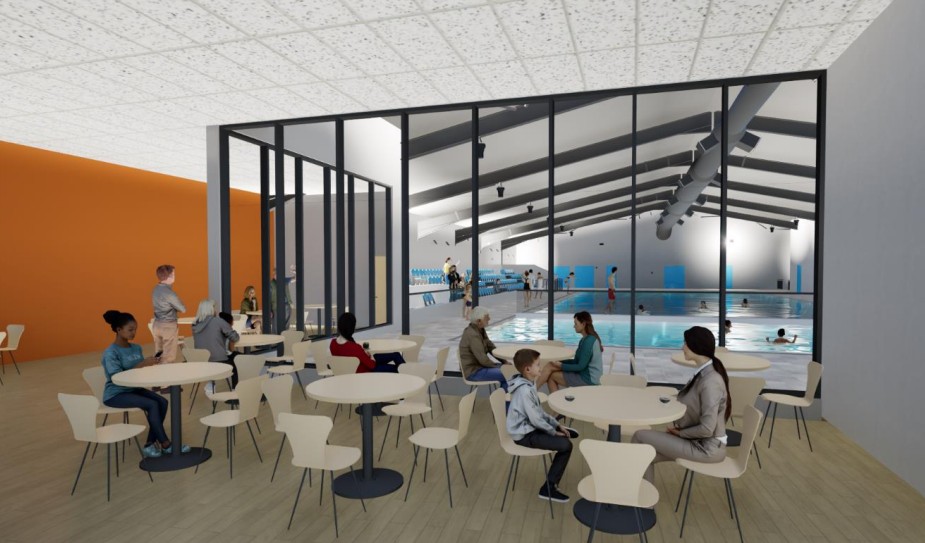
- A modern entrance with café and social space
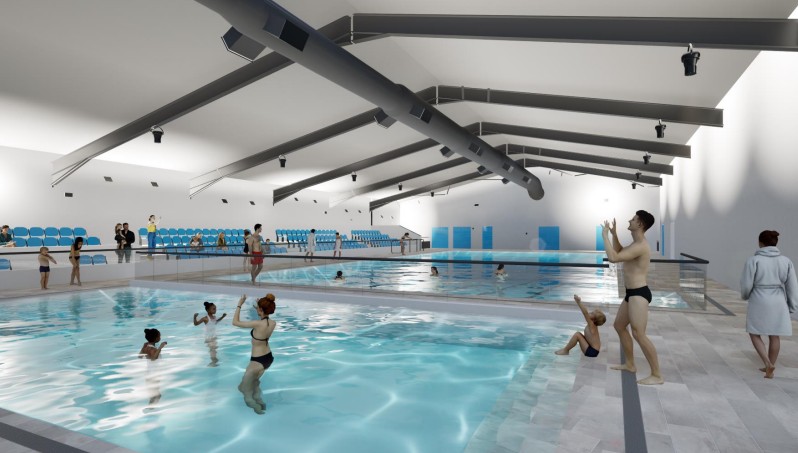
- A refurbished 25-metre six-lane pool and learner pool
- A larger gym and two studios
- Flexible event space and community rooms
- Three covered padel courts
- A new skate park and retained rifle range
- Improved accessibility and changing facilities
- Enhanced links to outdoor spaces
“Building a leisure centre just for sport is no longer a financially viable proposal,” the council states. “The facility must offer more.”
Funding, timeline and next steps
Construction costs are estimated at £17.6 million, including major elements such as the main build, padel courts, skate park and demolition.
The council expects the new facility to generate increased income through higher usage and new revenue streams, including café trade and sports activities.
The project has now reached RIBA Stage 3, with detailed design work underway.
A final decision on whether to proceed with construction is expected in June 2026. If approved, work could begin in August, with completion targeted for late 2027.
A project under growing scrutiny
For the council, the redevelopment represents a transformative investment in the future of leisure and community provision.
“The council welcomes comments… and aims to use these to improve what the new facility will offer,” its response states.
But for Sennitt Clough, the issue is about more than the final design.
“Clarity is needed around governance and decision-making processes as the project progresses,” she said.
With a major financial commitment on the line and a key decision looming, the outcome of her complaint—and the questions it raises—are likely to remain central to the debate in the months ahead.