

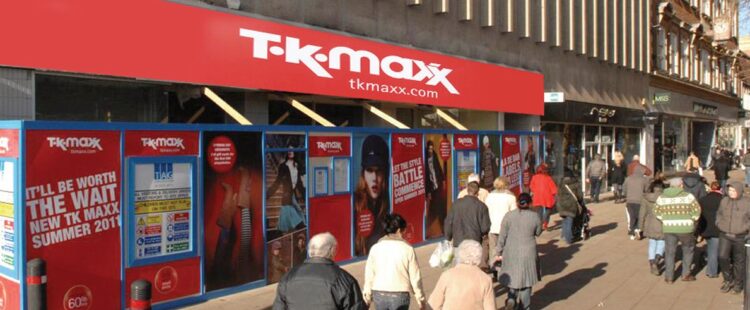
For more than a decade, a landmark building at the southern gateway to Bridge Street symbolised confidence in Peterborough’s city centre. Once marketed for sale at £9.85m as a prime investment delivering over £600,000 a year in rent, the former Woolworths, TK Maxx and New Look building has now been sold by Peterborough City Council at a loss of more than £2 million.
The journey of 62–68 Bridge Street reflects not only the decline of large high‑street retail, but also the increasingly active — and risky — role councils are taking in property markets as they attempt to regenerate struggling town centres.
And in this instance it is a journey undertaken by the former Tory administration – with senior level officer recommendations and guidance – that Cllr Assad Qayyum believes needs investigation and explanation.
“I absolutely support the call for an inquiry into the buying of the TK Maxx building at £4 million,” she said.
“If it reassures residents and provides a full account of how decisions were made, then I completely align with that.

“That transparency has been a hallmark of my administration.”
Critics say the key questions lie not in how the building was sold — but why it was bought in the first place.
Peterborough MP Andrew Pakes has been blunt in his assessment.
“The question is why Peterborough Council paid through the nose for the TK Maxx building only to then ditch the plans weeks after paying for it,” he said.

“Despite asking, the council has never been able to produce any documents showing due diligence or how they thought they could convert the building.
“We now lose out on public money that was meant to benefit the city.”
The deal has also reignited broader criticism of the previous Conservative administration, which ran the council for more than two decades.
Former Liberal Democrat councillor Nick Sandford accused the Tories of a pattern of high-risk spending funded by borrowing.
“They talked a lot about financial responsibility,” he said in a social media post, “but what we saw was profligate spending on big, high-profile projects.”
CambsNews has tried to create a timeline of events.
A prime asset in 2011
The building was marketed for sale in February 2011; it was positioned as a blue‑chip retail investment.
The property was fully let and income‑generating:
- TK Maxx paid £400,000 a year under a newly signed 10‑year full repairing and insuring lease.
- New Look contributed £225,000 a year.
- Combined rent totalled £625,000 per annum.
- Agents sought offers in excess of £9.85 million, reflecting a 6 per cent net initial yield.
At the time, the building was considered low risk, underpinned by national covenants in a busy city‑centre retail pitch.
A changed landscape
Over the following decade, the value of such assets collapsed across the UK. Online shopping accelerated, major chains downsized, and demand for large-format city‑centre retail units weakened sharply.
By the late 2010s, properties once seen as secure income streams were increasingly viewed as liabilities rather than assets.
The council steps in (2020)
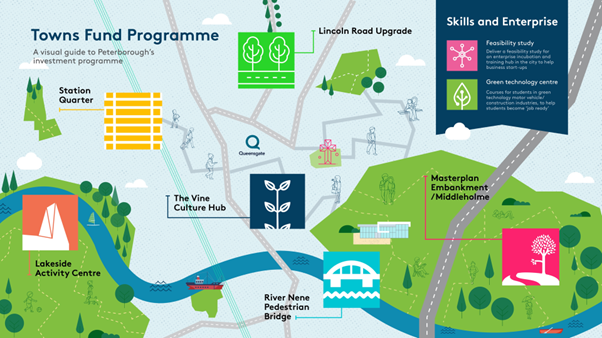
In August 2020, Peterborough City Council approved the acquisition of 62–68 Bridge Street as part of the city’s Towns Fund regeneration programme.
The purchase:
- Cost £4.16 million funded using Towns Fund grant money.
- Was signed off under delegated authority by Councillor Peter Hiller, then Cabinet Member for Strategic Planning, Commercial Strategy and Investments.
- Was authorised by Peter Carpenter, Acting Corporate Director of Resources.
Council reports argued that intervention was needed to prevent a highly prominent city‑centre building becoming a long‑term vacancy and dragging down Bridge Street.
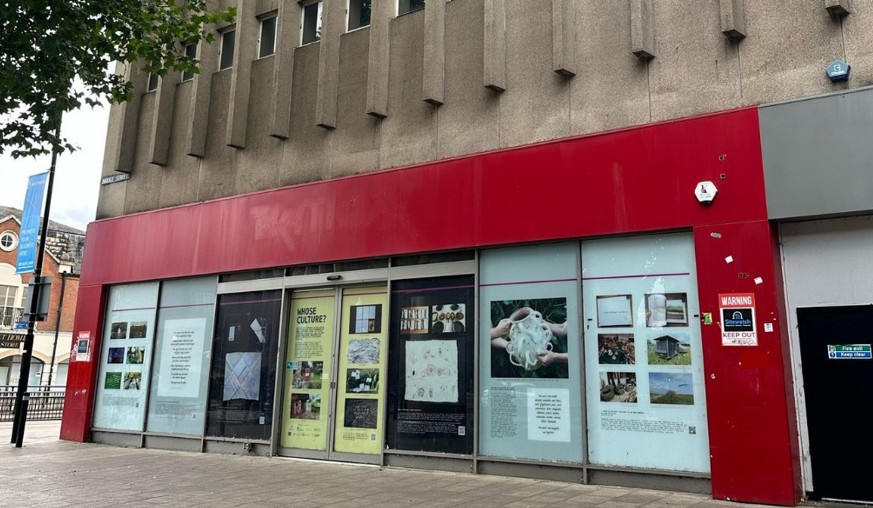
The intention was to repurpose the site into a new library and cultural hub forming part of The Vine, one of the Towns Fund’s flagship projects.
Rising costs and a strategic retreat
By 2023, the affordability of that plan had collapsed.
Detailed costings presented to the Peterborough Towns Fund Board showed that refurbishing the building would leave a £5 million funding gap, even after grant support. Construction inflation, specialist retrofit costs and programme risk all contributed.

March developer MJS to revive former TJ Maxx site in Peterborough
The board agreed to abandon plans to use the building. The Vine would instead be delivered across alternative sites, and Bridge Street ceased to be required for Towns Fund delivery.
The council’s role in marketing the site
Once declared surplus, the council moved into a hands‑on, structured disposal process — playing a far more active role than a typical private seller.
Preparing the asset for market
Before marketing could begin, the council:
- Commissioned development feasibility work, including options for both retention of the existing structure and wholesale demolition.
- Developed a planning and development brief, setting out how the site could be redeveloped within policy.
- Worked with ECE Architecture and the Montagu Evans planning team to identify residential‑led redevelopment potential, including capacity for at least 50 homes.
- Positioned the site clearly within the Peterborough City Centre residential allocation and conservation‑area framework.
This work was intended to reduce planning uncertainty and make the opportunity more attractive to developers.
Appointing agents and running the process
Following Cabinet approval in July 2025, the council appointed Montagu Evans as its sole marketing agent.
The marketing exercise:
- Ran for eight weeks.
- Included national and international advertising via platforms such as Estates Gazette, LoopNet and LinkedIn.
- Involved direct circulation of details to more than 2,000 developers and investors.
- Included a dedicated online data room, containing surveys, planning commentary, development concepts and Council‑commissioned reports.
- Invited unconditional offers, though conditional redevelopment proposals were also considered.
The council retained control of the bidding process and criteria, seeking the best offer that also ensured certainty and compliance with Towns Fund spending deadlines.
Bids, evaluation and governance
Six bids were received, prompting a best‑and‑final‑offers stage.
Council officers, supported by professional valuation advice, assessed bids against:
- headline price,
- funding certainty,
- deliverability and timescale,
- conditions attached, and
- purchaser track record.
The preferred buyer, Bridge Street (March) Limited, was selected following agent recommendation and internal due diligence.
The decision:
- Was reported back to Cabinet in December 2025.
- Was supported by an independent Red Book valuation to confirm best consideration.
- Included formal consultation with the Towns Fund Board, which was asked for views on reallocating the remaining funds.
Sold — at a substantial loss
The sale completed in early 2026 for around £2 million — less than half the council’s 2020 purchase price, and vastly below the 2011 valuation.
Council papers acknowledged openly that the value achieved was lower than the acquisition cost, attributing the outcome to market conditions rather than the marketing process itself.
Proceeds from the sale are being recycled back into the Towns Fund programme to support other regeneration schemes.
Explainer: the key numbers
- 2011 asking price: £9.85m
- 2011 rental income: £625,000 pa
- 2020 Council purchase: £4.16m
- Estimated refurbishment shortfall (2023): £5m
- 2025/26 sale price: ~£2m
- Estimated capital loss: ~£2.1m
A broader lesson
The story of 62–68 Bridge Street is not just about one building. It illustrates the growing role councils are taking as developers, landlords and market‑makers — often stepping in where private capital has retreated.
In this case, a once‑prime retail investment became a regeneration gamble, and ultimately a loss‑making disposal.
EDITOR’S FOOTNOTE
The towns board was set up in the wake of the decision by the Government in 2019 to invite 101 towns across the country to bid for up to £25m as part of its Towns Fund scheme. Peterborough City Council submitted an investment plan the following years with the money being agreed in early 2021.
A towns fund board of the great and the good came together to oversee the implementation of the projects identified in the investment plan and to work on business cases for each.
The first recorded meeting of that board was on January 13, 2020, chaired by Matthew Bradbury, of the Nene Park Trust. It was held in the Conservative Group meeting room at the town hall and kick started the work that was to continue for the following five years.
In a future article, CambsNews will examine the role of the towns board and its relationship with the city council which oversaw governance of the £22.9m.