
Fenland councillors have approved a major new parking enforcement scheme despite official warnings that it has “no obvious positive business case” unless parking charges are introduced.
At a heated Cabinet meeting on 27 April, members voted to press ahead with civil parking enforcement (CPE), with the total project cost now estimated at around £1.22 million.
However, councillors drew a firm political red line — insisting the scheme will be delivered without introducing parking charges.
The decision marks a major shift in how parking restrictions will be enforced across Fenland, transferring powers locally for the first time after years of complaints about illegal parking and weak enforcement.
Cabinet backs enforcement rollout

Cabinet agreed to move ahead with the scheme, setting out a timetable that could see preparatory work begin in 2027 and full enforcement powers introduced in 2028.

The decision gives officers authority to negotiate agreements with Cambridgeshire County Council and continue the legal, procurement and operational work needed to implement the project.
Members also acknowledged that costs could continue to rise due to external pressures.
Shared service plans stalled
The report considered by Cabinet revealed that three neighbouring councils had previously expressed interest in delivering both enforcement and administrative services for Fenland through a shared-service arrangement.
However, no progress has been made on that aspect of the project since 2023.
The report notes that Local Government Reorganisation (LGR) could still create future opportunities to work with neighbouring authorities that already have enforcement capability.
It also warns that operating costs have risen significantly since early discussions because of increases in fuel, labour and material costs.
Scheme expected to run at a loss
Updated modelling presented to councillors painted a stark financial picture.
The report states there is: “no obvious positive business case… unless car park charging is introduced.”
Operating costs were last updated in November 2025 and are based on employing two full-time civil enforcement officers using the cheapest external service delivery model.
Under those assumptions, annual running costs are projected to reach £149,173 per year.
Based on estimates of issuing 1,983 penalty charge notices (PCNs) annually, the council predicts the scheme would still operate at a yearly deficit of around £92,950.
Over the first five years, the cumulative operational deficit is forecast to total approximately £464,750.
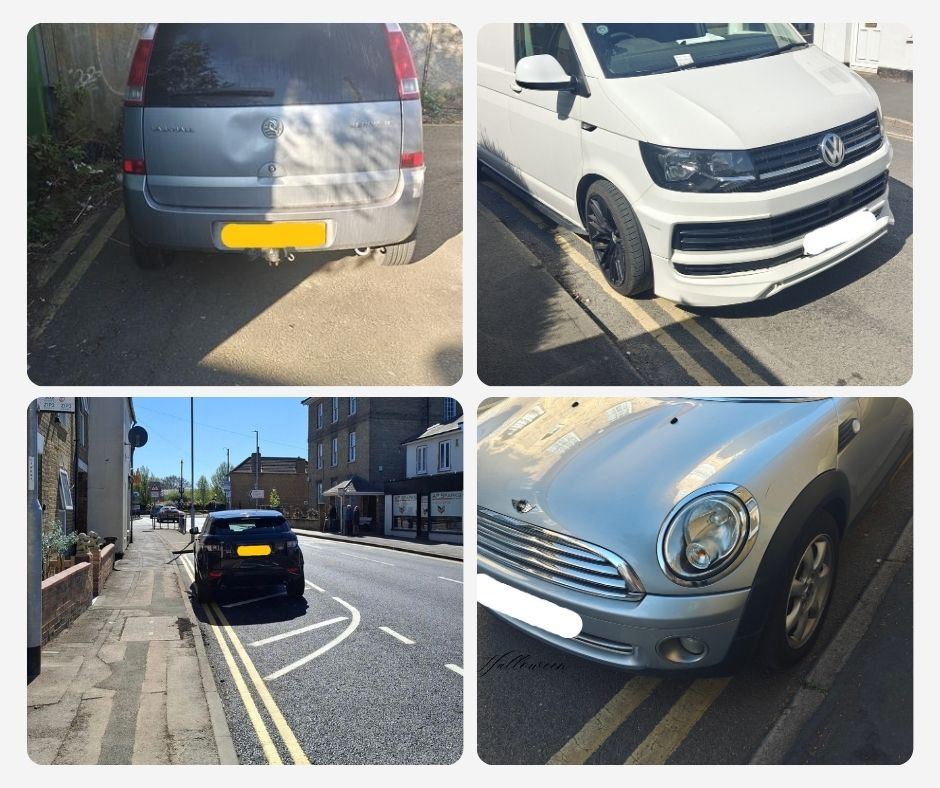
St Mary’s Street and Gracious Street in Whittlesey and Chatteris
These are a few of the places you may have seen our officers out and about issuing tickets this week.
This is another reminder that there are plenty of places to park your vehicle without risking a ticket from us for parking in an obstructive or illegal manner.”
The updated modelling also incorporated feedback from South Cambridgeshire District Council following the introduction of civil parking enforcement there, particularly around expected PCN issuance rates.
Despite the financial warnings, councillors rejected the introduction of parking charges and instead indicated the deficit would need to be covered through wider council funding.
Local government reorganisation casts shadow over plans
The timeline for the scheme also coincides with major structural changes to local government across Cambridgeshire and Peterborough.
By 2028, Fenland District Council itself is expected to be abolished as part of the Local Government Reorganisation currently under way, with its powers transferred into a new larger unitary authority.
Current proposals are expected to see Fenland grouped with Peterborough and potentially Huntingdonshire under a single authority structure.
If implemented, Fenland would hold only a minority share of representation within the new authority, significantly reducing the influence it currently exercises as an independent district council.

The debate around parking enforcement also comes against the backdrop of Fenland’s long-standing policy of retaining free parking in its town centres — something increasingly unusual among local authorities.
Several councillors made clear they wanted to preserve that approach, warning that charging could damage local high streets and accessibility.
However, while Fenland’s current administration has ruled out parking charges, any future unitary authority would ultimately control parking policy once reorganisation takes effect.
Strong opposition to parking charges
Deputy leader Cllr Jan French told the meeting she remained firmly opposed to paid parking.
“I would never accept car parking charges… I have fought against paid parking since 1993.”
Cllr Steve Count also warned against any move towards charging, describing it as: “the death knell for the high streets.”
He insisted suggestions the council intended to introduce parking charges were incorrect unless imposed through wider political change in future.
“Shocking let down”
Several councillors used the debate to criticise years of deteriorating infrastructure and lack of enforcement.
Cllr Steve Tierney described the situation as a: “shocking let down” and criticised the poor condition of road markings and signage, arguing they had been allowed to deteriorate to the point where restrictions were effectively unenforceable.
Council leader Cllr Chris Boden called the situation “outrageous” and said members were effectively being forced to choose between: “two bad alternatives” — either spend heavily now or continue waiting years for action.
Why the council says action is needed
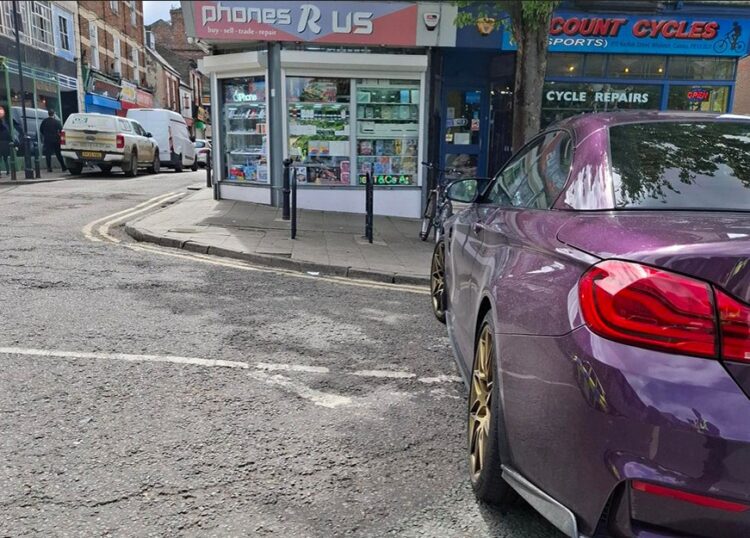
The report highlighted longstanding issues across Fenland including illegal parking, deteriorating signs and lines, and limited police enforcement capacity.
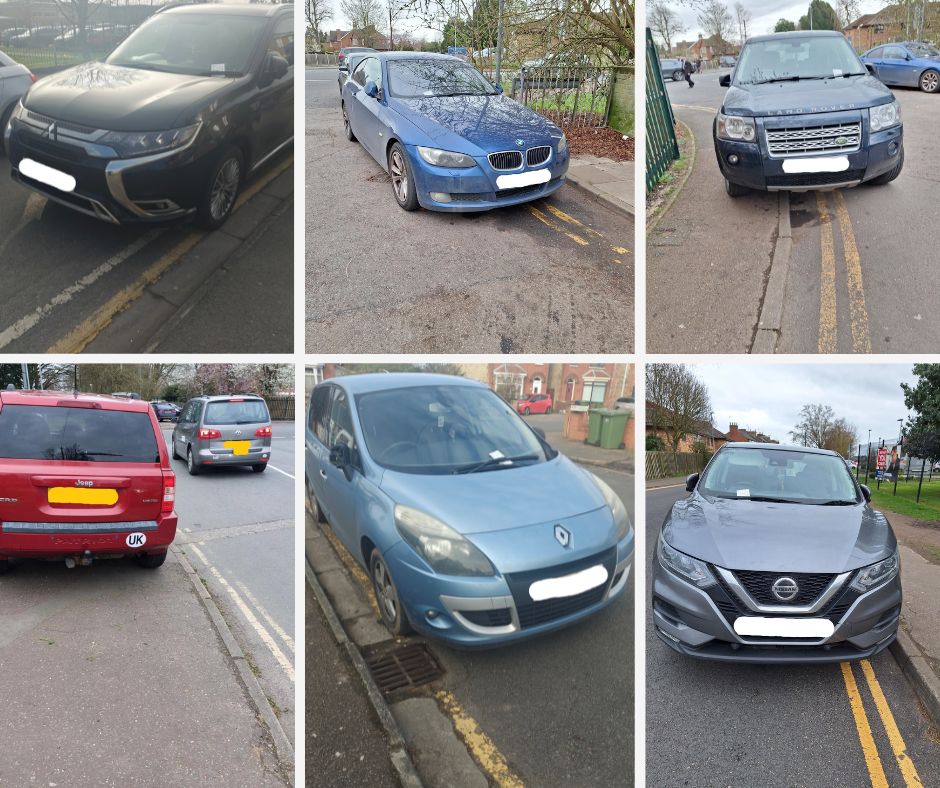
You may have seen our neighbourhood officers out and about last week at:
Westwood Primary School in March, where four tickets were issued
Burrowmoor Primary School in March, where one ticket was issued
Ramnoth Road in Wisbech, where seven tickets were issued”
A 2021 survey found that around 86% of parking-related signs and road markings were not in a suitable condition for enforcement.
Without civil enforcement powers, responsibility largely remains with police, though officers acknowledged enforcement has been heavily constrained by resources.
Cllr Samantha Hoy argued the lack of enforcement had broader consequences for communities.
“Having uncontrolled parking created a lawless feel in a town.”
What happens next
The project will now move into its next phase, including negotiation of service agreements and a formal application to government for enforcement powers.
If approved, work on replacing signs and road markings is expected to begin in 2027, with enforcement powers anticipated in 2028 following parliamentary approval.
That timetable means the scheme is likely to come into force at almost exactly the same time Fenland Council itself ceases to exist under local government reorganisation.
Bottom line
After decades of debate, Fenland has taken a decisive step towards introducing local parking enforcement.
But while councillors are prepared to spend heavily to tackle illegal parking, they have drawn a firm line against introducing parking charges — even though official modelling shows the scheme is expected to operate at a significant loss, and the future control of parking policy may ultimately rest with a new unitary authority rather than Fenland itself.