
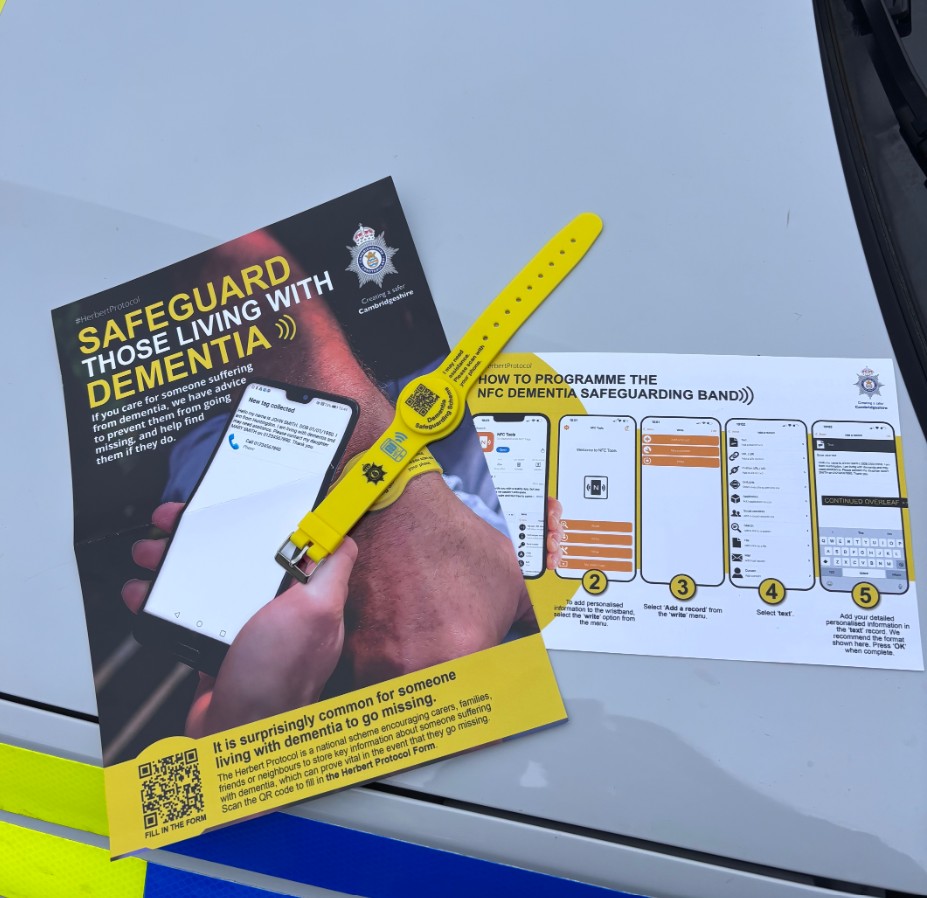
The force has also distributed almost 50 yellow dementia wristbands directly in the community, helping vulnerable residents maintain their independence while giving officers and members of the public a quick way to contact loved ones if someone becomes lost or confused.
The bright yellow wristbands, which resemble watches, contain emergency contact details using Near Field Communication (NFC) technology that can be read using a mobile phone.
Police say the scheme has already helped reduce pressure on emergency services while improving safeguarding for some of the county’s most vulnerable residents.
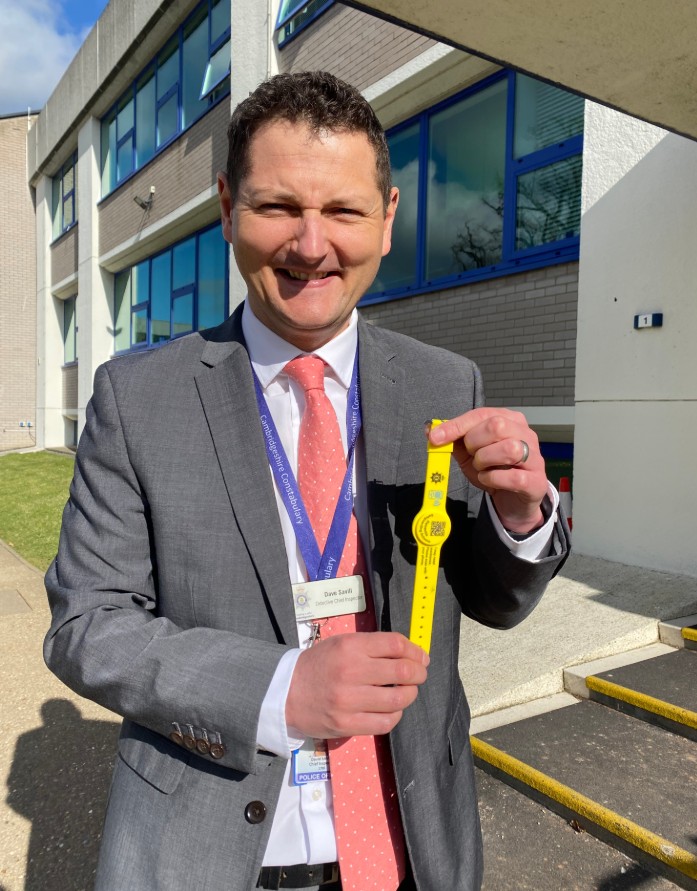
Detective Chief Inspector Dave Savill, from the force’s Protecting Vulnerable People unit, said: “We want to do everything possible to protect vulnerable people in our county and it is pleasing to see the statistics which support public uptake and encouragement in the scheme.
“It is crucial that people living with dementia can get to a place of safety and security, with friends or family, as quickly as possible.

“As our social media posts, based on real examples from our call logs have shown, these wristbands have been helping to achieve that and reducing the demand on emergency services.”
The Herbert Protocol allows families to upload key information about a loved one living with dementia, including physical descriptions, health details, favourite places and recent photographs.
Officers say having the information immediately available can significantly speed up missing person investigations.

DCI Savill added: “We appreciate how distressing it is when a loved one with dementia goes missing. Unfortunately, this can be common and it is important family and friends are prepared.
“If you have a friend or family member who is living with dementia, please take the time to complete our Herbert Protocol form. Hopefully you will never need to use it, but should the need arise, it could make a big difference and reduce the amount of time the person is missing.”
According to the Alzheimer’s Society, there are more than 10,000 people living with dementia in Cambridgeshire and around 982,000 people across the UK with the condition. That figure is expected to rise to 1.4 million by 2040.
The force has highlighted several real-life incidents over the past year, including a vulnerable man found on a motorway and an elderly woman who unknowingly racked up an £80 taxi fare after becoming confused.
Police are encouraging families to complete a Herbert Protocol form before an emergency happens.
For more information, visit the Cambridgeshire Constabulary Herbert Protocol page.