

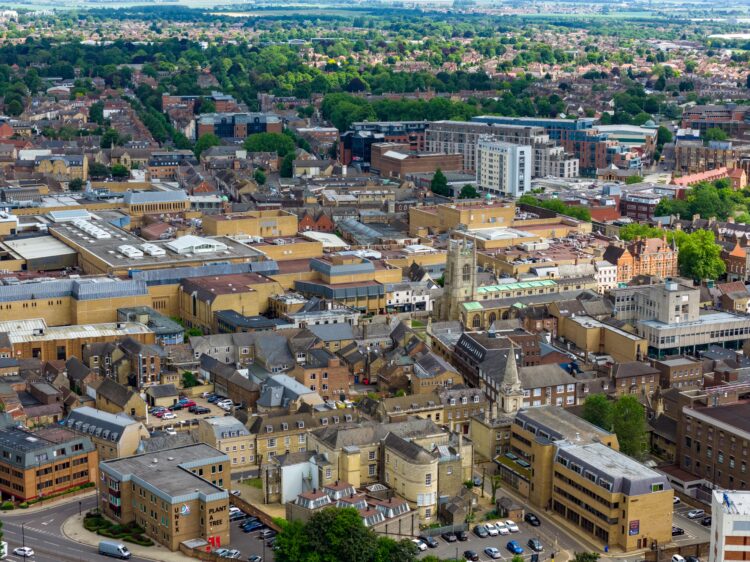
Cambridgeshire Police will deploy live facial recognition technology in Peterborough city centre for the first time this weekend as part of a policing operation aimed at identifying wanted offenders and vulnerable people.
The force confirmed the state-of-the-art system, known as Live Facial Recognition or LFR, will be used on Saturday in busy public areas of the city centre.
Police say the technology compares faces captured on a live camera feed against a pre-prepared watchlist in real time. The system analyses facial features and converts them into a mathematical representation before checking for possible matches.
According to Cambridgeshire Police, the watchlist can include suspects wanted for criminal offences, people with court-issued arrest warrants and high-risk offenders who are subject to strict legal notification requirements.
How the technology works

Officers say the technology is designed to help prevent crime and locate people who may pose a risk to the public.
If somebody walking past the cameras is not on the watchlist, their biometric data is automatically deleted immediately and cannot be recovered, police said.
Where the system produces a possible match, the alert is reviewed by specially trained officers before any action is taken. Police stressed that officers must confirm a match before approaching an individual.
Any alert-related data is automatically deleted after 24 hours unless needed for an investigation. CCTV footage from deployments is deleted within 31 days unless it must legally be retained under data protection or criminal investigation laws.
Cambridgeshire Police said biometric information gathered through LFR would never be passed to third-party agencies.
Privacy and civil liberties concerns

The introduction of facial recognition technology is likely to raise questions among residents about privacy, surveillance and accuracy.
Police acknowledged concerns surrounding facial recognition systems, particularly historic criticism about gender and ethnic bias in earlier versions of the technology.
However, the force pointed to independent testing by the National Physical Laboratory, which found false positive rates were extremely low. Police also said independent studies concluded there was no racial or gender bias within the current system.
Cambridgeshire Police said all deployments would be overseen through legal and ethical safeguards, including scrutiny by an ethics panel and oversight from the Police and Crime Commissioner.
Residents are also allowed to avoid walking through areas covered by the cameras or cover their faces, unless officers are acting under existing policing powers or a rare legal order banning face coverings is in place.
Police say transparency is key
The force said it would publicise most deployments of the technology in advance through its website and social media channels, although there may be exceptions where advance notice could compromise an operation.
Results from each deployment are expected to be published within five working days. Police say the technology could also be used to help locate high-risk missing people, victims of crime or witnesses linked to serious investigations.
A Cambridgeshire Police spokesperson said: “We will be open and transparent in the development, deployment and use of LFR technology, recognising that we must retain the confidence of our communities as we use this new and important crime fighting tool.”
Residents with concerns or complaints about the use of live facial recognition can contact the force directly via email at lfr@cambs.police.uk.