

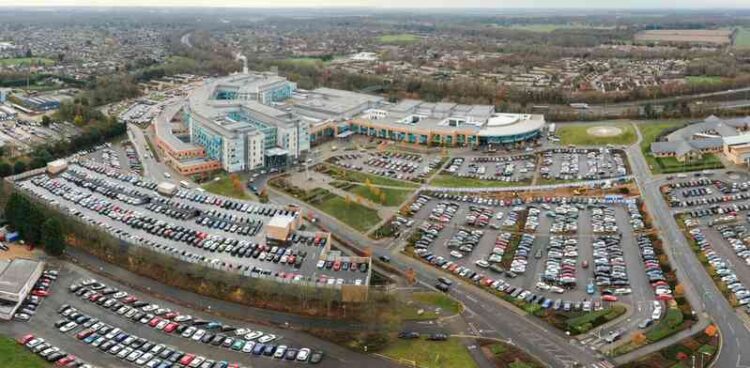
Hundreds of NHS staff across Cambridgeshire, Peterborough, Huntingdonshire, Stamford and South Lincolnshire could leave their jobs under a major workforce reduction programme launched by North West Anglia NHS Foundation Trust as it seeks to save nearly £10 million this year.
The Trust, formed in 2017, provides acute and specialist healthcare services across a large part of eastern England and oversees multiple hospital and community healthcare sites serving hundreds of thousands of patients.
Its three main acute hospital sites are Peterborough City Hospital, a 674-bed specialist and emergency care centre; Hinchingbrooke Hospital, a 289-bed district general hospital; and Stamford and Rutland Hospital, which provides outpatient care, minor injuries treatment and day surgery services.
The Trust also delivers or supports services at several community healthcare sites including Doddington Hospital, North Cambs Hospital and Princess of Wales Hospital, Ely, where outpatient clinics, diagnostic services and minor injuries units operate in partnership with other NHS organisations.
Details of the cost-cutting programme were outlined in a report by chief executive Hannah Coffey presented to the Trust board on May 12 and in an accompanying email sent to employees across the organisation.

The move forms part of the Trust’s wider “Back on Track” transformation programme, which leaders say is designed to improve efficiency, reshape services and deal with mounting financial pressures facing the NHS.
In her report to the board, Coffey said the Trust had begun implementing its Annual Plan for 2026-27 with a focus on patient safety, quality of care, productivity and workforce challenges.
She said there were already “encouraging signs of progress” in emergency care flow, elective recovery and outpatient services, adding that teams across the organisation were working to translate strategic priorities into day-to-day delivery.
But the report also acknowledged the “significant” scale of change facing the Trust as it attempts to balance rising demand for healthcare with tighter financial constraints.
As part of that process, the Trust is introducing a Mutually Agreed Resignation Scheme, known as MARS, which officially opened on May 11 and runs until May 29.
The scheme allows eligible staff to apply voluntarily to leave the organisation in return for a financial settlement. Trust leaders say it is intended to create flexibility to redesign services and reshape teams around future healthcare models.
In her email to staff, Coffey described the current pressures facing the NHS as among the toughest in recent years.
“Like all NHS organisations, we are operating in an increasingly challenging environment,” she wrote.
“Demand for care continues to grow, resources are more constrained, and the expectations placed upon our services are higher than ever.”
She added: “We have had to think differently about how we run our services sustainably.”
Board papers show the programme is expected to contribute £9.9 million in savings during the current financial year, with workforce reductions forming a key part of the Trust’s financial recovery plans.
Although the Trust refers to the loss of 350 whole-time equivalent posts, the number of individual employees affected could be considerably higher because many NHS staff work part-time hours.

The Trust stressed the programme is voluntary and not a compulsory redundancy scheme.
“No one will be required nor pressured to apply,” Coffey told staff in the internal message. “This is a personal choice.”
However, applications will not automatically be approved. Managers will assess whether services can continue to operate safely before agreeing to any departures.
Medical and dental staff, including consultants and doctors, are excluded from the scheme. According to the board report, those roles are reviewed separately through annual workforce planning and rota assessments.
The restructuring programme comes despite ongoing staffing pressures across the Trust’s hospitals and community sites.
The organisation is already managing more than 500 vacancies while continuing to face heavy pressure in accident and emergency departments, long waiting lists, rising demand for outpatient appointments and persistent sickness absence among staff.
Recruitment restrictions are also already in place across many departments, with some vacancies requiring additional senior approval before posts can be filled.
Internally, the Trust has described the changes as “organisational rightsizing” aimed at ensuring it has “the right roles, skills and capacity” to deliver services both now and in the future.
Coffey acknowledged the announcement would cause anxiety among employees.
“We know that any conversation about change can feel unsettling,” she wrote. “There will be a wide range of personal reactions to this announcement.”
To support staff, the Trust organised 15 briefing and question-and-answer sessions across hospital sites and online. Managers were instructed to ensure all teams receive information quickly through workplace meetings and local briefings.
The programme reflects a broader trend developing across the NHS nationally, with trusts increasingly turning to voluntary exit schemes, recruitment freezes and service restructures in an effort to close funding gaps.
Health leaders have warned that financial pressures during 2026-27 are among the most severe faced by the NHS in recent years, as inflation, staffing costs and rising patient demand continue to outpace available funding.
Despite the scale of the changes, Trust leaders insist the transformation programme is necessary to protect long-term services for local communities.
In her message to staff, Coffey said: “The transformation work ahead will not always be easy, but it is essential if we are to continue delivering the best possible care for our communities in the years to come.”
- CambsNews has approached the Trust for comment