
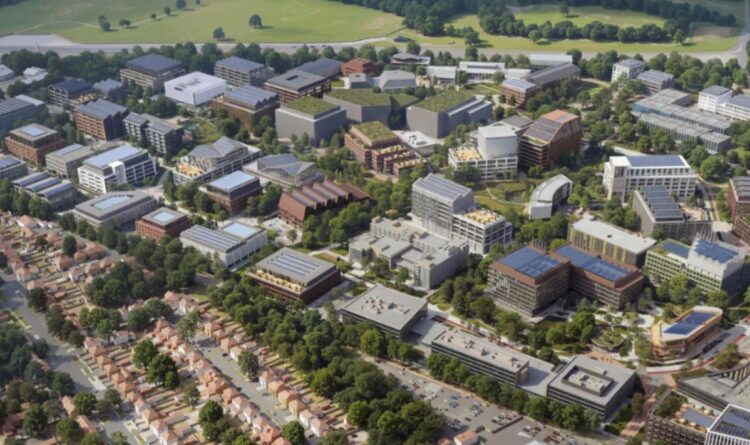
The Chancellor, Rachel Reeves, has thrown her support behind ambitious £3 billion plans to transform Cambridge Science Park into one of Europe’s leading innovation hubs. The expansion, led by Trinity College Cambridge, will triple the Science Park’s capacity over the next 30 years and create more than 20,000 highly skilled jobs across science, technology and research sectors.
The plans, now submitted for planning approval, are being hailed as a once-in-a-generation opportunity to boost the regional and national economy while cementing Cambridge’s global status as a centre for innovation.
Welcoming the announcement on LinkedIn, Reeves described the project as “exactly the kind of long-term, high-value investment the Oxford-Cambridge Growth Corridor was made for”.
She said the corridor could become “the Silicon Valley of Europe”, contributing £78 billion to the UK economy by 2035.
Science Park expansion to unlock billions in investment

Founded in 1970 by Trinity College, Cambridge Science Park was the first science park in the UK and has played a pivotal role in the internationally recognised Cambridge Phenomenon.
The park currently generates around £1 billion in gross value added annually through scientific breakthroughs, investment and exports.
Under the new masterplan, Trinity College says the site could eventually support around 27,000 workers while annual economic output could rise to more than £3 billion.
The College said the project would unlock £1 billion of direct investment from Trinity and leasehold partners, with a further £2 billion expected over the next three decades.
Dame Sally Davies: “The Science Park must continue to grow”
The Master of Trinity Dame Sally Davies said Trinity was “immensely proud” of the Science Park’s global impact, citing innovations in cancer drugs, diagnostic technology and communications systems.

She added: “We know that if the Science Park is to continue to serve the needs of people around the world, it must continue to grow.”
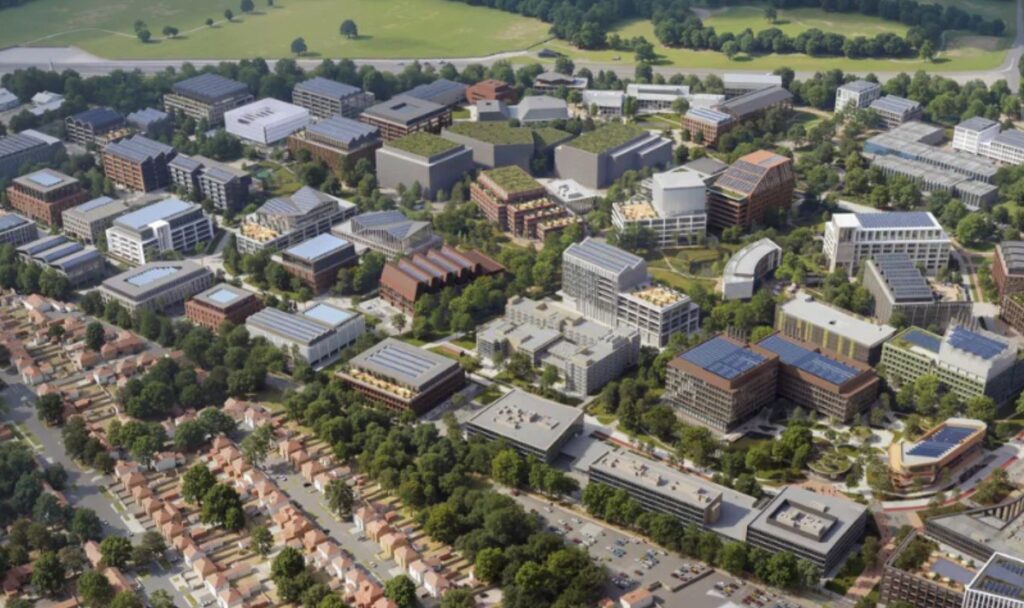
Davies said the masterplan would create “a vibrant, collaborative and inspiring place to learn, to work and to enjoy”.
New green spaces, transport links and STEM opportunities
Alongside laboratories and workspaces, the development includes plans for a new public “Park of Science” featuring lakes, biodiverse green spaces, walking routes and an outdoor science museum.
Transport upgrades, including improved busways and rail connectivity, are also designed to reduce car dependency and improve access to jobs.
The project promises investment in apprenticeships, education and STEM skills programmes aimed at benefiting communities across Cambridgeshire, from King’s Hedges to Peterborough.
University says project will inspire future innovators
Roland Sinker, Chairman of Innovation & Growth, University of Cambridge, described the expansion as “a strong vote of confidence in the UK as a science and technology leader”.
He said the development would inspire future generations by widening access to STEM opportunities for local children and creating an environment where “ideas that change lives” can flourish.
Sinker added that the project reflected the long-term collaboration between Trinity College, the University of Cambridge and government partners to ensure Cambridge remains “the best place in the world to innovate”.