
The race is on for one of Cambridgeshire’s biggest transport projects as the county council launched the tender process for the major Cambourne to Cambridge transport scheme, marking another significant step forward for the long-planned guided busway project.
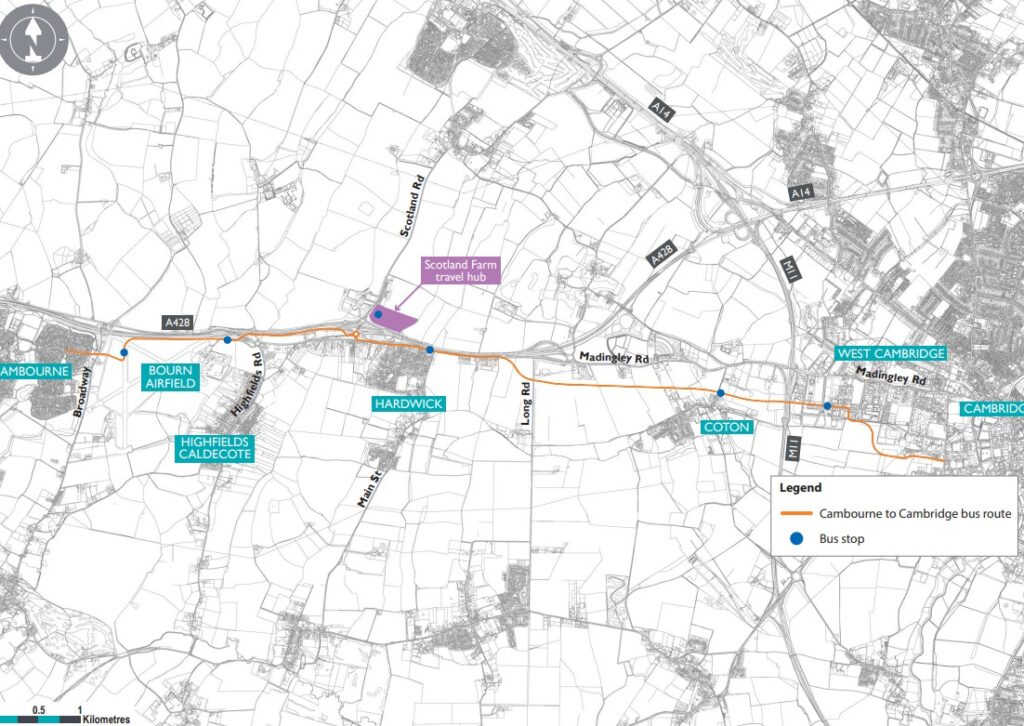
Acting on behalf of the Greater Cambridge Partnership, the council is seeking contractors for the “26013 Cambourne to Cambridge Construction Procurement” scheme, which is expected to transform public transport links between the growing new town of Cambourne and Cambridge.
The contract has an estimated value of around £150 million, with a gross value reported at £180 million, and will cover the design and construction of a new guided busway and associated infrastructure.
According to procurement documents published by the council, the scheme is intended to “increase capacity, improve journey times and the reliability and resilience of passenger services that serve the Greater Cambridge area”.
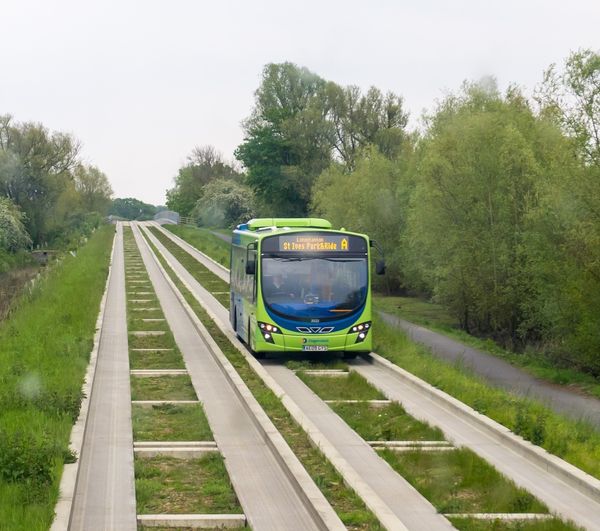
At the heart of the project is a mostly segregated guided busway connecting Cambourne with Cambridge. The route will also include an adjoining emergency and maintenance access track which will double as an active travel corridor for walkers and cyclists.

Other major elements of the scheme include new public transport stops, operational lighting, bridges crossing the M11 motorway and Bin Brook, signalised junctions where the route intersects with existing roads, and a Travel Hub park and ride facility offering spaces for cars, bicycles and coaches.
The project will also involve changes to existing highways and access routes, drainage works, landscaping, earthworks, fencing and environmental mitigation measures.
The procurement process is being carried out under the UK Procurement Act 2023 using what is described as a “competitive flexible procedure”.
Interested contractors have until noon on July 2, 2026, to submit requests to participate through the council’s ProContract e-tendering portal. The estimated award decision date is December 14, 2026.
Construction work is expected to begin in January 2027, with the contract currently scheduled to run through to early 2031. The council said the works will be procured using a two-stage tender process.
That approach is designed to bring contractors into the development phase at an earlier stage, allowing them to contribute to design validation, construction planning and cost management before the main construction phase begins.
Stage one of the contract will involve a wide range of preparatory and technical work, including surveys, Transport and Works Act Order design validation, preliminary and detailed design, buildability assessments, logistics planning and programme development.
The successful contractor will also work alongside the council’s commercial managers to develop target costs for stage two of the project.
Procurement documents state that subcontract packages will be tendered on an “open book” basis, giving the client and project managers full visibility over tender returns, adjustments and allowances throughout the process.
Tenderers will additionally be required to provide fixed percentages for overheads and profit to be applied across both stages of the contract.

Although bidders must provide a budget price for the overall scheme during the tender process, the council confirmed that this element would not form part of the stage one evaluation.
The authority said contracts will be awarded using a “price per quality point” evaluation model, although the council reserves the right to refine criteria and weightings during the procurement process in accordance with the Procurement Act 2023.
Council documents also note that draft tender documents may be updated as the procurement progresses and that shortlisted firms will have opportunities to raise clarifications and propose amendments during later stages.
The project represents one of the most significant transport infrastructure investments currently planned in Cambridgeshire and is expected to attract major interest from civil engineering firms and infrastructure specialists across the UK.
Businesses with expertise in guided busway construction, highways engineering, transport infrastructure and large-scale project delivery are likely to view the contract as a major opportunity.
The inclusion of early contractor involvement and extensive design responsibilities means firms will need to demonstrate not only construction capability but also experience in complex planning, cost control and collaborative delivery within a regulated public sector framework.
The Cambourne to Cambridge route has been the subject of years of planning and debate as local authorities seek solutions to growing congestion pressures and increasing transport demand across Greater Cambridge.
Supporters of the scheme argue the new busway will improve journey reliability, encourage greater use of public transport and support housing and economic growth in the region.
The project also forms part of wider ambitions to improve sustainable travel options through better cycling and walking infrastructure alongside public transport investment.
However, the scheme has also faced scrutiny and opposition in some areas over environmental concerns, route alignment and the impact of construction works.
Despite those debates, the launch of the procurement process signals that the project is continuing to move through its next major delivery phase.
Cambridgeshire County Council stressed within the tender documents that it reserves the right to abandon the procurement and is not obliged to award a contract following the process.
The authority also noted that bidders would be responsible for their own costs associated with participating in the procurement exercise.
Full tender details and supporting documentation are available through the council’s ProContract procurement portal.