

Peterborough City Council is heading for a loss of between £9 million and £13 million. More than £18 million of public money has been committed to the Fletton Quays hotel project, and even under optimistic assumptions, less than half is likely to be recovered. That is the reality now.
But for a long time, one figure suggested the outcome might not be quite so severe: £4.9 million.
When Fletton Quays Hotel Ltd went into administration in October 2023, attention quickly focused on one figure: £4.9 million, described in official paperwork as money owed to the company by other firms within the same development group.
For Peterborough City Council (PCC) — which had already lent around £17 million to the stalled hotel project — the figure appeared repeatedly in administrators’ reports, suggesting that internal group resources might still exist to soften the blow to public finances.
Nearly two years later, the administrators’ latest report, published in October 2025, tells a far less reassuring story.

The £4.9 million inter‑company debt has produced just £380,000 in real cash, while PCC is now heading toward an expected loss of between £9 million and £13 million, after committing more than £1 million simply to administer the collapse.
An asset that appeared solid — until it was examined
From the start, the administrators made clear that the £4.9 million figure originated with the company’s directors rather than from independently verified assets.
In their own words: “The director’s statement of affairs shows intercompany debtors (from companies in the Propiteer group) owing to the Company in the sum of c.£4.9m.” — Joint Administrators’ Progress Report
The number was cited consistently across early filings, reinforcing its perceived importance. But as the administration progressed, the administrators began to dismantle what lay behind the headline figure.
£4.6m concentrated in just two companies
By late 2024, the administrators disclosed that almost the entirety of the inter‑company balance rested with just two entities: “Of this balance, £4.6m pertained to Propiteer Limited and Propiteer Hotels Limited.”
— Joint Administrators’ Progress Report
This revelation shifted the narrative significantly. Most of the supposed £4.9 million depended on a very narrow slice of the group — companies without strong balance sheets or cash reserves.
To pursue the debts at all, the administrators escalated matters legally: “We instructed Pinsent Masons LLP in relation to the intercompany debtor balances.” — Joint Administrators’ Progress Report
A settlement that fixed the ceiling — and confirmed the shortfall
The legal efforts culminated in a settlement reached in late 2024. That agreement capped total recovery at £380,000.
The administrators described the terms in detail: “Following various legal correspondence a settlement was agreed… totalling £380k, based on payment of £80k upfront and then £20k per month for 15 months.”
— Joint Administrators’ Progress Report
Even that reduced sum required safeguards: “In respect of the deferred element, the Company was granted security over land held by a connected company.” — Joint Administrators’ Progress Report
In their latest October 2025 update, the administrators confirmed there would be no further upside:
“Payments totalling £40k have been received in the report period, which brings total realisations to date to £380k, representing full recovery of the settlement sum.” — Joint Administrators’ Progress Report, October 2025
The balance written off entirely
The remainder of the £4.9 million never materialised at all.
This time, the administrators left little room for ambiguity: “The balance of c.£0.3m is due from Fletton Quays Hotel Operations Limited… the subsidiary holds no realisable assets, and therefore no recovery is anticipated.” — Joint Administrators’ Progress Report, October 2025
In effect, a figure once presented as a major financial buffer delivered around eight pence in the pound.
Why the £380k did not materially help the council
Even the limited recovery did not flow directly to reducing PCC’s loan.
Because the funds were classed as floating‑charge assets, they were first applied to costs, including legal expenses and administration work.
The administrators note that funding and recoveries were closely intertwined: “We are currently reconciling the floating account with the aim of returning surplus funding to the Funding Account now that the intercompany debtor has been realised.” — Joint Administrators’ Progress Report, October 2025
In practice, much of the £380,000 softened the cost of insolvency rather than repairing the underlying public‑sector exposure.
How PCC’s exposure continued to grow
While the headline loan figure remained at around £17 million, the council’s actual financial commitment increased significantly during the administration.
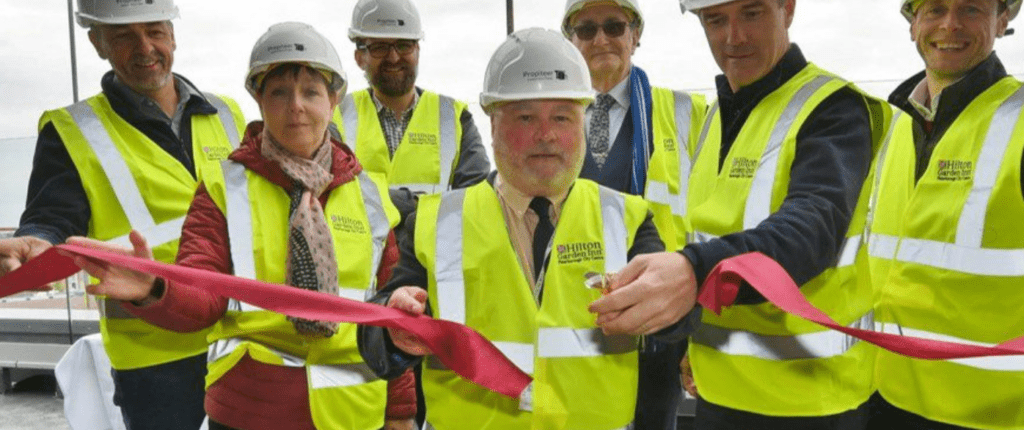
The most recent report confirms: “During the period, funding of £724k was received from PCC, bringing the total since our appointment to c.£1.174m.” — Joint Administrators’ Progress Report, October 2025
And it makes explicit how much of that additional public money has already been consumed: “Of this funding, c.£620k has been used to settle the Joint Administrators’ fees.” — Joint Administrators’ Progress Report, October 2025

The same report shows that total insolvency and professional costs across the case now approach, and may exceed, £1 million.
No prospect of full repayment
As for whether the council will recover the bulk of its money, the administrators’ position is unambiguous.
“It is not expected that sufficient funds will be realised to repay PCC in full.” — Joint Administrators’ Progress Report, October 2025
Interest continues to accrue on the loan, but administrators have repeatedly indicated that it is unlikely to be repaid.
What happens next — and what it means for taxpayers
With the inter‑company debt fully exhausted, PCC’s final recovery depends almost entirely on the sale of the unfinished hotel.
The administrators confirm that strategy has now shifted decisively: “Marketing commenced on 10 November 2025 with an offer deadline set for 16 January 2026.” — Joint Administrators’ Progress Report, October 2025
Based on current figures:
- Best‑case recovery: around £8–9 million
- Worst‑case recovery: around £5–7 million
Either outcome leaves PCC facing an expected loss of between £9 million and £13 million of public funds.
A figure that now demands scrutiny
The persistence of the £4.9 million inter‑company debt across official reports created the impression of a safety net that, in reality, did not exist.
While the figure was technically accurate at the time it was reported, it masked the weakness of the assets beneath it. By the time insolvency tested those claims, the cost of failure — and the cost of discovering the truth — had already escalated into the millions.
Conclusion
As Peterborough looks toward the final sale of the Fletton Quays site, one conclusion is already unavoidable.
The £4.9 million inter‑company debt did not protect the public purse. Instead, it has become a symbol of how paper assets can dissolve under scrutiny — leaving the council, and local taxpayers, facing a loss measured firmly in the low tens of millions.
The figures were always there. It simply took insolvency to reveal what they were really worth.
BACKGROUND EXPLAINER
On 25 September 2017, Peterborough City Council’s Conservative-led Cabinet met at 10:00 am in the Bourges/Viersen Room at the Town Hall. All Cabinet members attended with no apologies. The meeting covered several items, but the standout agenda item (often listed as Item 10 or 7 in reports) was the Financing Approval for Fletton Quays Hotel (report reference SEPT17/CAB/41), titled “Lending Facility for Fletton Quays Hotel.”
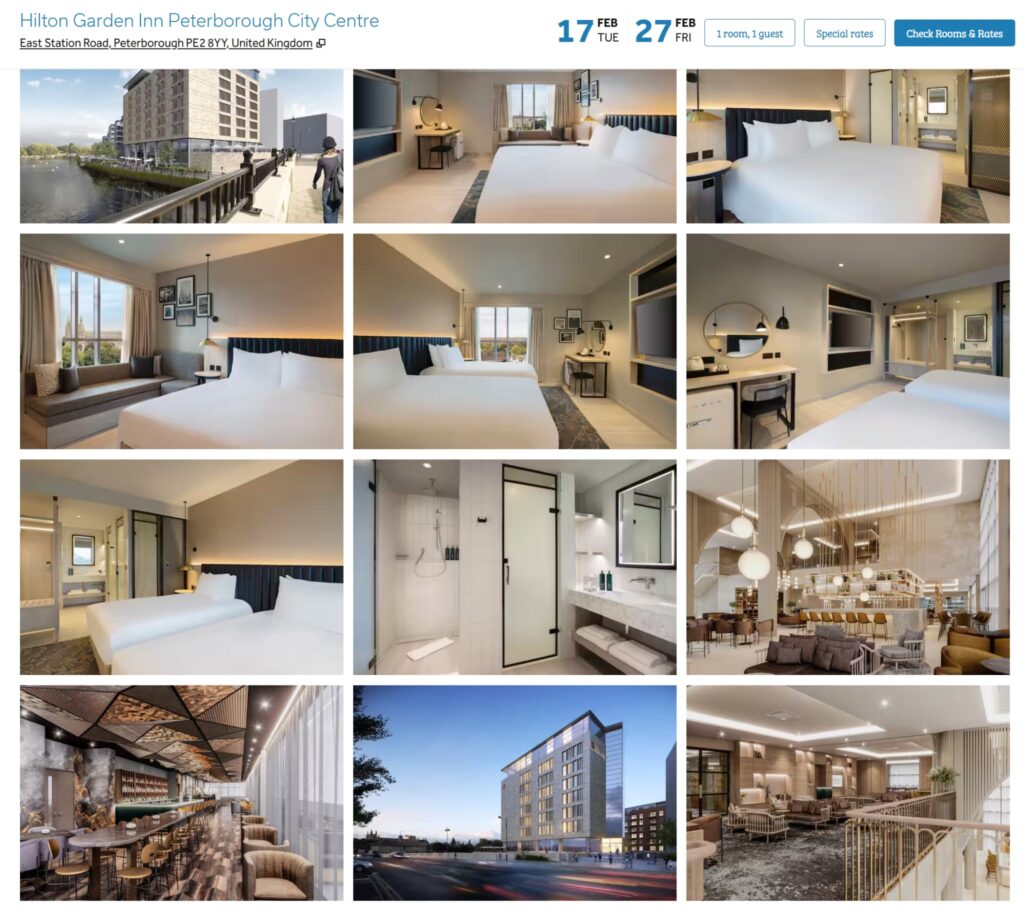
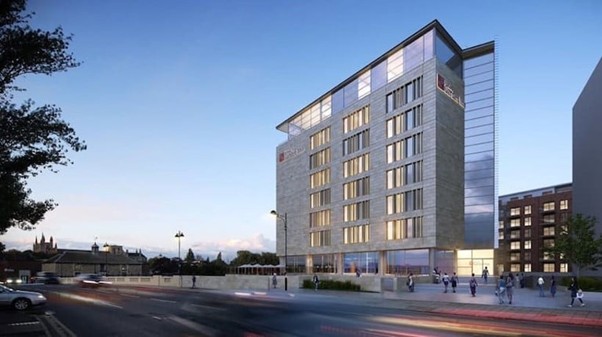
Cabinet Member for Resources Cllr David Seaton introduced the proposal. Cabinet was asked to approve a £15 million lending facility for up to 24 months to Norlin Hotels Holdings Limited and its subsidiary Fletton Quays Hotel Limited. The funds would support construction of a 160-room (later referenced as 168-bed) Hilton Garden Inn hotel on the riverside Fletton Quays regeneration site.
Key Assurances in the Report
The loan would be:
- Fully secured against the land and construction works (with security value exceeding the loan amount).
- Drawn down in stages.
- Charged at a commercial interest rate, expected to generate a “substantial six-figure profit” for the council.
The council planned to borrow the money from the government (via the Public Works Loan Board) and on-lend it. Independent advisers, including Gerald Eve LLP for valuations, Grant Thornton, and Pinsent Masons, had reviewed the proposal with no major concerns raised. Officers would complete further due diligence, including ground condition surveys, and finalise legal agreements with the developer and any hotel franchise.
Declarations of interest
Cabinet Chair Cllr John Holdich and Cllr Peter Hiller declared interests as directors of the Peterborough Investment Partnership (the council’s joint venture involved in the wider Fletton Quays scheme). They were allowed to participate, as the loan concerned the hotel developer directly, not the joint venture.
Decision and Rationale
Cabinet unanimously approved the recommendations with no recorded dissent, questions, or opposition. The formal resolutions were:
- Approve the £15m facility for 24 months (subject to due diligence).
- Authorise senior officers (Interim Director of Law and Governance and Interim Corporate Director of Resources) to finalise due diligence, surveys, and the business case.
- Authorise the same officers to agree all necessary legal agreements.
- Recommend to full Council amendments to the Treasury Management Strategy to permit such secured loans.
The “do nothing” alternative was rejected. Officers argued that withholding the loan could delay the final plot on the Fletton Quays site, hinder adjoining residential developments via the joint venture, and cause the council to miss out on investment returns.
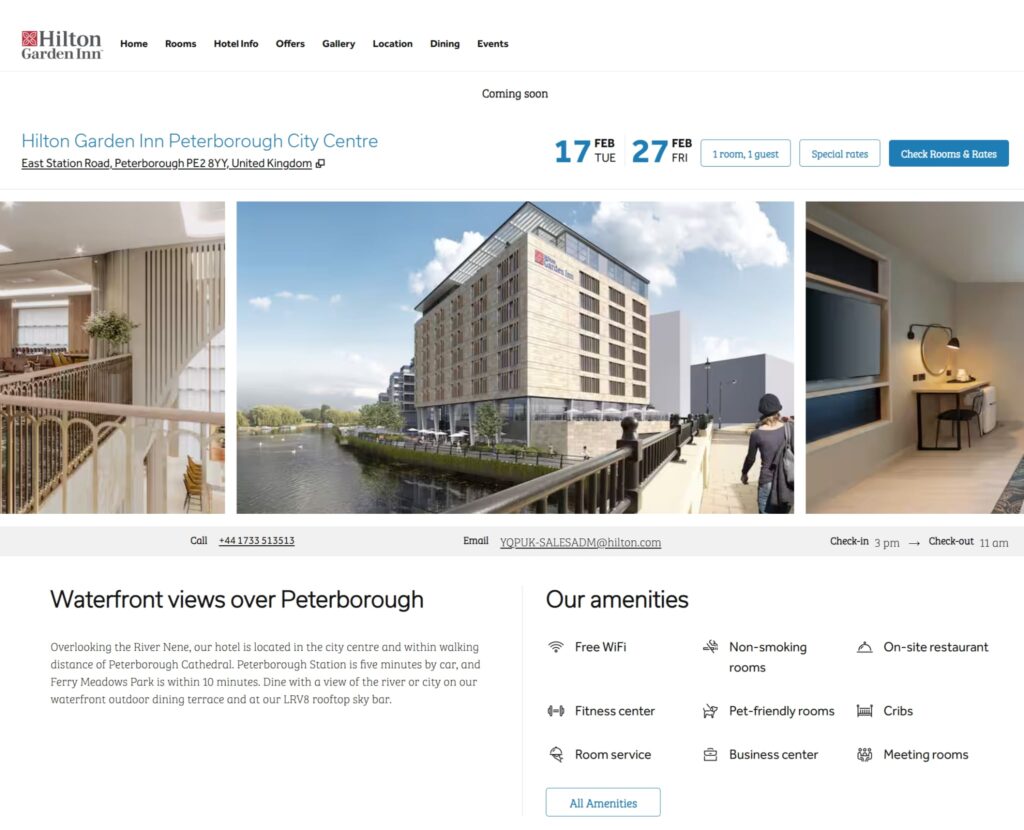
The project was framed as supporting the city’s growth and regeneration agenda, with the hotel expected to complete around 2019.
The decision passed smoothly and was later noted at full Council on 11 October 2017.
The first loan drawdown occurred in 2020 after ownership changes (to Propiteer Hotels Ltd). The project faced significant delays, the developer entered administration, and the unfinished hotel became the subject of later Cabinet discussions on extensions, recovery efforts, and eventual sale of the site to achieve best value.
.